Regulations on conditional business lines need revision: insiders

Insiders are calling for a revision to regulations on conditional business lines as the regulations have caused major hindrances to firms.
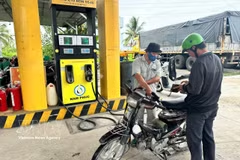
Regulations on conditional business lines need revision: insiders ảnh 1A petrol station in HCM City. (Photo: VNA)
Hanoi (VNS/VNA) - Insiders are calling for a revisionto regulations on conditional business lines as the regulations have causedmajor hindrances to firms.

Nguyen Thi Bich Huong, Chairwoman of the Petroleum Associationunder the Vietnam Association of Small and Medium Enterprises (SMEs), assertedthat many regulations on conditional business lines have posed compliancedifficulties to petroleum firms.

She took several specific regulations on petrol purchase as anexample. One such regulation stipulates that petrol stations and retailers mustpurchase fuels from a single seller to ensure fuel quality.

Huong said the regulation is unnecessary as petrol stations andretailers are subject to fuel standards set by the Ministry of Science andTechnology. That means they are legally bound to distribute up-to-standardfuels, regardless of the number of sellers they take the fuels from.

Other impractical regulations, according to the chairwoman,include those that bar petrol retailers from wholesaling, those that requireapproved environmental protection schemes prepared by petrol retailers, andthose that set a distance of at least 50m between petrol stations and theintersections in their proximity.

Nguyen Anh Duong, Director of the Department for General EconomicIssues and Integration Studies at the Central Institute for Economic Management(CIEM), remarked that some regulations on conditional business lines have addedsubstantial costs to firms.

One such regulation stipulates that petrol exporters, importersand traders, within one year from the date of being licensed, establish theirown laboratory whereby fuel quality could be tested.

"The regulation has added to firm bills. They would havesaved many costs by hiring laboratories from others," said Duong.

The director also highlighted several impractical regulations inthe food industry, including the regulation that requires the separation ofsales areas and other areas within a business facility and the regulation thatprohibits direct connections between restrooms and food-storage rooms.

He also called for the removal of the criteria applicable to riceexporters' warehouses as the criteria causes a high compliance burden on theexporters.

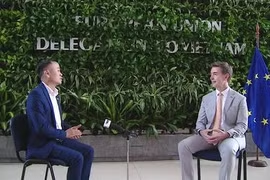
Aedan Puleston, Second Secretary at the Australian Embassy inVietnam, believed that the deregulation of conditional business lines wouldimprove the business environment, reduce corruption and draw in high-qualityforeign investments.

CIEM has recently published a report on conditional business linesin industry and trade. The report found that most regulations in place areconsistent and practical.

However, some contain so many technical details that cause greatcompliance burdens on firms, exposing the need for revision.

"Some specific criteria applicable to facilities, such asfuel tanks and warehouses, would add to firms' compliance costs," said Duong.

Economic expert Le Dang Doanh held that regulations on conditionalbusiness lines should be less detail-focused and more consumer-centric./.


VNA

See more

Shoppers at Winmart (Photo: VNA)

National brand programme drives Vietnamese corporate competitiveness

Vietnam’s national brand value reached 462.28 billion USD in 2026, up 45.14% from 2020 and ranking 32nd among 193 countries, according to Brand Finance. The challenge, however, goes beyond climbing the rankings or scaling up. It is turning those gains into lasting competitiveness and getting Vietnamese firms deeper into global value chains.

Loading and unloading steel products at Hoang Dieu–Chua Ve Port, Hai Phong city (Photo: VNA)

Hai Phong city seeks to boost inland waterway transport

According to the Hai Phong Maritime Administration, inland waterways carry coal, agricultural products, ores, stone, cement and other bulk cargoes, helping ease pressure on roads, particularly those connecting seaports and industrial parks.

Speakers at the conference (from left): AVPI Advisory Board Chair Dr Le Thu Huong, Australian Ambassador to Vietnam Gillian Bird, and Vietnamese Consul General in Sydney Nguyen Thanh Tung. (Photo: VNA)

Vietnam, Australia turn momentum into practical cooperation

Vietnam and Australia should focus on promoting two-way investment, expanding cooperation linked to APEC 2027 and making better use of people-to-people connections. Vietnam needs capital, skills, technology, infrastructure, and energy transition expertise - areas where Australia could offer valuable support.

The interface of the National E-Procurement System. (Photo: muasamcong.mpi.gov.vn)

Vietnam to move PPP bidding online from 2027

From January 1, 2027, PPP project proposals must be submitted through the National E-Procurement System. From September 1, 2027, investor selection for PPP projects tendered through open bidding will move fully online.

An automated robot-based production line at CAYI Technology Vietnam Co., Ltd. in Yen Phong II-C Industrial Park, Bac Ninh city (Photo: VNA)

EuroCham: Business Confidence Index in Vietnam remains high at 78.3 in Q3

The survey found that 64% of respondents described their current business conditions as good or very good, while 28% maintained a neutral or cautious outlook, reflecting a wait-and-see attitude as international demand remains flat and businesses look for policy momentum to translate into faster procedures and more predictable outcomes.

Workers manufacture handheld power tools at the Keystone Electrical Vietnam factory in Lien Ha Thai Industrial Park, Thai Thuy commune, Hung Yen province (Photo: VNA)

Vietnam seeks to turn FDI inflows into domestic value added

Vietnam is shifting its FDI attraction strategy from expanding investment volumes to prioritising capital inflows that brings technology, knowledge, modern management practices and stronger links with domestic businesses, particularly in semiconductors, artificial intelligence (AI), chips and renewable energy.

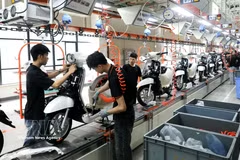
At Yadea Vietnam’s smart manufacturing plant in Tan Hung Industrial Park, Bac Ninh province (Photo: VNA)

Vietnam ties FDI incentives to local supplier commitments

Incentives will increasingly hinge on investors’ performance and commitments, not just on landing projects. Key commitments include transferring technology to Vietnamese firms, training workers, providing technical support and opening FDI supply chains to domestic companies.

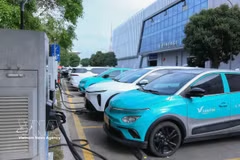
Green SM has launched all-electric taxi service in the US. (Illustrative photo: VNA)

Green SM launches all-electric taxi service in US

The move brings Green SM into one of the world’s most dynamic and demanding markets. It also marks another step in the international expansion of the Vietnamese mobility brand, following its rapid growth across markets in Asia and Europe.

An overview of the meeting between IMF Managing Director Kristalina Georgieva and ASEAN Finance Ministers and Central Bank Governors (Photo: VNA)

Vietnam strengthens financial cooperation at IMF-World Bank annual meetings

The Vietnamese Governor underscored the complementary roles of global and regional financial cooperation mechanisms, including the Chiang Mai Initiative Multilateralisation (CMIM) and the ASEAN+3 Macroeconomic Research Office (AMRO). He also highlighted the importance of technical assistance in fintech, digital transformation, cybersecurity and risk management.

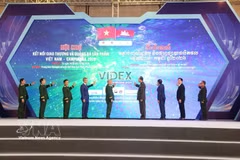
Representatives of the organising committee at the opening ceremony of the fair (Photo: VNA)

Vietnam-Cambodia trade expo promotes bilateral economic cooperation

The Vietnam-Cambodia Business Networking and Product Promotion Exposition has become a key trade promotion event, creating business and investment opportunities while strengthening mutual understanding and trust between the two countries’ armies, people and enterprises.