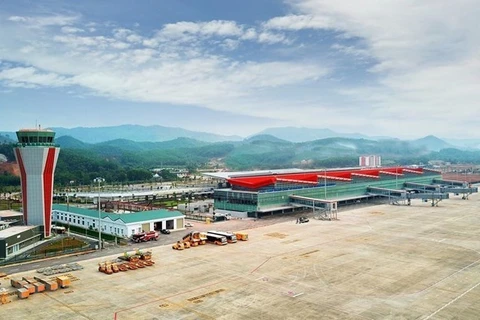
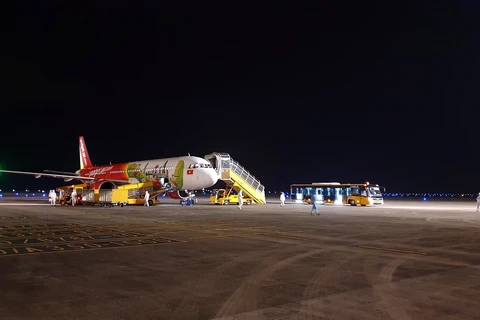
Vietnam is set to have 26 by 2030, including 13 international airports, and the number could reach 30 by 2050, with 15 international airports. (Photo: VNA)
 Hanoi (VNA) - Vietnam’s airport development planning should give top priority to key projects with stringent standards put in place for project approval, State management agencies and aviation insiders have said.
According to a draft report on the national airport network development master plan during 2021-2030 and vision to 2050 from the Ministry of Transport, Vietnam has nine international and 13 domestic airports at present. It is set to have 26 by 2030, including 13 international airports, and the number could reach 30 by 2050, with 15 international airports.
Total investment for planned airports in 2020-2030 is estimated at about 365.1 trillion VND (15.87 billion USD), with an additional 866.36 trillion VND needed for 2030-2050. The capital will come from official development assistance (ODA), the State budget and loans from financial institutions and public-private partnership projects.
A representative from Transport Engineering Design Inc. (TEDI), which built the draft master plan, said the necessity and feasibility of any new airport should be decided based upon six major criteria: travel demand, socio-economic development, national defence-security, natural conditions, emergency relief, and distance from main urban areas and nearby airports.
Research shows that 75 percent of the global population are able to access an airport within a radius of 100 km. Vietnam will have 98 percent of its population able to do so by 2030.
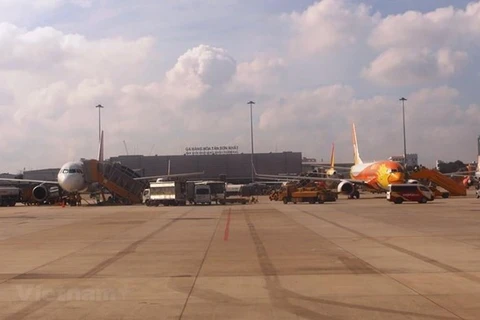
The TEDI representative said Vietnam’s airports are regularly distributed nationwide but there are no airports within a radius of 100 km in the northwestern and Central Highlands regions, adding that some existing airports fail to reach design capacity while others face serious overcrowding.
Such issues need to be considered carefully, the representative emphasised.
According to the President of the Vietnam Union of Science and Technology Associations, Phan Xuan Dung, Vietnam’s aviation sector has developed in the double digits over the last ten years, averaging 16 percent, and Vietnam is one of the fastest-growing aviation markets in Asia.
The Ministry of Transport said demand for aviation transport by 2030 will be 276 million passengers and 4 million tonnes of cargo. Those figures will increase to 650 million and 16 million tonnes by 2050.
Dung said the airport network development plan needs to take into account socio-economic development and should be penned in accordance with national security purposes.
According to Bui Van Vo from the Vietnam Association of Aviation Science and Technology, the draft planning only focuses on the development of airports serving commercial flights and overlooks general and specialised aviation activities.
Since most airports in the country serve both civil and military purposes, it is necessary to assess military flight operations in the planning, Vo said, adding that planning needs to specify which airports will be civil airports while adding a specialised airport system.
Meanwhile, deputy head of the Central Institute for Economic Management Tran Kim Chung said that national airport development planning should go with development planning for other means of transport.
Pham Bich San from the Institute for Development Research and Consultation said that, over the next decade, Vietnam should focus on building key airports that have good operations and also improve road connectivity to airports, helping to improve the efficiency of public investment./.
| Certain localities have proposed developing airports in 2021-2030 when giving feedback to the draft master plan, including Ninh Binh, Ha Tinh, Binh Phuoc, Cao Bang, and Ha Giang. Earlier, the Bac Giang Department of Transport proposed developing the existing Kep Military Airport into a dual-purpose military and civil airport to attract investment. Meanwhile, Ninh Thuan province wants its Thanh Son Airport to cater to civil flights along with military flights Others have proposed converting existing domestic airports into international airports, including Lien Khuong Airport in Da Lat city, Buon Ma Thuot in Dak Lak province, Phu Cat in Binh Dinh province, and Tuy Hoa in Phu Yen province. |