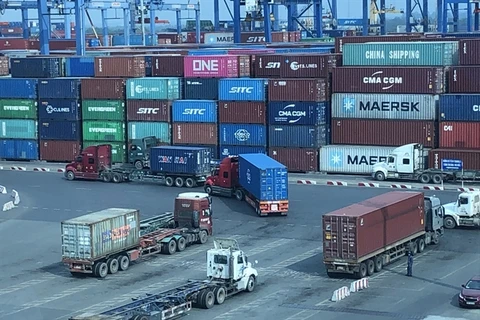
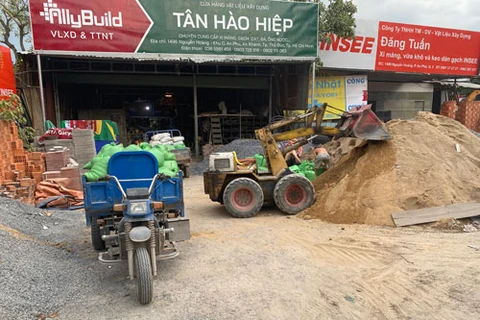
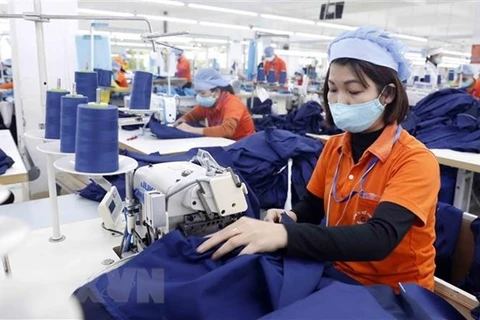
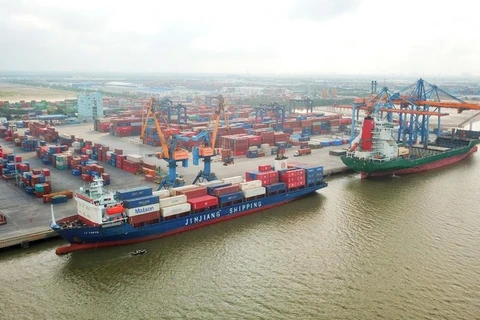
Illustrative image (Photo: VNA)
 The conflict has disrupted the supply of fuels and materials to Vietnam, affecting businesses’ operations, they added.
Other countries around the world have banned or restricted the export of food and farm produce until the end of 2022, of which the conflict is the main cause.
India, the world’s second-largest wheat producer, has banned wheat exports to ensure food security for its 1.4 billion people, leading to a surge in the world’s wheat prices globally.
Russia and Ukraine are among the biggest exporters of the grain, accounting for 29 percent of global exports, according to the World Bank. A western embargo means Russia is unable to export wheat.
Indonesia also halted palm oil exports.
Malaysia will halt the export of chicken from June 1 as it faces a supply shortage and rising prices.
Malaysian Prime Minister Ismail Sabri Yaakob said on May 23 the chicken export ban would be effective until production and prices stabilise.
The country used to export 3.6 million tonnes of chicken a month.
In this context, most businesses in Vietnam, especially in the food and food processing industry, are directly affected by the hike in prices of food and raw materials, petrol and logistics.
On May 23, domestic gasoline prices jumped to an eight-year high. The price of RON92 gasoline increased to 29,639 VND from 28,959 VND per litre, and the price of RON95 gasoline increased to 30,653 VND from 29,983 VND per litre.
Tran Vu Khanh, Director of Hiep Quang Company which imports wheat, corn and soybeans, said the price of these raw materials has increased by 30–40 percent since the conflict began, as they are the major wheat suppliers of the world.
Though Vietnam is currently not facing a shortage of wheat supply, as most wheat imports come from Australia, the US and Canada, the price has surged.
The price of ordinary wheat is now 510 USD per tonne, up 160 USD since the beginning of February, pushing the price of bread and instant noodles.
The country’s animal feed industry, which imports 90 percent of its raw materials, has also been affected by the price of animal feed increase, according to Khánh.
While the price of raw materials typically accounts for about 80-85 percent of the production cost, the price of animal feed already increased from 16 to 36 percent in the 2020-21 period, he said.
The livestock industry this year is expected to grow negatively or by only 1–2 percent due to the high input cost.
Looking for a way out
Experts have recommended that Vietnamese companies be prepared to deal with any ramifications of the ongoing conflict. Adding diversification to both export and import markets would be a key aspect of the preparation.
Speaking at a recent conference on the impacts of the crisis on Vietnamese firms, Dr Tran Quoc Hung, Director of the US-based Institute of International Finance, said the disruptions to agricultural activities of two major exporters of staple commodities could seriously escalate food insecurity globally.
A representative of Acecook Vietnam Company said the company would continue to monitor the global market and work closely with suppliers to respond to the supply disruptions.
Bui Phuong Mai, Chairwoman of the Board of Directors of the Vietnam Food Industry Joint Stock Company (Vifon), said the company would cut costs and increase labour productivity to offset the damage caused by skyrocketing raw material prices.
The hike in prices of raw materials in the world has directly affected food production enterprises, especially those which use a lot of flour and cooking oil.
“We have to buy raw materials, especially flour and cooking oil, at a very high price, which has increased by 30 -50 percent.”
Nguyen Ngoc Luan, General Director of Global Trade Link Co, Ltd, said his company wanted to sign a long-term contract to ensure stable prices but the suppliers have refused for fear of possible fluctuations in prices.
Ngo Tran Ngoc Quoc, Chairman of the Young Entrepreneurs Association of Tây Ninh Province, said businesses are now also struggling to repay social insurance, corporate income tax and VAT, which they were allowed to suspend during the lockdown period under Directive 16.
He recommended the Government continue to offer support to help enterprises overcome the challenges, he recommended.
According to the Food and Agriculture Organisation, international food and feed prices could rise by up to 20 percent as a result of the conflict.
The conflict has seriously impacted the commodity markets around the world, which could keep prices at historically high levels through the end of 2024, according to the World Bank’s latest Commodity Markets Outlook released on April 26.
Opportunity for Vietnam
However, a ban on export of items such as poultry and rice by some countries has brought great opportunities for Vietnamese exporters since food supply is abundant in the country.
Vietnam has no concerns related to food security and is also one of the world's leading food exporters.
Le Xuan Huy, Deputy General Director of the CP Livestock Joint Stock Company, said the company has increased the number of pigs it raises by 5-10 percent a year and could supply 19,000 - 20,000 a day to the market. This is more than enough to meet domestic demand, and a part could be exported, he said.
Truong Kien Tho, Deputy Director of An Giang province’s Department of Agriculture and Rural Development, said the province’s annual rice output is huge at over four million tonnes, enough for the domestic market as well as exports.
Le Quoc Dien, his counterpart in Dong Thap, said the rice production target for the year is over 3.2 million tonnes, and the province exported over 136,000 tonnes for 71.2 million USD in the first five months of this year.
With many countries restricting exports, causing prices to rise rapidly, Vietnam needs to take advantage and penetrate deeper into the world's food supply chain, experts said./.
VNA