Russia exports one more batch of pork to Vietnam

Up to 69.5 tonnes of frozen pork and by-products from Tomsk province of Russia have been exported to Vietnam, meeting the sanitary and veterinary regulations of the Eurasian Economic Union (EAEU) and the veterinary requirements of Vietnam.

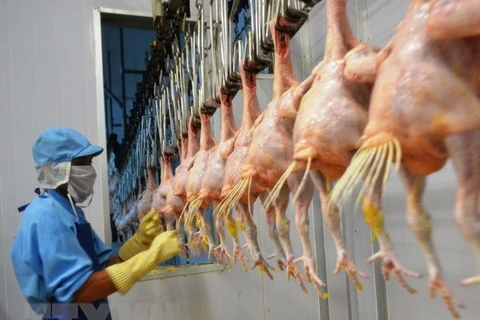
Illustrative image (Photo: VNA)

Hanoi (VNA) - Up to 69.5 tonnes of frozen pork and by-products from Tomsk province of Russia have been exported to Vietnam, meeting the sanitary and veterinary regulations of the Eurasian Economic Union (EAEU) and the veterinary requirements of Vietnam.

The Federal Service for Veterinary and Phytosanitary Supervision (Rosselkhoznadzor), which inspected the batch, stated that delivery is carried out in three modes of transportation—road, rail, and sea—accompanied by veterinary certificates agreed upon with the importing country.

So far this year, 192.8 tonnes of pork from Tomsk have been exported to Vietnam. Last year, the province shipped 77 tonnes of the meat to Vietnam.

Meanwhile, on July 29, the Ministry of Agriculture and Food of Belarus announced that businesses in the country will conduct inspections to export beef to Vietnam.

Representatives from the Department of Animal Health under the Ministry of Agriculture and Rural Development of Vietnam are currently visiting Belarus to conduct a veterinary inspection of beef production from July 29 - August 2.

Vietnamese experts will visit several companies in Minsk, Brest, and Grodno provinces to look into the production process and assess the quality control system as well as the safety of the products./.

VNA

See more

Promoting stronger foreign direct investment (FDI) inflows is considered an important solution to help drive economic growth. (Photo: VNA)

Vietnam emerges as hub for high-quality FDI

Vietnam is gradually becoming a strategic destination for high-quality global FDI. Investment flows are increasingly directed toward sectors such as high-tech manufacturing, electronics, digital infrastructure, modern logistics, and industries that are closely linked to global supply chains.

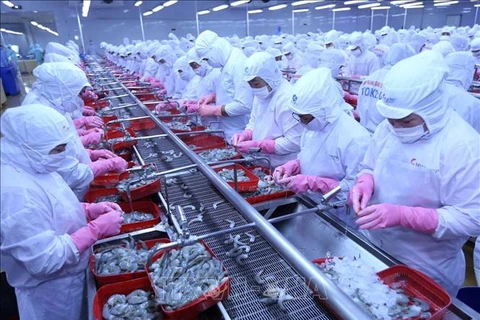
Shrimp processing for export at Huy Nam company, An Giang province. (Photo: VNA)

Fisheries sector proactively adjusts to emerging challenges

In addition to food safety regulations, the US continues to closely monitor the origin of imported seafood through the Seafood Import Monitoring Programme (SIMP) administered by the National Oceanic and Atmospheric Administration (NOAA). Requirements linked to the Marine Mammal Protection Act (MMPA) are also a major concern for businesses.

Pham Van Cong, Chairman of the Vietnam Cashew Association, speaks in a conference reviewing the industry’s 2025 performance and deploying procurement plans for 2026 in HCM City on March 13. (Photo: VNA)

Cashew sector braces for challenges in 2026 amid global uncertainties

Vietnam’s cashew industry recorded export turnover of about 5.5 billion USD in 2025, the highest level ever. He noted that the result reflects the industry’s remarkable development, dynamism and timely adaptation to complex and unpredictable challenges both domestically and globally.

An Phát Complex Industrial Park in Hai Phong City is one of the eco-friendly industrial parks. (Photo: VNA)

Green industrial parks become new magnet for FDI

Statistics show that about 80% of FDI enterprises prioritise investing in industrial parks with green energy infrastructure, reflecting a growing shift in investment preferences amid tightening global environmental standards.

Wood panel production at the Thuan An Wood JSC in Ho Chi Minh City (Photo: VNA)

Vietnamese businesses ride wave of investment in green manufacturing

Recent developments in private investment show that as confidence in the private sector has grown and is a key driver of economic development, investors are strengthening support for enterprises not only through capital but also management expertise and market connectivity.

Officers and soldiers of Son Tra Border Guard Station, Da Nang City Border Guard Command tell local fishermen about IUU fishing. (Photo: VNA)

Fishing solidarity groups help Vietnam with IUU “yellow card” warning removal

Over the years, coastal authorities in Da Nang have intensified efforts to educate fishermen about regulations, particularly the need to avoid illegal fishing in foreign waters. Local administrations and competent forces have also strengthened vessel registration and inspection procedures, installed vessel monitoring systems and ensured transparent declarations of catches at ports.