Sai Gon river bus fails to attract regular commuters

The Sai Gon river bus, launched with fanfare two years ago in Ho Chi Minh City, has not proved to be popular with commuters.
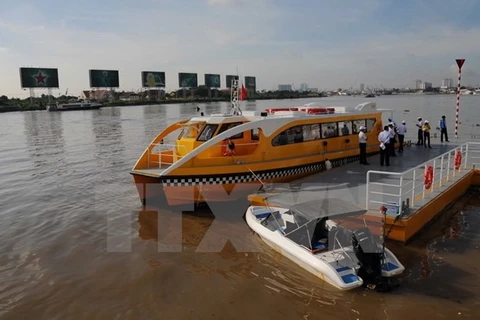
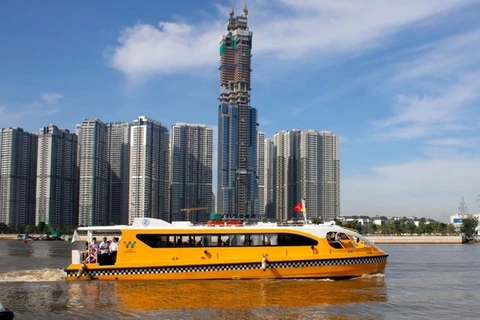
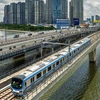
Sai Gon river bus fails to attract regular commuters ảnh 1Passengers on a river bus on the Sai Gon River. (Photo: VNA)

HCM City (VNS/VNA)- The Sai Gon river bus, launched with fanfare two years ago in Ho Chi MinhCity, has not proved to be popular with commuters.

Mai Thi Xuan Trang and herfriend from Khanh Hoa province visited HCM City and took the river bus to seethe city from a different perspective.

"I think many visitorscoming to Sai Gon want to experience the river bus for sightseeing. Butunfortunately the services on the boat and at the stations are nothing specialand so it is difficult to get visitors to return," she told Tuoi tre (Youth) newspaper.

Pham Van Lam of Linh Dong wardof Thu Duc district, who works in district 1 and is a regular user of the boatsbetween Bach Dang wharf in district 1 and Linh Dong, said: "Taking theriver bus helps me stay away from the traffic congestion while enjoying theearly morning air. Many people choose to go by boat on a regular basis.”

But the services from Linh Dongin the morning are only at 6:30am and 7am and not until 9am again, and this isinconvenient for many office workers, he said.

Other drawbacks are that inmany places the river bus station is far away from residential areas and thereare no buses linking them and most stations lack parking space for passengers’vehicles, he said, adding that is why the service is failing to attract moreusers.

The service, launched inNovember 2017, was expected to become a popular option considering the severecongestion on roads.

According to regular commuters,many 75-seat boats leave stations with only 10 passengers on board on weekdays.

Nguyen Kim Toan, Director of ThuongNhat Co., Ltd., which operates the service, said route No.1 (Bach Dang - Linh Dongroute through districts 2 and Binh Thanh) served 291,000 passengers last year.

On average, there are 22 tripson the route each day and 880 passengers, but during weekends the boats operateat 95 percent capacity, he said.

The number of passengersincreased from the previous year though not significantly, he said.

According to an official of themunicipal Department of Transport, many measures are planned to attract morepassengers.

The department would work withbus transport operators to ensure some bus routes touch the river bus stations,he said.

It also plans to add serviceson shore and on board and build parking spaces near wharfs, he said.

The department is collaboratingwith relevant agencies to acquire land for building more river bus stations.

Toan said his company plans tolaunch the 10km route No.2 from Bach Dang to Lo Gom in district 8 by the end ofthis year.  

According to the department,construction work related to two infrastructure projects had prevented thelaunch of the second route, but the works are likely to be finished thisyear./.
VNA

See more

Hanoi has over 1,100 libraries and numerous cultural and educational spaces in the community. (Photo: VNA)

Spreading value of books, building foundations of learning society

Each weekend in Hanoi, the “Reading with Children” Club brings together students to practise reading, explore language, and express ideas creatively. According to founder of the club Nguyen Thuy Anh, the club encourages children to reflect, retell stories, and connect books with personal experiences, making reading more vivid and meaningful.

Automated ticketing system is used on the urban railway Cat Linh-Ha Dong line in Hanoi. (Photo: VNA)

Digital transformation powers Hanoi metro expansion

Beyond convenience, stable fares and the elimination of fuel, parking and maintenance costs have made urban rail increasingly attractive. The growing preference for metro travel is also contributing to a greener, more modern urban lifestyle.

Delegates cut the ribbon to inaugurate the operation of electric bus route No. 43. (Photo: VNA)

Hanoi accelerates shift to green buses, targets 100% by 2030

In the 2027–2030 period, the city will accelerate the transition towards the complete phase-out of fossil fuel-powered buses. The share of electric and green energy-fueled buses is projected to reach 79–89% by 2029 and 100% by 2030.

At the second session of the Ho Chi Minh City People’s Council (Photo: VNA)

Ho Chi Minh City greenlights central square, administrative centre in Thu Thiem

The new central city square and administrative centre will create a modern, centralised political-administrative complex for Ho Chi Minh City, designed to house around 8,000 officials, civil servants, and employees. It will also handle daily traffic of 1,500- 2,000 citizens and business representatives through a unified one-stop-shop administrative service system.

A working session at the job fair (Photo: VNA)

Vietnamese students flock to Seoul Job Fair 2026

The second annual Job Fair 2026 was held for Vietnamese students in the Republic of Korea. Organisers pitched it as a straight-up bridge between eager students and bosses hungry for young talent who can actually handle multicultural workplaces.

Defendants at the court (Photo: VNA)

Ho Chi Minh City court opens trial over Agribank lending scandal

The investigation revealed that multiple credit files were incomplete or riddled with inaccurate information, while some pledged assets lacked proper legal standing yet were accepted and grossly overvalued. As a result, the loans became high-risk and largely unrecoverable, leading to losses surpassing 1 trillion VND.

Hanoi introduces 53 electric buses from April 18 (Photo: VNA)

Hanoi to add 53 electric buses from April 18

According to the plan, all buses operating within Ring Road 1 will use green energy by July 1, 2026. The requirement will expand to Ring Road 2 by January 1, 2028, and to Ring Road 3 by 2030.

Illustrative image (Photo: VNA)

National, local traffic safety committees to be dissolved from June 1

Under the dicision, ministries and ministerial-level agencies will assume responsibility for tasks previously performed by the committee, in line with their mandates under the Law on Government Organisation, the Law on Road Traffic Order and Safety, the Law on Roads and other relevant legal frameworks, ensuring that traffic safety and order are maintained without disrupiton.