Satellite hospital project helps reduce hospital overload

A satellite hospital project has helped reduce patient overloads at hospitals, especially at central-level facilities in Hanoi and Ho Chi Minh City, in its five years of implementation, heard a conference in Hanoi on November 15.
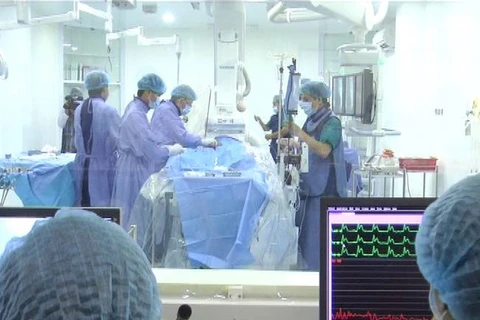
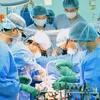
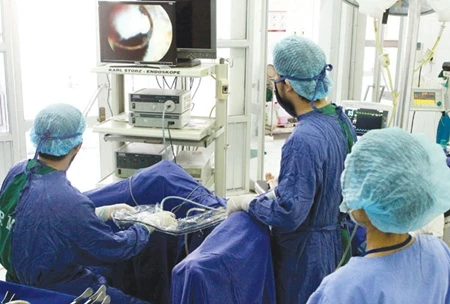
Satellite hospital project helps reduce hospital overload ảnh 1Doctors from the E hospital teach cardiovascular techniques to their colleagues from a satellite hospital.(Source: nhandan.com.vn)

Hanoi (VNA)
- A satellite hospitalproject has helped reduce patient overloads at hospitals, especially at central-level facilitiesin Hanoi and Ho Chi Minh City, in its five years of implementation, heard aconference in Hanoi on November 15.

Speaking at the event, Minster of Health NguyenThi Kim Tien said the project has contributed to improving ability on provisionof medical services at satellite hospitals and strengthening patients’confidence in hospitals outside city centres. This in turn increases patientvisits and treatment rates at satellite hospitals.

“The project helps reduce the number of patientsbeing sent from satellite hospitals to core hospitals for treatment and willease overcrowding at core hospitals,” said Tien.

She said the satellite hospital model has beendeveloped nationwide, not only in provincial and general hospitals but also atthe district-level like the general hospitals of Moc Chau (Son La province), MuongKhuong (Lao Cai province) and Tam Duong Health Centre (Lai Chau province).

“Satellite hospitals are not only public medicalfacilities but also non-State hospitals,” said Tien. “In HCM City, somesatellite hospitals attracted many patients visiting for examination andtreatment.”

“Professional skills of doctors at provincialand district hospitals were improved,” said Tien. “Doctors from core andsatellite hospitals held consultations though telemedicine, meaning patientswith complicated conditions were handled right at the district level, thusreducing accident and fatality rates.”

She added that doctors of central hospitalswould have more time to do scientific research and develop modern techniques ifprofessional skills of their colleagues at provincial and district levels wereimproved.

According to the Health Ministry’s MedicalService Administration (MSA) statistics, the project has developed 23 corehospitals with 127 satellite hospitals across the country after five years ofimplementation. Special priorities have been given to 10 professionalfields that experience serious patient overcrowding, namely cardiovascularcare, surgery, cancer treatment, obstetrics and pediatrics, emergency responseand first aid, clinical hematology, heart and injury surgery. 

Launched in 2013 as part of the Ministry’s planto reduce hospital overload, the project aimed to improve satellite hospitals’examination and treatment ability through training and by upgradinginfrastructure, facilities and telemedicine capabilities.

At the event, core and satellite hospitalsshared lessons and discussed measures to handle shortcomings.

MSA Director Luong Ngoc Khue said the rate ofpatients being sent to central hospitals for treatment has reduced in 85 percentof satellite hospitals and that patient congestion at central hospitals hasalso declined, especially at facilities in Hanoi and HCM City. 

Five years after implementation, 23 corehospitals have transferred nearly 2,000 medical techniques to satellitehospitals. Many complicated techniques were transferred successfully such asliver surgery from the E hospital and digestion and urinary cancer surgeriesfrom the K (Cancer) hospital, according to Khue.

He said satellite hospitals must be equippedwith medical facilities and medicine that meets transferred techniques. Somehospitals were short of skilled workers, especially doctors.

“On-site training and technique transferenceshould be strengthened along with after-training supervision in efforts totransfer modern surgery techniques,” he noted.

“Patient congestion was reduced at central hearthospitals like the National Heart Hospital and the Hanoi Heart Hospital and inother fields like cancer and tumour treatment, pediatrics, obstetrics, injuriesand orthopedics,” Khue added. - VNA
VNA
See more

At the launch of the 14th national red journey blood donation campaign in Ho Chi Minh City on June 11. (Photo: VNA)

National Red Journey blood donation campaign 2026 launched

Addressing the opening ceremony, Associate Professor, Dr. Nguyen Ha Thanh, Director of the NIHBT and head of the campaign’s organising committee, said the Red Journey is a symbol of dedication, compassion and social responsibility, and the campaign carries the hopes of millions of voluntary blood donors and helps bring life-saving opportunities to patients in urgent need of blood transfusions.

Da Nang will roll out a citywide health screening and periodic health check-up programme for all residents on July 1. (Illustrative photo: VNA)

Da Nang to launch citywide health screening programme on July 1

Director of the municipal Department of Health Tran Thanh Thuy said the city has developed a comprehensive plan for conducting free periodic health examinations and screening services throughout 2026, and prepared the necessary human resources, facilities and digital infrastructure to ensure effective implementation.

Students play football during a break atthe Hai Xuan Secondary School in Ninh Binh province . (Photo: VNA)

Vietnam targets annual health screening for all students by 2030

By 2030, all educational institutions are expected to have separate medical rooms equipped with essential medicines and healthcare equipment, adequate access to safe drinking water and sanitation facilities, and school meal services that comply with food safety regulations.

Staff from the Ho Chi Minh City First Aid Centre demonstrate first aid skills. (Photo: VNA)

Vietnam, France cooperate to build community first-aid network

The agreement focuses on establishing hundreds of first-aid stations across Long Chau’s pharmacy and vaccination network, standardising first-aid training for medical and pharmaceutical students, and expanding community health education activities nationwide.

In Hanoi, the temperature recorded in Lang Ha at 1 pm on May 26 reached 40 degrees Celsius. (Photo: VNA)

Proactive response needed to cope with extreme weather: Experts

Health experts warned that prolonged heat exposure could cause heatstroke, heat exhaustion and other serious health conditions. High-risk groups include the elderly, children, pregnant women, people working or exercising outdoors for long periods, and those suffering from chronic illnesses such as hypertension, chronic obstructive pulmonary disease, asthma and diabetes.

Ho Chi Minh City plans over 95 million USD for universal health screenings in 2026. (Illustrative photo: VNA)

Ho Chi Minh City earmarks over 95 million USD for universal health screenings in 2026

Ho Chi Minh City's free health examination programme, set to begin on May 25, is carried out at qualified healthcare facilities, mobile clinics at schools, factories and businesses, community-based screening sites arranged by local authorities, as well as through home visits to elderly residents, people living alone and those with limited mobility.

Healthcare workers are employed in an isolation and treatment area for patients infected with the Ebola virus in Entebbe, Uganda. (Photo: Xinhua/VNA)

Health Ministry calls for stronger preparedness against Ebola

Medical facilities were instructed to strengthen surveillance, especially for individuals who have travelled to or returned from outbreak-hit countries or areas within the previous 21 days. They were also asked to strictly enforce infection control measures, including protective procedures, screening, triage and isolation protocols for suspected or confirmed Ebola cases.

Party General Secretary and State President To Lam speaks at a working session Party Committee of the Ministry of Health on Vietnamese traditional medicine in Hanoi on May 20 (Photo: VNA)

Top leader calls for historic transformation of traditional medicine

Highlighting strategic orientations for the sector, Party General Secretary and State President To Lam requested that traditional medicine be incorporated into the country’s overall development strategy in the new era. He called for the building of a national traditional medicine ecosystem linked to the development of the health economy and national soft power.

Deputy Prime Minister Pham Thi Thanh Tra speaks at the programme “Organ and Tissue Donation Day May 20 – Giving is Forever”. (Photo: VNA)

Deputy PM calls for stronger organ donation movement to save more lives

Vietnam has gradually mastered some of the world’s most complex transplant techniques since the country’s first successful kidney transplant in 1992. As of 2025, Vietnam had conducted 10,878 organ transplants, with 34 licensed hospitals now capable of performing transplant procedures.

The meeting between the delegation from Military Hospital 175 and Mayor of Leipzig Burkhard Jung at Leipzig City Hall (Photo: VNA)

Healthcare cooperation shines in Vietnam – Germany ties

The partnership between Military Hospital 175 and medical institutions in Leipzig has been recognised as a highlight of Vietnam – Germany healthcare cooperation, as well as of the sister-city relationship between Ho Chi Minh City and Leipzig.