Scientists team up to eradicate tuberculosis

A team of 23 scientists from different hospitals and institutes has conducted a massive scientific research project to help control tuberculosis (TB).
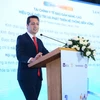
Scientists team up to eradicate tuberculosis ảnh 1President Nguyen Xuan Phuc (right, first row) gives the Hồ Chí Minh Award to Associate Professor Nguyen Viet Nhung.(Photo suckhoedoisong.vn)
Hanoi (VNS/VNA) - A team of 23 scientists from different hospitalsand institutes has conducted a massive scientific research project to helpcontrol tuberculosis (TB).

They have saved the lives of thousands who suffered from multidrug-resistantand super-multidrug-resistant TB patients.

The project on research and application of advanced techniques in respiratorydiseases diagnosis and treatment in Vietnam, by associate professor Nguyen VietNhung, director of the National Lung Hospital and 22 co-authors received the HoChi Minh award.

The project includes 23 sub-researches.

The research results have been applied over three years to solve very difficultrespiratory problems in Vietnam.

They applied advanced techniques for TB screening, early diagnosis anddetection in the community.

It helped treat TB 44% faster than earlier methods.

"It is proof of the feasibility of the goal of ending TB globally,"Nhung said.

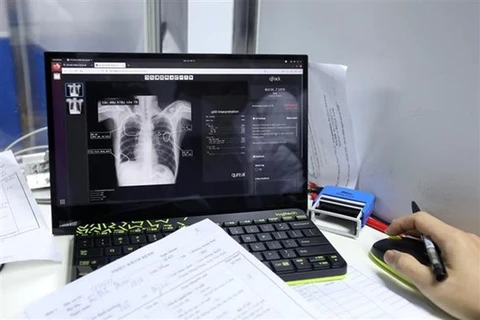
The project's results have inspired the global TB community with a breakthrough2X (X-ray and Xpert) screening strategy to improve TB detection.

The 2X screening strategy was implemented quickly due to the COVID-19 pandemic,but it diagnosed and further treated 2,854 TB patients in the community.

The proportion of TB patients detected is 1,248 per 100,000 people, much higherthan the estimated national rate of 322 per 100,000.

Nhung said that dozens of studies drew up the model over many years. It gave Vietnamthe position of a leading country and proposed to the World Health Organization(WHO) strategic advisory council to spread the model on a global scale.

The successful application of advanced techniques for screening, earlydiagnosis and development of new TB treatment has reduced the burden of TB in Vietnamwith a reduction of 4.5% per year compared to 1.5% per year globally.

The death rate in 2020 has decreased by 34% compared to 2015.

The reduction of TB disease in the past ten years has saved 8.7 trillion VND (354.2million USD), equivalent to preventing 284,000 new TB patients if no preventivemeasures were taken.

First time

Associate professor Nhung said the project's speciality was that it establisheda lot of "first times".

The project was conducted all over the country, with hundreds of thousands ofpeople joining from central to local levels. It was the first time they carriedout research with a large sample scale of nearly 100,000 people.

For the first time in Vietnam, after 40 years of TB treatment history, thegroup has successfully researched and set up a four-month TB treatment period,which was an important step to ending TB globally.

Shortening the treatment time to only two-thirds of the current period reducedthe risk of serious side effects and improved treatment quality.

From this project, said Nhung, for the first time in Vietnam, a lung lobetransplant from a live donor was successful with favourable anti-rejectiontreatment results.

Even in countries with a developed medical system, monitoring and treatingtransplant rejection complications after lung transplantation can be difficult.Despite this, more than four years after the lung transplant, the patient'shealth is still stable.

"The research's success has put Vietnam on the world system of a lungtransplant, bringing our country's respiratory technology to a new level. Lungtransplants can be applied in many hospitals nationwide," said Nhung.

During the peak period of the H5N1 outbreak in 2004-06, thanks to comprehensivediagnostic, treatment and prevention procedures, Vietnam successfullycontrolled H5N1 disease with a mortality rate of 39% compared to 61% in theworld.

The results of the studies have supplied advice to the Government and theMinistry of Health to issue effective health policies, providing patients witha comprehensive lung health care system from the central to the grassrootslevel.

It plans strategies and national action plans for ending TB.

The work has made important contribution to promoting the end of TB in Vietnam,which WHO and the international medical community highly appreciate./.
VNA
See more

Doctors from Cho Ray Hospital conduct preventive health screenings for residents at the Cho Lon ward health station. (Photo: VNA)

Ho Chi Minh City targets completion of universal health check-ups by December 15

According to the municipal Department of Health, as of July 20, a total of 732,873 residents had undergone periodic check-ups and had electronic health records established. The figure reflects encouraging initial results from the citywide campaign launched by the department and underscores local authorities' commitment to implementing one of the largest community healthcare programmes ever undertaken in the southern metropolis.

Medical staff at Cho Ray Hospital in Ho Chi Minh City cares for and treat the victim. (Photo published by VNA)

Last survivor of Phu Quoc boat capsize shows signs of recovery

The health condition of the last patient receiving treatment following the deadly boat capsize off the Phu Quoc special one in An Giang province has shown positive signs of improvement after three more days of intensive care, Cho Ray Hospital in Ho Chi Minh City said on July 16.

The number of foreign tourists coming to Ho Chi Minh City for travel combined with medical check-ups is increasing. (Photo: VNA)

Vietnam looks to unlock medical tourism potential with national strategy

The draft strategy aims to position Vietnam as a trusted healthcare destination in Southeast Asia by 2030 and eventually among Asia's leading medical tourism hubs. The plan marks a shift from viewing medical tourism as an untapped opportunity to making it a national development priority.

Delegates at the conference. (Photo: VNA)

Vietnam to produce first homegrown next-generation vaccines from 2028

Under the agreement, Sanofi will transfer technology to VNVC to manufacture selected high-demand vaccines for children and adults at VNVC Vaccine and Bioproduct Plant. The first next-generation vaccines produced in Vietnam are expected to roll off production lines in 2028.

Eric and Alysha joyfully welcome their baby through Mini IVF after more than 10 years of waiting. (Photo: Hong Ngoc Phuc Truong Minh General Hospital)

Vietnam - a destination for journeys to parenthood

An increasing number of international families are choosing Vietnam for infertility treatment, embarking on journeys to parenthood that transcend geographical distance and differences in nationality.

Prime Minister Le Minh Hung delivers remarks at the inauguration ceremony for Viet Duc University Hospital's second campus in Ninh Binh province. (Photo: VNA)

PM urges modern restructuring of healthcare network

The PM stressed that throughout the country’s development process, people have consistently been regarded as the centre, the driving force, the objective and the most important resource for national development. Sustainable and rapid development requires not only a healthy, knowledgeable and skilled population but also a modern, equitable, efficient, sustainable and accessible healthcare system.

Thu Duc General Hospital, with a capacity of 1,000 beds, was inaugurated and put into operation in April 2025 (Photo: VNA)

Ho Chi Minh City moves to expand robotic surgery to gateway hospitals

According to the municipal Department of Health, developing gateway hospitals is a key pillar of the city's strategy to establish a regional specialised healthcare system. The network is designed to permanently relieve overcrowding at major downtown hospitals while strengthening strong inter-regional emergency care and treatment network.

Doctors conduct health screenings for children in Tru Van Tho commune, Ho Chi Minh City. (Photo :VNA)

Ho Chi Minh City moves closer to universal health check-ups

Achieving universal health check-ups in 2026 will lay the foundation for a new healthcare model in which every resident has an electronic health record, receives regular screenings, benefits from lifelong health management and gains access to early intervention through primary healthcare services.