Sea-island tourism - future of tourism sector

Sea and island tourism has contributed greatly to Vietnam’s tourism sector, accounting for about 70 percent of the country’s total flow of visitors.
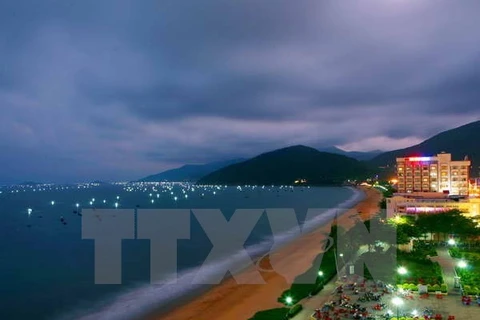
Sea-island tourism - future of tourism sector ảnh 1My Khe beach in Da Nang (Source: VNA)

Hanoi (VNA) - Sea and island tourism has contributed greatly toVietnam’s tourism sector, accounting for about 70 percent of the country’s totalflow of visitors.

Vietnam holds great sea and island potential  
                         
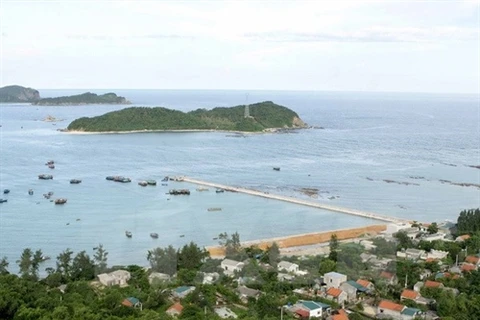
Vietnam boasts the greatest sea and island potential amongSoutheast Asian nations. It has a coastline of more than 3,260 kilometres and seawatersurface of over 1 million square kilometres, dotted with some 2,700 islands ofall shapes and sizes.

According to Dr. Du Van Toan, Head of the Division ofMarine Resources and Climate Change Research of the Vietnam Institute of Seasand Islands under the Vietnam Administration of Seas and Islands, the sea’seconomic value is not only about seafood and oil and gas resources. Forgenerations, the maritime environment has shaped Vietnam’s culture and beliefs,reflected in traditional festivals, practices, cuisine, folk art and more. Thenation’s history has also been shaped by sea-related economic achievements and nationalliberation victories.
Vietnam’s coastal areas have nurtured variousUNESCO-recognised world natural heritage sites and biosphere reserves,and natural preservation areas. This maritime value helps Vietnam leadthe region in sea-island tourism development, Dr. Du Van Toan told the VietnamNews Agency (VNA).

Deputy General Director of the Vietnam NationalAdministration of Tourism (VNAT) Ngo Hoai Chung said the Government’s master planfor tourism development by 2020 aims to develop seven key tourism zones, ofwhich five are sea-island related zones, reflecting the importance of sea and islandtourism.

Beyond tourism revenue, sea and island tourismcontributes to the country’s socio-economic development while consolidating nationaldefence and security. Developing tourism in sea-related areas boosts servicesand trading, thus creating jobs for local people. Further, tourism developmentis also the best way to get people to live and work in remote areas. Thecivilian presence of Vietnamese people in far-flung areas is the bestway to affirm and guard Vietnam’s sea and island sovereignty, Chung said.

Taking full advantage of the coastline

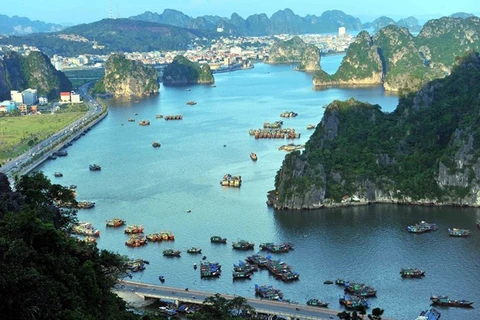
Along the country’s coastline, there are 125 tourism beaches.Among them, Da Nang beach was voted by Forbes magazine as one of the six mostcharming beaches on the earth. Ha Long Bay, the UNESCO-recognised world naturalheritage in Quang Ninh, and Nha Trang Bay in Khanh Hoa are also among theglobe’s most beautiful bays.

According to Chung, to fully exploit coastalpotential, priority has been given to developing three marine tourism hubs,namely Ha Long Bay, Da Nang, and Nha Trang Bay, serving high-end demand andMeetings, Incentives, Conferences, and Events (MICE). Investmenthas also been poured into suchpromising beaches as Sam Son in Thanh Hoa, Non Nuoc and My Khe in DaNang, Mui Ne in Binh Thuan, and Vung Tau in Ba Ria-Vung Tau.

Sea and island tourism has also drawn a large numberof foreign and domestic investors, accounting for 70 percent of the sector’stotal investment. The biggest projects, offering the most luxurioustourism products are in sea and island tourism. The top-notch InterContinental Da Nang SunPeninsula Resort with 200 rooms overlooking the sea has been named as the world’s Leading Luxury Resort at the World Travel Awards, and several otherregional crowns.

Sea-island tourism - future of tourism sector ảnh 22017 Fun Cup windsurfing competition in Binh Thuan (Source: VNA)

Vietnam’s sea waters and beaches host various nationaland international recreational activities and sport games, contributing tosea-related tourism development. The reputation of local special seafood anddishes is also buoyed by the development of tourism, such as Nuoc Mam (fishsauce) in Phu Quoc, Cha Muc (chopped squid) in Ha Long, single garlic in LySon, swallow’s nest in Nha Trang, and wild honey in Cat Ba.  

Developing sea-island tourism sustainably


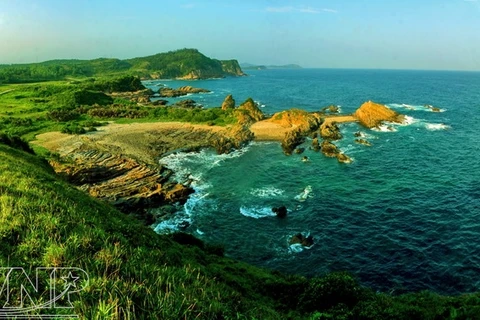
According to Dr. Du Van Toan from the VietnamInstitute of Seas and Islands, the climate varies region to region, resultingin high biological diversity. Vietnam’s coastal areas are home to dozens of ecosystems,including coral reefs, seagrass and mangrove forests.

With appropriate approaches to preservation andexploitation, these ecological values offer resources for ecotourism. However, nature-basedtourism development should respect nature, he underlined.

Dr. Duong Van Sau, Dean of the Faculty of CulturalTourism of the Hanoi University of Culture (HUC) said seaand island ecotourism is new but will be popular in Vietnam. He also attachedsignificance to the role of enterprises in developing the sector, saying thatwith the nation’s limited financial and sci-technological resources, strategicinvestors will help Vietnam enhance its sea and island tourism reputation.

Financially and technologically capable andexperienced firms will help fully exploit sea and island tourism potential, saidSau, suggesting the Government take caution in selecting investors, licensingprojects and products, even in allowing tourists to explore sea and island areas.

In order to realise Politburo Resolution No. 08 onmaking tourism a spearhead sector, the sector needs to ensure strong, steadyand sharp criteria. Vietnam’s tourism potential is strong, and the sector’space of development has so far been steady. The rest is being sharp, Dr. Saucommented, expressing his belief that sea and island tourism is what makes thesector sharp.-VNA
VNA
See more

A view of the opening ceremony of the Ban Flower (Bauhinia) Festival 2026 in Dien Bien province on March 8 evening. (Photo: VNA)

Government leader attends Ban Flower Festival 2026 in Dien Bien province

Themed “Hoa Ban – Khat vong Dien Bien,” the festival was a highlight of the Dien Bien Culture and Tourism Week running from March 6 – 12. The annual event celebrated the beauty of the iconic Ban flower and promoted the culture, history and tourism potential of the Northwestern region.

Khem beach in Phu Quoc island of An Giang province. (Photo: VNA)

Phu Quoc strengthens appeal as international arrivals soar in early 2026

Phu Quoc special zone is increasingly affirming its strong appeal to international visitors with impressive growth, positioning the “pearl island” as a standout destination in Southeast Asia and a direct competitor to renowned resort islands such as Bali in Indonesia and Phuket in Thailand.

Leaves of loc vung (Barringtonia acutangula tree) change colour beside Hoan Kiem Lake (Photo: VNA)

Hanoi named among world’s 50 most beautiful cities by Condé Nast Traveler

Hanoi’s appearance within the global media ecosystem of Condé Nast Traveler is expected to provide a significant boost to the city’s tourism appeal. Beyond enhancing its credibility as a travel destination, the recognition could also help attract high-end tourism services and encourage higher spending by international visitors.

Overseas Vietnamese in traditional ao dai explore Nguyen Hue flower street. (Photo: qdnd.vn)

Overseas Vietnamese amplify Ho Chi Minh City’s tourism appeal

With their understanding of both local traditions and international contexts, OVs are proving to be an effective “soft bridge” in promoting the city globally, contributing to rising international arrivals and reinforcing Ho Chi Minh City’s position as a creative, globally integrated and culturally rich urban tourism destination

Smoke rises following US and Israeli airstrikes on Tehran, Iran, on March 1. (Photo: XINHUA/VNA)

Hanoi urges suspension of tours to Middle East conflict zones

Vietnamese citizens have been advised not to travel to Iran, Israel, and other countries in the Middle East at present due to ongoing conflicts and complicated security developments, according to an official dispatch sent by the department to the above-mentioned units on March 3.

A representative of a Vietnamese enterprise shows it products at ITB Berlin 2026. (Photo: VNA)

Vietnamese firms promote tourism at ITB Berlin 2026

Vietnam’s exhibition area stands out with spacious and visually striking booths featuring businesses' most outstanding products as well as Vietnam's cultural icons such as cyclo models and traditional ao dai attire while a Vietnamese cuisine counter has drawn long queues of visitors.

International tourists are increasingly choosing Phu Quoc over giants like Bali and Phuket, driven by the freshness that Phu Quoc offers (Photo: Sun Group)

US media explains why Phu Quoc is becoming a tourism phenomenon

In 2025, international arrivals to Phu Quoc surged by nearly 60%, marking a new breakthrough cycle. As 2026 begins, during the Lunar New Year alone, the island welcomed nearly 366,000 visitors (a 30% increase year-on-year), with international guests accounting for nearly 93,000 (up 24.3%).

The crystal-clear waters and powdery white sands of Kem Beach are especially appealing to visitors (Photo: Fabl Belek)

Australian magazine hails Phu Quoc as a worthy alternative to Bali

In its list of “the best Bali alternatives worth exploring,” published by Australia’s leading travel site Escape, Phu Quoc is highlighted as a standout Southeast Asian destination, thanks to its appealing blend of reasonable costs, striking scenery, and diverse experiences.

Young locals explore Co Loa Citadel in digital space (Photo: nhandan.vn)

Hanoi festivals embrace digital tools to modernise management

During spring festival season 2026, Hanoi's major celebrations have aggressively adopted digital technologies across management, organisation, communications and promotion, presenting a more orderly and civilised image for traditional events.

The international cruise ship Adora Mediterranea arrives at Chan May Port, carrying 2,613 passengers and 732 crew members from Guangzhou, China, to Hue city. (Photo: VNA)

Unified promotion strategy sets stage for tourism expansion

Vietnam’s tourism brand is demonstrating strong momentum and robust recovery amid record-breaking international arrivals, driven not only by market demand but also by renewed thinking and innovative approaches to destination promotion and marketing.

Five-coloured sticky rice encapsulates the essence of the land and skies of Muong Lo in Lao Cai province. (Photo: VNA)

Vietnam positions cuisine as core national tourism product

To build a national culinary brand, Vietnam must align heritage, the food and beverage industry, and artisan standardisation—laying the groundwork for greater global presence and the elevation of Vietnamese cuisine as a tourism icon.

Hanoi offers free admission to 17 scenic and historical relic sites and cultural landmarks from February 20 to 22, 2026, triggering a surge in visitor numbers. (Photo: VNA)

Hanoi welcomes over 3.18 million visitors in February

International arrivals to Hanoi in February reached approximately 680,800 in February, marking a 16.2% increase compared to the same month in 2025, while domestic visitors totaled around 2.5 million, up 32.3%. Total tourism revenue was estimated at 12.39 trillion VND (476 million USD), a rise of 24.8%.