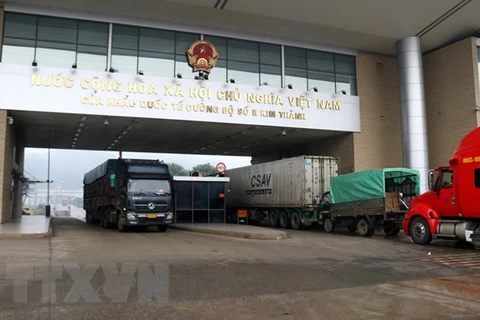
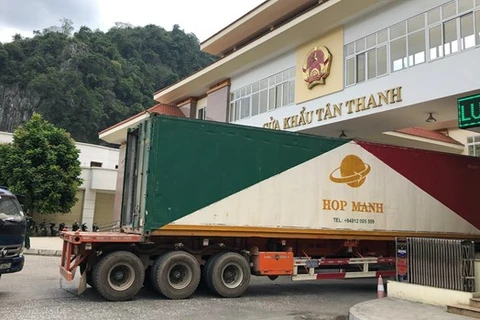
Goods are loaded at the Quy Nhon Port in the central province of Binh Dinh (Source: VNA)
 Hanoi (VNS/VNA) - The novel coronavirus has caused problems to most of the roadway logistics firms, however at sea it is having a mixed affect.
One of the country’s largest seaport logistics firms revealed the first quarter is often low due to the inclusion of the Tet (Lunar New Year) holiday.
A representative of Gemadept, which runs seven seaports from the north to the south, said a slow start to the year is factored into their forecasts.
“The import and export work is often lower in the Q1 after the long Tet holiday even with or without the epidemic,” the representative said.
“Normally we have annual contracts, so if the orders are not done in the first quarter, they must be done in the other quarters.”
The company says they are preparing for what they feel will be an increase in business once the outbreak has subsided.
She added: “Luckily, the epidemic did not happen in Q4 last year as that was the busiest duration of the year.”
However, unlike Gemadept, some firms from the biggest seaport corporation, the Vietnam National Shipping Lines (Vinalines), reported losses during the epidemic as they must skip Chinese ports to lower the risk of infection while many of their shipping partners and customers were in China.
According to Vinalines' website, during the epidemic, many of its companies lost up to 70 percent of the volume compared to the same period last year.
Sai Gon Securities Inc (SSI), said the exports to China will be badly influenced in Q1 and it would impact import and export activities.
SSI said as the third largest importer from Vietnam, China was still an important destination for the local agricultural and wood products as well as mobile phones and components and China was the country’s largest exporter of machinery, textile materials, footwear, plastics, chemicals, steel, mobile phones and components.
If the epidemic last long, SSI reported: “The import export turnover which is a driving force for the seaport industry will be hurt.”
Despite reaching the 516 billion USD turnover for the first time last year, the seaport logistics’ growth rate of 8.1 in 2019 was lower than the growth of 13 percent in 2018.
According to the Vietnam Maritime Administration, the total cargo volume in the first nine months of 2019 on all Vietnam's seaports increased by 12 percent over the same period, lower than 19 percent in 2018.
SSI also said though the seaport firms experienced growth on the local stock market at the end of 2019, most of them lost between 10 and 20 per cent of the value in the whole year.
Seeing not much change in the first quarter, however, Gemadept’s representative agreed with SSI, saying: “If the epidemic lasted longer, Gemadept or any of the seaport logistics firms cannot avoid being hurt.”/.
VNA