Settlement of banks’ bad debts faces hurdles

Though the bad debt ratio of the banking system has been reported to drop to below 3 percent of its outstanding loans, how to deal with the amount of bad debt is still a troublesome job.
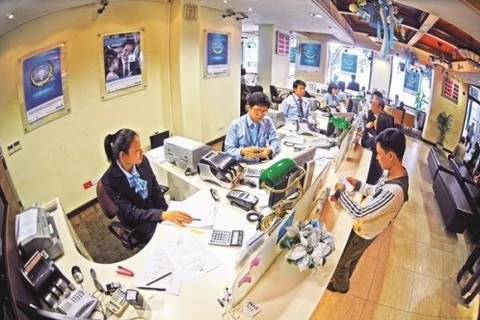
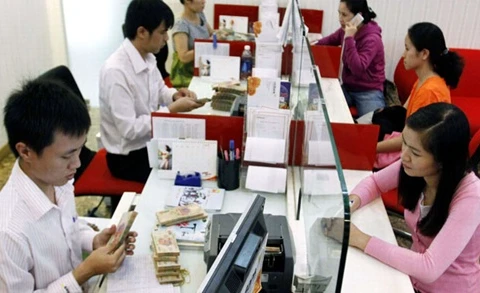
Settlement of banks’ bad debts faces hurdles ảnh 1Clients asking for loans at a branch of the Bank for Investment and Development of Vietnam in central Quang Tri province (Photo: VNA)

Hanoi (VNA) - Though the bad debt ratio of the banking system has been reported to drop to below 3 percent of its outstanding loans, how to deal with the amount of bad debt stuck at the Vietnam Asset Management Company (VAMC) is still a troublesome job.

From 2013 to June 18, 2016, VAMC bought 247 trillion VND (10.9 billion USD) worth of bad debt from credit institutions but only collected 31.2 trillion VND (1.38 billion USD).

Many international institutions and foreign investors came to VAMC thinking buying its bad debts would be a transparent and smooth process thanks to favourable legal procedures, the company’s chairman Nguyen Quoc Hung told VietnamPlus – an online newspaper of the Vietnam News Agency.

However, after studying legal documents related to debt trading and settlement, land ownership and enterprise restructuring, they realised VAMC lacks the rights to determine debt trading and collateral selling.

Therefore, they have yet to offer any deal, Hung said.

In fact, all bad debts sold to VAMC are overdue and almost impossible to collect on because they were guaranteed by property projects or assets that will only be completed in the future.

Under the Law on Real Estate Business, the transfer of property used as collateral is limited, thus the amount of bad debts settled was also small.

Le Thanh Trung, Deputy General Director of the Ho Chi Minh City Development Commercial Joint Stock Bank (HDBank), said the procedure of applying for land-use right certificates or transfer of land use rights and ownership of assets attached to land was very time-consuming and complicated.

In addition, the confiscation of collaterals had not been regulated in the Civil Code, causing difficulty in offloading non-performing loans, Hung said.

Article 301 of the Civil Code 2015 regulates that collaterals holders are obliged to provide the assets to creditors for settlement but, he said, if the debtors do not voluntarily hand over the collaterals, the only solution for creditors is to sue them - also a time-consuming procedure.

The head of a commercial bank who requested anonymity said that his bank had been struggling with a steel enterprise for four years to collect payment.

Trung emphased that it was necessary to provide a mechanism allowing creditors to the right to confiscate mortgages.

Tran Du Lich, a member of the National Monetary Policy Consultancy Council, told Tien Phong (Vanguard) newspaper that he had proposed to the Government that it review the laws related to bad debt handling, but so far there had not been any improvement.

Economist Nguyen Tri Hieu said that VAMC needed a separate law with specialised mechanism to deal with the large amount of bad debt stuck at the company because it was impossible to wait for amendments of each law.

Hung said despite the obstacles, the VAMC determined to buy 2 trillion VND worth of bad debts this year.

VAMC had also completed procedures of selecting five professional auction organisations and five price appraisal institutions to prepare for the upcoming auctions of collateral assets, he said.

He said he hoped the Government’s decree on debt trading businesses would have a positive effect on the debt trading market and help speed up the bad debt settlement process.-VNA
VNA

See more

Vice Chairman of the Hanoi People’s Committee hands over investment policy approval for Moscow House project in Hanoi to the Moscow authorities. (Photo published by VNA)

Hanoi, Russian localities step up cooperation in urban railways, technology

Secretary of the Hanoi Party Committee Tran Duc Thang and the delegation held talks with Moscow authorities to review implementation of the 2025-2027 cooperation programme and discuss key priorities for the new period, including urban transport, science and technology, digital transformation, trade and investment, and cultural exchanges.

Vietnamese Ambassador to Mexico Nguyen Van Hai (fourth from right) and others attend the seventh Veracruz International Energy Congress. (Photo: VNA)

Vietnam, Mexico strengthen energy, port cooperation

A number of Mexican state Veracruz businesses expressed their wish to organise a delegation to Vietnam to gain first-hand insights into the market, seek partners and explore investment and business opportunities, initially focusing on trade, energy, agriculture and tourism.

At the working session (Photo: VNA)

Can Tho, Guangxi seek collaboration in logistics, supply chains

Chinese investors now back 35 projects in Can Tho with registered capital of nearly 1.2 billion USD. In the first seven months of 2026, Can Tho’s exports to China hit 77.5 million USD, while imports stood at 64.7 million USD. Key exports included rice, seafood, farm produce, processed agricultural products and apparel while main imports comprised agricultural chemicals, veterinary medicines, fertilisers, chemicals, fabrics and other materials and inputs.

Vietnamese Minister of Finance Ngo Van Tuan grants an interview to the Vietnam News Agency (VNA). (Photo: VNA)

Vietnam, Russia move to boost financial cooperation

On bilateral economic, trade and investment ties, Tuan said two-way trade hit 3.24 billion USD in the first seven months of 2026, up 12% from a year earlier. Vietnam’s exports to Russia totaled 1.33 billion USD, while imports amounted to 1.91 billion USD.

Cai Mep - Thi Vai Port complex in Ho Chi Minh City (Photo: VNA)

Ho Chi Minh City seeks to make seaports new growth driver

To maximise its seaport advantages, Ho Chi Minh City is developing smart and green ports while promoting clean energy, lower emissions and sustainable supply chains. It aims to establish an integrated ecosystem linking seaports with industrial parks, logistics centres, free trade zones, multimodal transport networks and an international financial centre.

Farmers visit the off-season durian orchard of Cao Chi Dai in Vinh Hanh commune, An Giang province (Photo: VNA)

Vietnam promotes finance for green agriculture

Over the past five years, Vietnam has developed and gradually implemented a green finance system to support low-emission and environmentally friendly production, including agriculture. Based on the State Bank of Vietnam's Directive No. 03/CT-NHNN dated March 24, 2015, banks including BIDV, VCB, HDBank and Agribank have introduced green credit packages for waste treatment, high-tech agriculture, digital transformation, regional linkages and emission reduction across production chains.

An overview of the meeting between representatives from Polish businesses and the Agency for Domestic Market Surveillance and Development. (Photo: Agency for Domestic Market Surveillance and Development)

Polish businesses seek suppliers, partners in Vietnam

MAJAMI, a confectionery manufacturer and trader under Sweet House, is seeking distributors for Polish confectionery products in the Vietnamese market. Meanwhile, GABONA, a distributor and wholesaler of professional cosmetics, hair care and make-up products and beauty accessories, is looking for Vietnamese manufacturers of vegan and natural cosmetics.