Seven films on President Ho Chi Minh

On the occasion of the 134th anniversary of the birthday of President Ho Chi Minh (May 19, 1890-2024), VietnamPlus introduces seven films about the late President. Each film tells a story in a period in the President’s life and revolutionary career.

A scene in the film “Thau Chin in Xiem” (Thau Chin in Siam) with Manh Truong playing Ho Chi Minh (Photo: courtesy of the film producer)

Hanoi, VNA - On the occasion of the 134th anniversary of the birthday of President Ho Chi Minh (May 19, 1890-2024), VietnamPlus introduces seven films about the late President. Each film tells a story in a period in the President’s life and revolutionary career.

1. “Hen Gap Lai Sai Gon” (See You Again in Sai Gon) by Director Long Van based on screenplay by Son Tung, produced in 1990

“Hen Gap Lai Sai Gon” is the first feature film about President Ho, which was made on the occasion of the centenary of his birth. It depicts the time the young patriot Nguyen Tat Thanh (the name of Ho Chi Minh at that time) lived with his family in Hue and then left for Sai Gon to look for ways to go abroad in search of the path to salvage the nation.

With a lively and emotional depiction of the youth of the leader, the film inspired and kick started more films about the revolutionary cause of President Ho Chi Minh.

In the film, People’s Artist Tien Hoi played the main role. He was said to be the most successful actor playing the role of Ho Chi Minh. Following the film, Hoi also took up the role of the late leader on the stage.

film2.webp
Actor Tien Hoi (left) plays Nguyen Tat Thanh in the film (Photo: courtesy of the film producer)

2. “Ha Noi Mua Dong Nam 46 (Hanoi in the Winter of 1946) by Director Dang Nhat Minh based on screenplay by Dang Nhat Minh, Hoang Nhuan Cam, produced in 1997.

The film tells the story of President Ho Chi Minh’s efforts to negotiate autonomy for Vietnam from French colonialists amidst a series of escalating events in the winter of 1946. It follows three young Vietnamese men and shows how the political situation of the time affected the average person.

film3.webp
Tien Hoi played the role of the leader in the film (Photo courtesy of the film producer).

3, “Nguyen Ai Quoc o Hong Kong (Nguyen Ai Quoc in Hong Kong) by Director Nguyen Khac Loi and Yuan Shiji (China) based on screenplay by Huu Mai, produced in 2003.

The film follows the journey of Ho Chi Minh from Hong Kong to Shanghai and then to the Soviet Union to escape from the hunt of French agents and the Chiang Kei-shek administration. It highlights the legal case of Nguyen Ai Quoc in Hong Kong, in which the leader was illegally arrested by the British imperialists in Hong Kong and he was only released after an arduous legal battle.

The role of Nguyen Ai Quoc in the film has earned People’s Artist Tran Luc the Most Favourite Male Artist title at the Mai Vang (Golden Ochna) Awards in 2003. The film won the special prize at the 14th Vietnam Film Festival and another special prize at the 2003 Golden Kite Awards.

film4.webp
A scene in the film (Photo courtesy of the film producer)

4. “Vuot Qua Ben Thuong Hai” (Across the Shanghai) by Director Trieu Tuan and Fan Dong Yu of China based on screenplay by Ha Pham Phu, Le Ngoc Minh and Chinese author Jia Fei, produced in 2010.

The film is seen as the second part of “Nguyen Ai Quoc o Hong Kong (Nguyen Ai Quoc in Hong Kong), made with a budget of 15 billion VND, with 11 billion VND sourced from the State budget.

It portrays the life of Nguyen Ai Quoc in 1934 when he came from Hong Kong to Shanghai to try to make contact with international revolutionary movement. The film spotlights the innate traits of a leader of Nguyen Ai Quoc and praises the contributions to the Vietnamese revolutionary cause by Vietnamese patriots in China and the assistance that several historic figures gave to Nguyen in Shanghai.

film5.webp
Actor Minh Hai (right) plays Nguyen Ai Quoc in the film (Photo courtesy of the film producer)

5. “Nhin Ra Bien Ca” (Looking Towards Sea) by director Vu Chau based on the screenplay of Nguyen Thi Hong Ngat, produced in 2010.

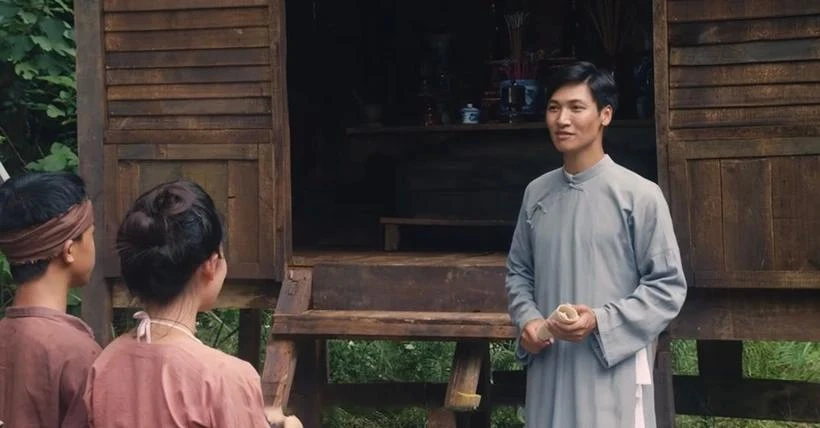
The film was made on the occasion of the 120th birth anniversary of President Ho Chi Minh. It focused on the period from 1910 to 1911 when Nguyen Tat Thanh was a student at Quoc Hoc Hue school in the central province of Thua Thien-Hue. He was later forced to leave the school after he assisted farmers and small traders in avoiding heavy tax. After that, he became a teacher at Duc Thanh school in Phan Thiet in the central province of Binh Thuan.

film6.webp
Actor Nguyen Minh Duc plays the role of the young teacher Nguyen Tat Thanh (Photo courtesy of the film producer)

6. "Thau Chin o Xiem” (Thau Chin in Siam) by director Bui Tuan Dung based on the screenplay of Dinh Thien Phuc, produced in 2015.

The film, made on the occasion of the 85th founding anniversary of the Communist Party of Vietnam, follows Ho Chi Minh’s political activities in Thailand (Siam is the old name for Thailand) during 1928-1929.

Under the name of Thau Chin, the leader built the support base for and worked for the merge of the three communist organisations - the Communist Party of Indochina, the Communist Party of Annam and the Federated Indochinese Communist Party. At the same time, he also approached Vietnamese in Thailand to popularise patriotic ideology, solidarity, and the will to fight for national independence.

film7.webp
Actor Manh Truong was chosen for the main role in the film (Photo: courtesy of the film producer).

7. “Nha Tien Tri” (The Prophet), by director Vuong Duc, based on the screenplay of Hoang Nguyen Cam, produced in 2015

The role of Ho Chi Minh in the film was played by People’s Artist Bui Bai Binh.

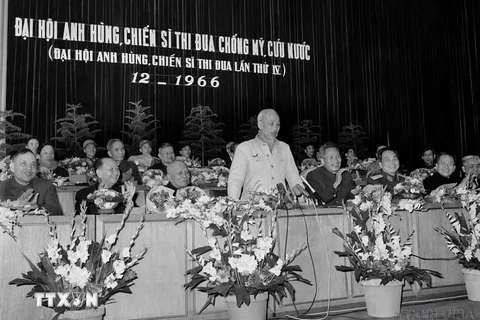
The film details the life of the President from 1947 to 1954 during the war against French colonialism. It recounts the President's time in the Viet Bac Resistance War Base (located in northern provinces of Cao Bang, Bac Kan, Lang Son, Tuyen Quang and Thai Nguyen), as the country's first president who led Vietnamese people in their struggle for national independence./.

film8.webp
The film depicts the historical period when President Ho Chi Minh leads the nation in the struggle for national independence. (Photo: courtesy of the film producer)
VNA

See more

Children perform Xoan folk singing at the cultural camp. (Photo: VNA)

Hung Kings festival opens with vibrant cultural, tourism activities in Phu Tho

Beyond its role as a sacred national commemoration, the event helps promote cultural values, strengthen national unity and enhance cultural exchanges. A notable feature is the flexible organisation in 18 commune and ward clusters, encouraging the localities' participation and enriching the festival’s content.

A corner of the Book Street in Hanoi (Photo: VNA)

Hanoi celebrates Reading Culture Day with book street activities

Organised by the Book Street’s management board in collaboration with publishers and distributors, the programme will brings together 14 publishing and distribution units across 15 booths, offering readers access to a rich and diverse selection of book titles spanning literature, children’s books, life skills, economics, history, science-technology and education, among others.

Vietnam’s Consul General in Osaka Nguyen Truong Son speaks at the 9th Vietnam cultural festival in Osaka on April 19, 2026. (Photo: VNA)

Vietnam cultural festival in Osaka draws tens of thousands of attendees

Saito Naoki, Mayor of Ikuno Ward – where the event took place, expressed his pleasure at the rapid growth of the Vietnamese community in the area. He praised such cultural festivals for helping Vietnamese residents maintain their traditions while fostering mutual understanding and closer ties with Japanese locals.

Urawadee Sriphiromya, Thai Ambassador to Vietnam (third from left); Camila Polo Florez, Colombodian Ambassador to Vietnam (C); and Saadi Salama, Ambassador of Palestine to Vietnam (fifth from left), experience indigenous coffee culture in a coffee garden in Dak Lak. (Photo: doanhnghiepkinhtexanh.vn)

World Coffee Heritage Forum: A dialogue connecting coffee culture, knowledge

The recognition of "The knowledge of coffee cultivation and processing in Dak Lak” as a National Intangible Cultural Heritage marks an important milestone. It affirms the value of indigenous knowledge, creative labour, and the harmonious connection between local livelihoods, culture and nature in the Central Highlands.

The artwork "Harvest Day" by Doan Thi Thu Huong. (Photo: cand.com.vn)

Vietnam to join Venice Art Biennale with first national showcase

As Vietnam makes its debut at the Biennale, the exhibition “Vietnam: Art in a Global Flow” does not seek to assert its position through scale or grand statements, but rather opens up a space for meaningful artistic dialogue - an invitation to listen to subtle voices, contemplate in stillness, and reflect on the capacity to nurture sustained creative energy in a dynamic and ever-evolving art world.

Viet Youth Readiness Hub debuts at the event (Photo: VNA)

Vietnamese Canadian youth hub launched to fight mother tongue erosion

The Viet Youth Readiness Hub is seen as a dedicated platform to connect, support, and empower Vietnamese-Canadian youth. It aims to emerge as a central force to host social events, advance heritage education, foster exchange and integration among young Vietnamese in Canada.

At the event “Vietnamese Language in the heart of Kyushu, Japan” (Photo: VNA)

Vietnamese in Japan revive mother tongue among young generations

While the number of Vietnamese-origin children in Japan is surging, opportunities to actually speak Vietnamese in daily life are vanishing fast. Many children can understand the language but default to Japanese in response, gradually relegating their mother tongue to a secondary role, sometimes even treating it as a “second foreign language” inside their own houses.

A tribute to Hung Kings in Ho Chi Minh City (Photo: VNA)

Hung Kings’ Commemoration Day 2026 to spread sacred values, foster national unity

Following the merger of Phu Tho, Vinh Phuc, and Hoa Binh provinces into the new Phu Tho province last year, the Hung Kings Temple Festival has taken on heightened significance. It now serves not only as a tribute to the ancestral homeland but also a unified cultural platform that extends sacred ancestral values to Vietnamese communities at home and abroad.

A traditional art performance at Bach Ma temple in Hanoi (Photo: VNA)

Traditional arts hold untapped economic power

Traditional arts embody deep aesthetic values, worldviews, and national identity, shaping the country’s distinctive “aesthetic identity” and foundational cultural tastes

A performance at the opening ceremony of the Hung Kings Temple Festival and the 2026 Ancestral Land Culture and Tourism Week on late April 17 (Photo: VNA)

Hung Kings Temple Festival, associated tourism week kick off

The annual festival serves as a major national cultural event, offering an opportunity for people across Vietnam and overseas Vietnamese communities to pay tribute to their ancestors, express gratitude, and strengthen the great national solidarity.