Several primate species teeter toward extinction

Primatologists have identified the 25 most endangered primates globally, of which three are endemic to Vietnam.
Several primate species teeter toward extinction ảnh 1The Cat Ba langur (Trachypithecus poliocephalus). — Photo bushwarriors.org

HCM City (VNA) - Primatologists have identified the 25 most endangered primates globally, of which three are endemic to Vietnam, according to a press release from the Fauna & Flora International (FFI)- Vietnam Programme.

The Cat Ba langur (Trachypithecus poliocephalus), Delacour's langur (Trachypithecus delacouri) and Tonkin snub-nosed monkey (Rhinopithecus avunculus) are the three Vietnamese species to figure in the emergency action list: the 2014-2016 World's Top 25 Most Endangered Primates list.

The Cat Ba langur was reported to have less than 70 individuals now while the numbers of the other two species dropped to below 200.

Eleven species that occur in Vietnam are listed as critically endangered, up from seven in the 2008 list.

"These updated assessments continue to highlight the importance of Vietnam as a centre of primate importance globally," Dr Ben Rawson, FFI-Vietnam Programme Country Director and IUCN SSC Co-Vice Chair for SSE Asia Region, said.

"They also highlight that Vietnam is at risk of being the first country to lose a primate species to extinction."

No primate extinctions have been recorded in the 20th or 21st centuries.

Le Khac Quyet, a leading Vietnamese primatologist, said, "We need more actions to conserve Vietnam's endangered primates and their habitats by improving population protection, afforestation, law enforcement and conservation biological studies as well as involvement of local people in wildlife conservation."

FFI's work spans the globe, with over 140 projects in over 40 countries, mostly in the developing world.

The FFI Vietnam Programme focuses on the conservation of Vietnam's most threatened wildlife and important habitats and eco-systems.

A particular focus of the programme has been primate conservation activities that span more than 15 years and have resulted in the discovery and protection of some of the world's rarest primate species.

FFI-Vietnam programme are currently working on the conservation of five of these species: The Cat Ba langur, the Tonkin sub-nosed monkey, the Cao Vit gibbon, the grey-shanked douc, and the western black-crested gibbon.

The 11 species from Vietnam now on the brink of extinction are: Cat Ba langur (Trachypithecus poliocephalus), Delacour's langur (Trachypithecus delacouri), Tonkin snub-nosed monkey (Rhinopithecus avunculus), Grey-shanked douc (Pygathrix cinerea), Red-shanked douc (Pygathrix nemaeus), Black-shanked douc (Pygathrix nigripes), Cao Vit gibbon (Nomascus nasutus), Western black crested gibbon (Nomascus concolor), Northern white-cheeked gibbon (Nomascus leucogenys), Southern white-cheeked gibbon (Nomascus siki), Con Dao macaque (Macaca fascicularis condorensis).-VNA
VNA

See more

Quang Tri recently received two endangered pangolins from local resident. (Photo published by VNA)

Two pangolins handed over to authorities in Quang Tri

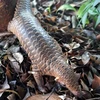
At around 8:30 pm on April 12, Le Thanh Tung, a resident of Thuong Nghia hamlet in Cam Lo commune, and his friend spotted the two pangolins, weighing over 4 kg, while working near the Cam Lo–La Son Expressway.

A view of Phong Nha - Ke Bang National Park in Da Nang city (Photo: VNA)

Phong Nha – Ke Bang: untapped biological treasure in Truong Son mountains

Unlike ecosystems where species inventories are largely complete, Phong Nha–Ke Bang National Park remains scientifically “open,” with each survey revealing new findings. Recent studies - from local research projects to international collaborations - have recorded additional bird species and identified the rare parasitic plant Sapria himalayana, which only survives in intact primary forests.

The interface of Vietnam Weather KTTV mobile application (Photo: baochinhphu,vn)

Application of dangerous weather warning introduced

All unusual weather events, from widespread thunderstorms, lightning strikes, landslides, flash floods, tropical depressions to strong winds at sea, are continuously updated from official data sources of the NCMHF and meteorological stations and prominently displayed on the main interface.

An overview of the kick-off meeting for the “Sustainable Management of Substances Controlled by the Montreal Protocol” project (Photo: VNA)

Vietnam launches 13 mln USD project to phase out ozone-depleting substances

Funded by the Multilateral Fund for the Implementation of the Montreal Protocol and implemented through the World Bank (WB) and the United Nations Environment Programme (UNEP), the project aims to help Vietnam meet its international commitments in managing and phasing out controlled substances. It will run from 2026 to 2031 with a total budget of over 13 million USD.

Tram Chim National Park and the Mekong Conservancy Foundation (MCF) organise the workshop on sustainable restoration of wetland ecosystems in the Mekong Delta on March 24. (Photo: VNA)

Solutions sought to restore Mekong Delta wetland ecosystems

Experts at the workshop described wetlands as the “ecological heart” of the Mekong Delta, playing a vital role in water storage and regulation, climate moderation, carbon sequestration, biodiversity conservation, and livelihoods for millions of people through aquaculture, agriculture, and ecotourism. These ecosystems also help reduce disaster risks and enhance climate resilience.

Deputy Minister of Agriculture and Environment Le Cong Thanh speaks at the ceremony to launch major environmental campaign. (Photo: VNA)

Vietnam calls for collective action on water, air, climate and sustainable future

Deputy Minister of Agriculture and Environment Le Cong Thanh underscored that water, climate, and energy are fundamental pillars of sustainable development. In Vietnam, water resources and weather patterns influence every aspect of life, from food and water security to livelihoods, ecosystem stability, and economic growth.