Southern localities work to tackles spread of African swine fever

Stricter preventative measures are needed to combat the spread of African swine fever (ASF) in southern provinces and cities, especially in the Mekong Delta, which is highly susceptible to the disease, experts said at a conference in Ho Chi Minh City at the weekend.
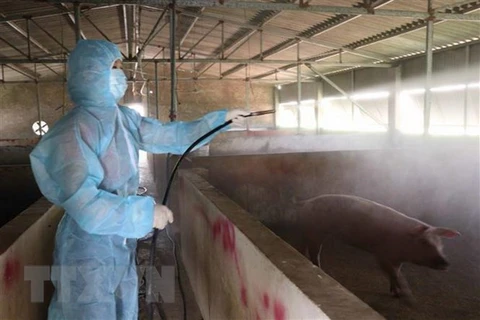
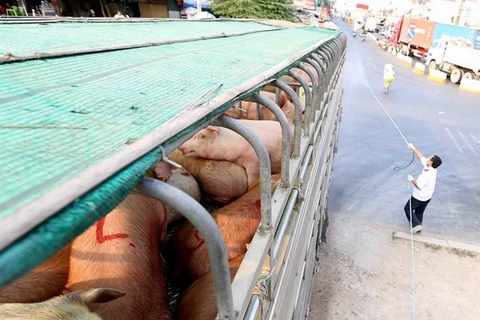
Southern localities work to tackles spread of African swine fever ảnh 1HCM CITY Stricter preventative measures are needed to combat the spread of African Swine Fever (ASF) in Vietnam's southern provinces, especially in the Mekong Delta, which is highly susceptible to the disease. (Source: VNA).

HCM City (VNA) - Stricter preventativemeasures are needed to combat the spread of African swine fever (ASF) in southernprovinces and cities, especially in the Mekong Delta, which is highlysusceptible to the disease, experts said at a conference in Ho Chi Minh City atthe weekend.

Since the first outbreak in northern Hung Yen provincein February, ASF has been detected in 2,904 communes in 42 provinces, with 1.7million pigs culled – over 5 percent of the country’s pigs.

After ASF was spotted in China in August, theVietnamese government began providing instructions on disease prevention,according to Bach Duc Luu, Deputy Director of the Animal Health Departmentunder the Ministry of Agriculture and Rural Development.

He said the disease had appeared in small townsin the country. About 80 previously affected communes in 22 provinces havenow gone 30 days without another outbreak.

Large-scale pig farming areas owned bybusinesses are taking bio-security steps to protect their pigs, and around 740farming facilities have been certified as safe from the disease.

Minister of Agriculture and Rural Development NguyenXuan Cuong said that frequent transportation and traffic, the abundance ofcanals and high temperatures made the Southern region highly susceptibleto ASF, as there are more avenues for the disease to spread and transportis more difficult to manage.

Luu said ASF was first discovered in the southin the province of Hau Giang in April. The disease has now spread to eightsouthern provinces, and 4,840 pigs have been culled, which is 0.08 percent ofall pigs in the region, he said.

Southern Vietnam has nearly 6.5 million pigs, or23 percent of the country’s total. There are 3,514 pig farms, only 459 of whichare considered safe from the disease. Many clustered individual households withpig farms are located near accommodations, making it more difficult to preventthe spread.

Many farmers in the south are still not fullyaware of the dangers of ASF and have not applied bio-security measures.

Some farmers have tried to treat the diseasethemselves or have discarded pig carcasses in the river or garbage dumps, andhave withheld information from local authorities or failed to co-operate.

Some officials, especially at the commune level,are not taking proactive measures to inspect areas and deal with outbreaks.

In addition, pig slaughtering has not beenmanaged well. Several units are gathering and harvesting pork from pigs withunclear origins to sell to restaurants.

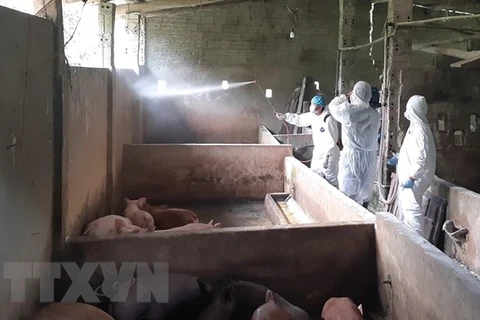
Disinfection has also not been done asfrequently or thoroughly as instructed, and some areas lack the requiredchemicals.

Pig culling has not always been carried outsafely as staff are not adequately trained and they lack proper equipment andchemicals. The burial sites are also problematic because much of the southis very low, allowing water so seep in and spread the disease.

Financial support for affected households is notenough, so some families try to hide the presence of the disease fromlocal authorities to avoid having the rest of their pigs culled, according tothe Bạc Liêu Province People’s Committee.

Luu said different departments throughout thesouth need to strictly monitor ASF and pig transportation activities anddisinfect more farms.

Authorities should also develop better pigculling teams, offer support to farmers whose pigs have to be culled andbuild more facilities that are protected from ASF, he said.

There is no cure or preventive medicine for ASF,and ensuring bio-security is the best way to prevent ASF or slow its spread, saidMinister Cuong, adding that households and businesses also need to activelytake part in tackling ASF.

Farmers with culled pigs should wait until theyreceive notice from authorities to begin farming pigs again. Affected farmershave been receiving help so they can farm other animals.-VNA
VNA
See more

The DAV asks pharmacy producers and distributors to increase medicine supply capacity during Tet to meet increasing demand (Photo: VNA)

Measures rolled out to ensure adequate medicine supply during Tet

Accordingly, provincial and municipal health departments are required to direct hospitals, centres for disease control and health care facilities to urgently develop plans and carry out medicine procurement to ensure sufficient supply, absolutely avoiding shortages. Medicines must meet quality standards and be sold at reasonable prices, with no sudden price increases allowed.

Military doctors conduct ultrasound examinations for residents in Dong Dang town, Cao Loc district, Lang Son province. (Photo: VNA)

Resolution 72 opens path to a modern, sustainable healthcare system

To build a resilient healthcare system capable of meeting the challenges of ageing, emerging diseases and rising expectations for quality care, Vietnam must continue to strengthen primary and preventive care, invest in human resources, accelerate digitalisation and big data development, and refine healthcare financing mechanisms.

Vietnam steps up Nipah virus prevention at border gates (Photo: suckhoedoisong.vn)

Vietnam tightens Nipah virus prevention at border gates

Local authorities have been instructed to strengthen disease prevention and control measures at border gates, medical facilities and in the community, stay updated with global disease information, and closely monitor inbound travellers.

Nipah virus infection is designated a Group A infectious disease, with reported fatality rates of between 40 and 75%. (Photo: moh.gov.vn)

Health sector steps up preparedness against Nipah virus disease

Nipah virus infection is designated a Group A infectious disease, with reported fatality rates of between 40 and 75%. At present, no vaccine or specific antiviral treatment is available. The virus is mainly transmitted from animals to humans or through contact with contaminated food and objects, and can also spread between people via direct contact with bodily fluids and secretions of infected patients.

Member of the Party Central Committee and Minister of Health Dao Hong Lan (Photo: VNA)

Health minister highlights comprehensive, people-centred healthcare orientation

Member of the Party Central Committee and Minister of Health Dao Hong Lan said the Politburo's Resolution No. 72 provides a breakthrough orientation for the protection, care and improvement of the people’s health. It places the people’s health at the centre of all healthcare policies and services, while aiming to address long-standing bottlenecks in the health sector that have yet to be fundamentally resolved.

Elderly people do morning exercises in the Hoan Kiem Lake area in Hanoi. (Photo: VNA)

Strategic roadmap for healthier future

As Vietnam’s population ages rapidly, Dr Angela Pratt, WHO Representative in Vietnam, identified two strategic priorities: strengthening primary healthcare and developing a formal long-term care system. These measures are essential not only for healthy ageing, but also as long-term investments with wide-ranging socio-economic returns.

Professor Dr Tran Van Thuan, Deputy Minister of Health. (File photo: VNA)

More than 300 medical staff assigned to serve 14th National Party Congress

Deputy Minister of Health Tran Van Thuan called on experts and healthcare workers to uphold a strong sense of responsibility, professionalism and expertise to ensure that medical services for the 14th National Party Congress are delivered safely, effectively and with the highest level of care.

Health check-up offered to citizens in Gia Lai province. (Photo: VNA)

Health ministry maps out three phases for hospital fee exemption

Health insurance participants from near-poor households and those aged 75 and above who are receiving social pension allowances will be entitled to 100% coverage of medical examination and treatment costs within the scope of health insurance benefits.

A patient pays hospital fees using cashless transactions (Photo: qdnd.vn)

Hanoi aims for modern healthcare system

Hanoi's health sector will continue to expand the comprehensive use of digital technology in professional practices to improve management efficiency and service quality, aiming to develop a modern, transparent, and people-centred healthcare system.