Southern transportation shifts to CNG

Officials from the transport sectors of southern provinces urged the Government to issue special policies to encourage the use of compressed natural gas (CNG) in public transportation.
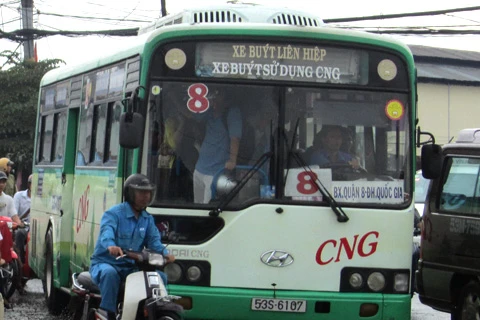
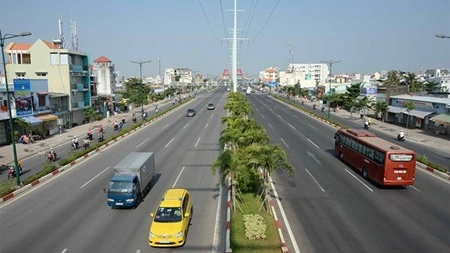
Southern transportation shifts to CNG ảnh 1A compressed natural gas (CNG) bus is put into operation on the Ben Thanh-Cho Lon route in HCM City (Photo: VNA)

HCM City (VNA) - Officials from the transport sectors of southern provinces urged the Government to issue special policies to encourage the use of compressed natural gas (CNG) in public transportation.

Tran Van Quan, Deputy Director of the Department of Transport of Dong Nai province, said the scheme of purchasing 550 CNG buses for the province had been submitted to the provincial government twice.

However, the central government has not issued a policy to help enterprises develop the CNG transport industry. The Government had said that CNG was not a new technology that was to be given top priority, he said.

The province has been working with Bình Dương province and HCM City to present its views to the Government.

The Government does not see the long-term environmental benefits of reducing import taxes to develop a CNG automobile industry, Quan said, adding that the Government should offer incentive loans as part of the policy.

“The Government should be more aware of improving the environment,” Quan said, adding that the province had 24 bus routes and only five of them were subsidised, with 30 billion VND (1.3 million USD) annually.

The province has many bus stations and bus stands, while the demand for buses is huge.

The provincial People’s Committee has invested in 100 buses a year in recent years, and the Dong Nai leaders are aware of the benefits of using CNG in public transport.

HCM City leads southern provinces in applying CNG in transportation with satisfactory results it began a pilot bus programme.

In 2011, the HCM City government approved Sai Gon Bus to buy 21 buses using CNG for the city’s bus route No 1 Ben Thanh – Binh Tay.

A recent survey on three CNG buses of the route by the HCM City University of Transport has given positive results.

On average, each bus consumes 39.56kg CNG for every 100kilometre.

After one year, the CNG bus saved more than 2 billion VND in fuel, a reduction of 23 per cent of fuel costs compared with diesel engines.

Buses using CNG cut at least 20 percent CO2 emissions compared to those using diesel oil.

Following the success, in 2013, the city government approved the plan to produce 300 CNG buses and assigned the SAMCO Corporation to conduct the project.

The project aims to gradually replace degraded buses in the city.

In early March, the corporation transferred the first 23 CNG buses of the 300 buses to the 19/5 Transport Cooperative.

In 2015, the corporation also supplied some CNG buses operating on the Thu Dau Mot City and Binh Duong New City.

Besides concerns about the need for a preferential policy from the Government to support CNG transport, a transport official in Tien Giang province expressed his concern about the number of CNG and CNG pump stations.

Tran Van Nghi, deputy director of PVGas South, said there were enough CNG pump stations for the bus system.

Excluding imported CNG, the gas resources in the country are immense for the development demand.

Off Vietnam’s shore, 962 billion cu.m gas has been found. The current exploitation capacity is over 10 billion cu.m a year.-VNA
VNA

See more

Gildas Tréguier, Secretary-General of the France-Vietnam Health Federation (Photo published by VNA)

‘Small bricks’ help strengthen Vietnam-France ties

Dr. Gildas Tréguier, Secretary-General of the France-Vietnam Health Federation (FSFV), said the visit comes as Vietnam is opening further to the world and entering a new stage of development, creating greater demand for experience sharing and closer cooperation with international partners, including France. After nearly 40 years of involvement in medical cooperation programmes with Vietnam, he said bilateral ties have been built not only through major events and government-level agreements, but also through the contributions of generations of people.

Cultural activities are held at the 2026 Vietnamese Language Summer Camp in Klinok village on the outskirts of Minsk, Belarus. (Photo: VNA)

Vietnamese language preserved across globe

In the new context, Politburo Resolution No. 23-NQ/TW, dated August 2, 2026, continues to place the preservation of the Vietnamese language within the strategic vision of mobilising resources from the Vietnamese community abroad and promoting Vietnamese cultural values around the world.

Overseas Vietnamese teachers participating in the 2026 training course on Vietnamese language teaching methods (Photo published VNA)

Leveraging overseas Vietnamese resources for Vietnam-France ties

As Vietnam enters a new era of prosperous and harmonious development, top leader To Lam's official visit to France will significantly contribute to the special dynamics of bilateral relations while fostering shared commitments to international peace, security, and stability.

Ambassador Nguyen Huong Tra briefs representatives of the Vietnamese communities in Belgium and Luxembourg on the country's situation. (Photo: VNA)

Overseas Vietnamese ready to contribute to national transformation

Affirming that overseas Vietnamese are an integral part of the nation and partners in its development and creation, Vietnamese Ambassador to Belgium and Head of the Vietnamese Mission to the European Union (EU) Nguyen Huong Tra pledged to listen to them openly and responsibly, and convey their recommendations to authorities at home.

The operation to remove the bomb is carried out cautiously and meticulously by military forces. (Photo: VNA)

Phu Tho: 200kg bomb safely relocated, detonated

According to a report by the Phu Tho Military Command, local residents spotted the bomb on August 31 in the Da River after the river water receded, exposing it beneath mud and soil on the riverbed. The bomb remained intact, including its fuse, and was located about 300m from a residential area.

Quang Ninh's seaport infrastructure, including the Ha Long International Cruise Port, is capable of serving large cruise ships. (Photo: VNA)

Quang Ninh 2030: Ambitious targets for a breakthrough

These objectives reflect the principle that economic development must not become detached from living standards; rather, the benefits of growth should create opportunities for all residents to share in its achievements.

A police officer guides a citizen on how to use VNeID app. (Photo: VNA)

Shift to data-driven administrative procedures needs acceleration

Under a draft decree replacing Decree 63, authorities will have to proactively pull information from databases and records for informational or technical procedures. Applicants would no longer be required to resubmit documents, and certification or information requests could not be turned into discretionary licensing through an “ask – give” mechanism.

Cuban journalist Luis Manuel Arce Isaac, author of the article published in Mexico’s Voces del Periodista magazine. (Photo: Screenshot/VNA)

Mexican journalist praises Vietnam’s profound transformation

According to the article, Vietnam’s progress over the past decades has turned President Ho Chi Minh’s aspiration for a country that would be more dignified and more beautiful into reality in ways that have far exceeded what was initially envisioned.