Ban Gioc Waterfall (Photo: VNA)
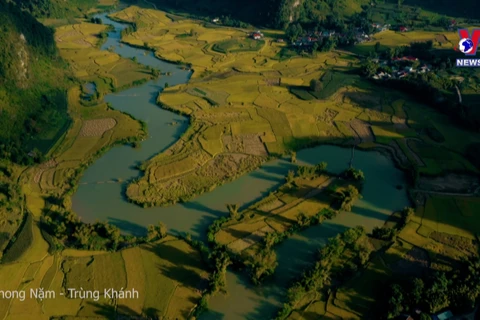
 Hanoi (VNA) – With three major tourism routes, the northern border province of Cao Bang is giving visitors opportunities to explore all landscapes and cultures of the Non Nuoc Cao Bang Global Geopark, one of the most impressive attractions of the province, which has been recognised as a UNESCO global geopark, the second of its kind in Vietnam.
With its spectacular beauty, the Non Nuoc Cao Bang Global Geopark has become a highlight of Cao Bang province, helping the locality boost its tourism development and promote its unique culture.
Unique geological heritage
Located in the north of Vietnam, 300km from Hanoi, the Non Nuoc Cao Bang UNESCO Global Geopark covers 3,000 sq.km. It covers six districts of Ha Quang, Tra Linh, Quang Yen, Trung Khanh, Ha Lang, Phuc Hoa, and part of Hoa An, Nguyen Binh and Thach An districts. The geopark is home to nine ethnic groups including Tay, Nung, Mong, Dao and San Chay.
The geopark is an exceptional territory which offers insights into the history of our planet across more than 500 million years through protected sites. Fossils, marine sediment, volcanic and plutonic rocks and minerals are witness to the remarkable evolution and changes of our planet, and they constitute an exceptional geological heritage.
It is also a land of tangible and intangible cultural heritage sites and special historical monuments. The area is also well-known for its high biological diversity with abundant endemic plant and animal species and ecosystems.
There are three main routes to explore the geopark, including going to the east to experience traditional cultures, north to see history and freedom, and west to experience Phia Oac, the mountain of transformations.
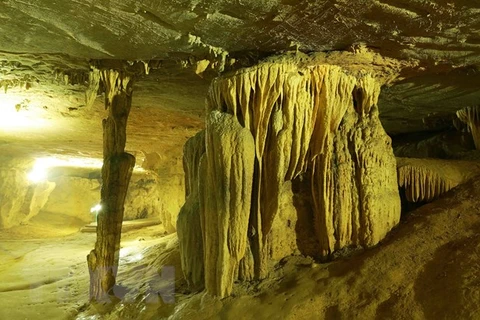
 Nguom Ngao cave in Cao Bang is one of the most beautiful caves in Vietnam (Photo: VNA)
Non Nuoc Cao Bang Global Geopark is home to various famous landscapes, including Phia Oac, Phia Den, Thang Hen lake complex, Nguom Ngao cave and Ban Gioc Waterfall.
Located in Dam Thuy commune of Trung Khanh district, the Ban Gioc Waterfall is one of Vietnam’s most impressive natural sights. Thirty metres high and 300 metres across, it is the widest, but not the highest, in the country. The falls occur on the beautiful jade-blue water of the Quay Son River, as they flows through a pastoral landscape of rice fields and bamboo groves, surrounded by limestone mountains.
In 1997, Ban Gioc waterfall was officially recognised as a national scenic spot. Ban Gioc waterfall is the world’s fourth largest border waterfall. World renowned travel magazines have honored Ban Gioc as one of top ten most majestic waterfall on earth.
Ban Gioc waterfall is most beautiful between June and October, especially in September and October when it is full of water.
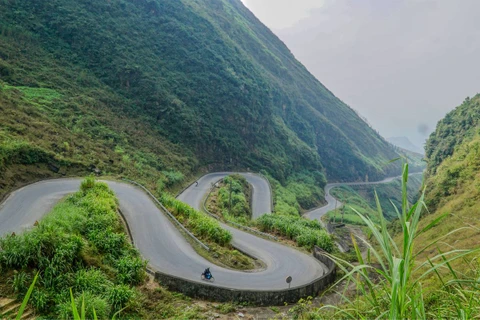
Ma Phuc Pass and “Mat Than nui” (Mountain God’s eye) in Quoc Toan commune of Tra Linh is also among famous landscapes of Cao Bang, along with Phia Oac-Phia Den national park in which more than 90 rare faunal and 58 animal species are living.
Exploring local culture
Cao Bang is home to nine ethnic minority groups, including Tay, Nung and Giao. The groups mostly concentrate in Tra Linh, Quang Uyen, Phuc Hoa and Trung Khanh districts. Their unique cultural identities have become an attraction for Cao Bang tourism.
Visitors will have a chance to experience the craft of making incense of Nung An people in Phia Thap village. Handed down from generations to generations, all villagers in the village know how to make incense from natural materials found in the locality.
They can also enjoy dozens of folk festivals such as Quang Uyen firework festival, Nang Hai Phuc Hoa Festival, and “long tong” (going to the field) Festival of Taym Nung, Dao and San Chi people, along with special dishes.
Major tourism routes
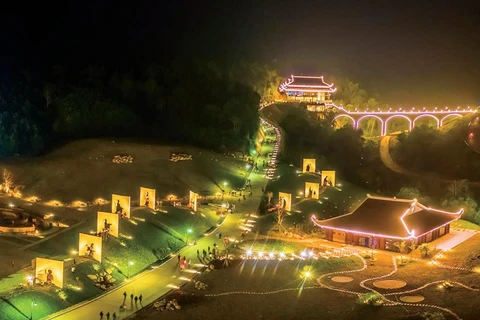
Currently, Cao Bang is developing three major tourism routes – the northern route called “Journey to the root”; the western routes entitled “Exploring Phia Oac – the mountain of changes”; and the eastern route themed “Exploring local culture of the fairy land”.
The “Journey to the root” will bring visitors to Hoa An and H Quang district to explore the land that is rich in cultural and historical values typical for the tradition of national defence, including the Le King temple, De Doong temple, Kim Dong historical relic site, and Pac Bo national special historical relic site in which President Ho Chi Minh live from 1941 to 1944.
The journey will take tourists through the 500-year history of the formation of the Earth with geographical heritage of global value.
Meanwhile, the Phia Oac tour comprises 16 destinations in Nguyen Binh district. The highlight of the tour is the Phia Oac-Phia Den ecotourism site, including the 1,931m Phia Oac peak, which is considered the roof of Cao Bang.
At the same time, the eastern route goes through four districts of Tra Linh, Quang Uyen, Trung Khanh and Ha Lang, giving a chance for visitors to experience the unique cultures of Tay, Nung, Mong, Dao and San Chay ethnic minority people through traditional craft villages and folk festivals. They will have the opportunity to enjoy special cuisine of the northern mountainous region.
With the three major tourism routes, visitors to Cao Bang can have a panorama of the global geopark and an insight of local life. The beauty of nature and culture have made Cao Bang a worth-to-visit destination./.