Vietnam gold market

State commercial banks to directly sell gold to people: deputy governor

The State Bank of Vietnam (SBV) will directly sell gold to state-owned commercial banks starting June 3 and the banks will sell gold to the public, Deputy Governor Pham Quang Dung said in a recent meeting with the media.

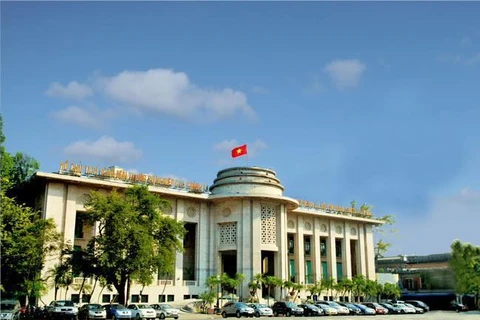
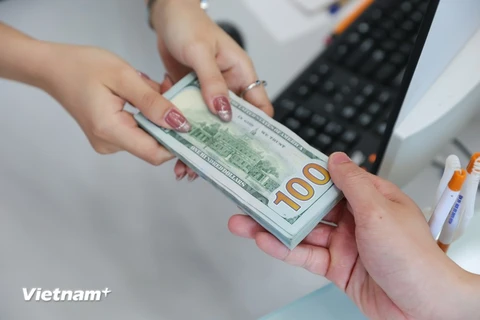
State-owned commercial banks with their extensive networks have prepared necessary conditions to organise direct gold sales to people in need. (Photo: VNA)

Hanoi (VNA) - The State Bank of Vietnam (SBV) will directly sell gold to state-owned commercial banks starting June 3 and the banks will sell gold to the public, Deputy Governor Pham Quang Dung said in a recent meeting with the media.

The SBV will decide the prices of gold sold to the banks based on world prices, Dung said, noting State-owned commercial banks with their extensive networks have prepared necessary conditions to organise direct gold sales to people in need.

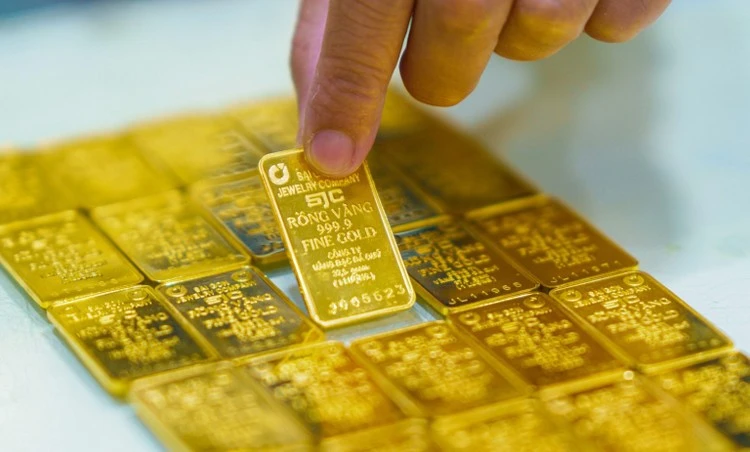
According to the deputy governor, following the instructions of the Government and the Prime Minister, the SBV has organised nine auctions, supplying 48,500 taels of SJC gold to the market, equivalent to over 1.8 tonnes of gold.

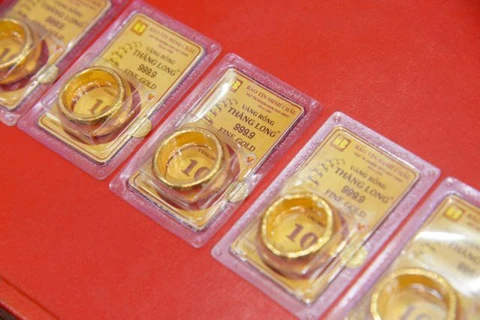
However, the gold price difference between Vietnam and the world remains high, at around 20%. This indicates that, in addition to market factors such as supply-demand relationship, there might be illegal activities like price manipulation and fixing, causing market instabilities.

Dung added the central bank is coordinating with the Ministry of Public Security, Ministry of Finance, Ministry of Industry and Trade, and Government Inspectorate to inspect compliance with policies and laws in gold business activities by credit institutions and enterprises. Violations of the law will be strictly handled, the official stressed./.
VNA

See more

Saigon Marina IFC, an emerging landmark, reflects Ho Chi Minh City’s pioneering spirit.

Saigon Marina IFC – The light of Ho Chi Minh City’s new icon

Saigon Marina IFC, an emerging landmark, reflects Ho Chi Minh City’s pioneering spirit. Designed to become an International Financial Centre, this new architectural icon along the Saigon River is envisioned not only as a premium commercial complex, but as a central platform supporting financial institutions, international investors and cross-border capital flows in the years ahead.

Shoppers at a supermarket in Hung Yen (Photo: VNA)

Retailers see tax compliance, AI as key to survival in 2026 survey

The annual survey, conducted at the end of 2025 among retail and food and beverage (F&B) sellers nationwide, found that businesses are shifting their focus from rapid growth to operational efficiency, cost control and legal compliance amid increasingly stringent regulatory standards.

Visitors shop at Glorious Spring Fair 2026 (Photo: VNA)

Spring Fair 2026 opens broader prospects for Vietnam–UAE trade cooperation

For Vietnam, the UAE serves not only as a consumer market but also as a gateway to the Middle East and North Africa. Vietnamese agricultural products such as cashew nuts, pepper, cinnamon and rice have steadily gained market share, while aquatic products, including tra fish and tuna, are increasingly present in the UAE’s hospitality sector.

Bao Viet Bank's employee counts Vietnamese banknotes at a transaction counter in Hanoi. (Photo: VNA)

Credit quota reform, tighter capital rules may widen gap among banks

Yuanta Vietnam Securities estimates that to achieve GDP growth above 10%, credit growth would need to exceed 16%. This suggests bank credit is no longer expected to be the main growth driver, with greater reliance on fiscal policy, public investment and capital markets.

Commercial Counsellor Do Viet Phuong, Head of the Vietnam Trade Office in Cambodia. (Photo: VNA)

Spring Fair 2026 offers ample room to deepen Vietnam–Cambodia trade ties

Cambodia holds substantial potential for cooperation in agro-processing and exports, especially in key products such as rice, cashew nuts and rubber. In recent years, the country’s cultivation area and agricultural output have grown steadily, providing a stable raw material base for processing industries.

Vietnam is projected to have approximately 2.4 million SMEs, accounting for over 98% of the country’s total enterprises. (Photo: cafef.vn)

Banks offer diverse solutions to support SMEs

With an increasingly significant role in the economy, the small and medium-sized enterprise (SME) sector is becoming a key segment in the credit growth strategies of many banks and the banks have been taking diverse solutions to support the enterprises.

Workers process coconuts for export at Vina T&T Group. (Photo: nhandan.vn)

Agricultural exports reliant on securing raw material supply

According to Secretary General of the Vietnam Pepper and Spice Association Le Viet Anh, pepper remained Vietnam’s leading spice export in 2025, with shipments exceeding 247,000 tonnes, accounting for 59.3% of total spice export volume. Export revenue reached 1.66 billion USD, out of total spice exports of 2.1 billion USD.