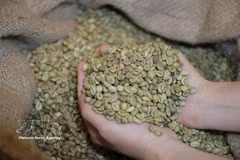
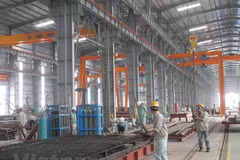
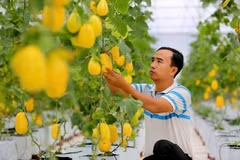
Wood, coffee, rubber, pepper and rice have established Vietnam’s presence in international markets. While businesses are shifting towards higher-value processing and branded products, many remain concentrated in manufacturing and raw material exports.
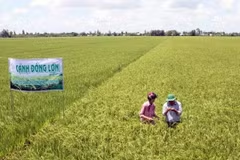
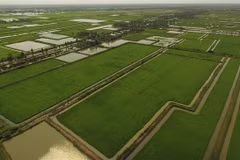
Vietnam’s agricultural sector is shifting from the traditional “large field” model, focused mainly on expanding production areas, towards “organised fields” built on stronger coordination and linkages, marking an important step towards raising the value of farm produce.
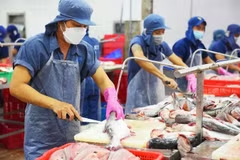
Establishing logistics chains connecting producers with traders is an urgent need to improve the effectiveness of agro-forestry-aquatic product exports, heard a roundtable conference held in Ho Chi Minh City on December 25.
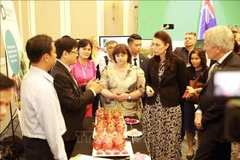
Prime Minister of New Zealand Jacinda Ardern viewed agriculture as a basis for relations with Vietnam while addressing an agriculture connection event (AgriConnectioNZ) in Hanoi on November 15.
The Mekong Delta province of Ca Mau plans to convert this year nearly 2,000ha of unproductive rice paddies into fields where rice and aquatic species are rotated or perennial crops are grown.
The global trade slowdown is likely to sap the domestic economy, and if the prices of goods and services are not well controlled, the country will fail to keep the inflation rate at the desired level.
A support centre for cooperative development was opened in Hanoi on December 6, aiming to help Vietnamese cooperatives get more involved in agricultural value chains.
The Australian Government-funded “Integrating gender in agricultural value-chain research” project looks to settle gender social constrains, encourage ethnic men and women’s involvement in agricultural value chains, as well as promote the adoption of high-tech application towards a sustainable agriculture.
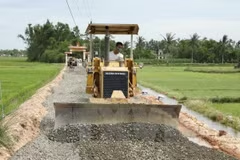
Vietnam has to date had 3,370 communes, or 37.76 percent of the total, recognised as new-style rural areas, according to the Central Coordination Office for New Styled Rural Development.