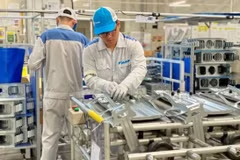
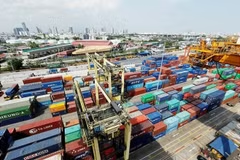
The Indonesian Government is ready to make policy adjustments to anticipate any potential impact of the US-China trade tensions, with the adjustments to cover regulatory framework, public services, and business efficiency.
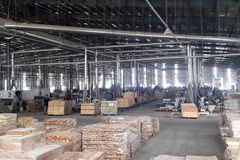
Vietnam is working hard to complete its legal corridor and tighten the examination and supervision of imported wood materials to ensure transparency in the wood sector and meet the strict origin rules in foreign markets.
After two years of implementing the Comprehensive and Progressive Agreement for Trans-Pacific Partnership (CPTPP), the use of the deal to generate benefits for the economy and businesses has remained modest, according to insiders.
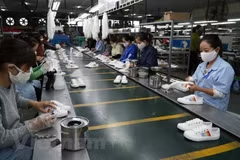
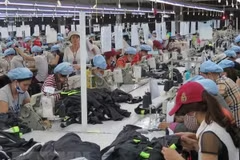
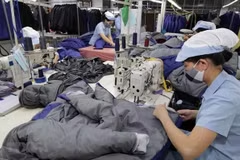
Vietnam raked in 2.6 billion USD from exports of textiles and garments in January 2021, up 3.3 percent year-on-year, according to the Ministry of Industry and Trade.
Japanese investment in Vietnam has strongly developed in both quality and quantity as investors are applying the most advanced technologies in production, experts have said.
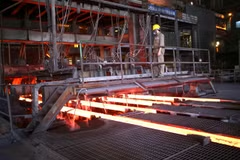
International free trade agreements such as the CPTPP and the EU-Vietnam Free Trade Agreement have opened up unprecedented opportunities for Vietnamese steelmakers with the industry forecast to see robust growth.
Thailand’s exports fell for the fourth consecutive month in November, mainly due to lower prices of oil and agricultural products, a slowdown in the world economy, the US-China trade tensions, and rising baht.
The Ministry of Trade and Industry (MTI) of Singapore on November 21 released a report showing that the country’s economy expanded by 0.5 percent yearonyear in the third quarter of 2019.
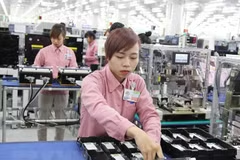
Amidst escalating US-China trade tensions, Vietnam is expected to become a major Asian destination for foreign investors thanks to its location, policies and human resources, experts have said.
Thailand’s economic growth in the third quarter is likely to improve from the second quarter’s reading, mainly thanks to positive tourism growth and the government’s economic stimulus measures, according to the Bank of Thailand.
In the first nine months of 2019, the final consumption expenditure was 7.2 percent, while asset accumulation rose 7.68 percent, and exports expanded 7.41 percent.
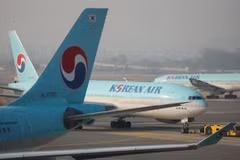
Korean Air Lines Co., the Republic of Korea (RoK)'s largest carrier, said on September 4 that it has expanded cargo flights to Southeast Asia and South America to cope with the global economic slowdown prompted by the US-China trade tensions.
Southeast Asian economies will likely face continued external headwinds in the remaining months of 2019 as the US-China trade tensions weigh on the region, according to Nikkei Asia Review of Japan.
Business leaders and economic experts discussed how an open economy like Vietnam should deal with risks and impacts in the wake of international economic and technological upheavals at a business forum themed “Navigating the digital age” held by Forbes Vietnam in HCM City on August 15.
Indonesia on August 5 reported its lowest rate of quarterly growth in two years as Southeast Asia's biggest economy has been affected by US-China trade tensions.
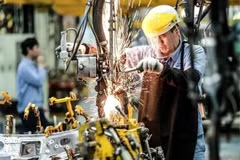
Vietnam’s index of industrial production (IIP) recorded a year-on-year rise of 9.13 percent in the first six months of this year, according to the General Statistics Office (GSO)’s latest report.
The foreign exchange market in Vietnam has heated up recently when the daily reference exchange rate set by the State Bank of Vietnam (SBV) continuously climbed to new record levels and the VND/USD rates listed at commercial banks also surged.