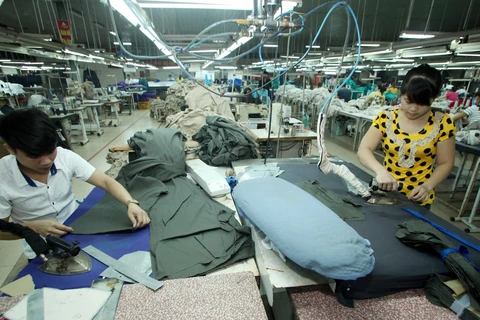
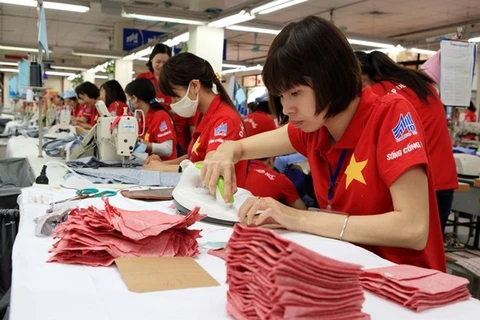
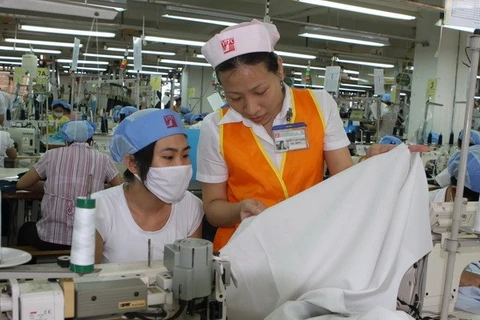
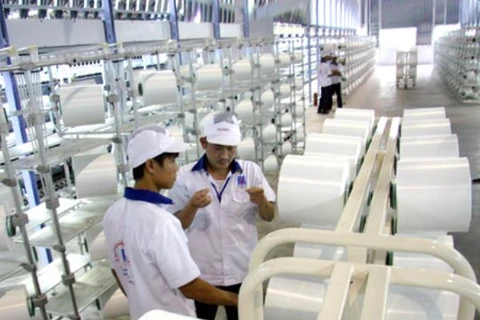
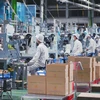
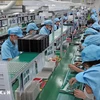
Illustrative image (Source: VNA)
 Hanoi (VNS/VNA) - The textile and apparel industry was defined as a field with one of the highest growth rates over the next 12 years.
It’s expected the business will grow by 14 percent over the next two years and a further 10 percent up to 2030.
Speaking at the 4th Vietnam Textile Summit 2018 held in Hanoi on June 27, Dr. Tran Du Lich said he believed the future would be bright.
“Garment and textile is a key economic sector in terms of employment creation and contribution to exports. It creates 20 percent of jobs in Vietnamese industry,” said Lich.
This sector has the second highest export turnover and occupies the fifth position in the world. Last year saw goods worth more than 31 billion USD, exported, representing 10.23 percent year-on-year increase.
The rapid growth rate was expected to continue this year with an estimated turnover of 33 billion USD.
In addition to maintaining traditional markets such as the US, Europe, Japan and the Republic of Korea, Vietnamese garment and textile firms have been expanding to new areas such as China, Russia and Cambodia.
It also promotes the development of the cotton fiber industry; petrochemical industry and other textile supporting industries as well as trading, services, and fashion industry.
“The textile industry contributes to the success of FDI attraction policy. FDI accounts for about 60 percent of apparel and textile export turnover,” he said adding that in the economy industrialisation strategy, the industry played an important role in the economic structure of Vietnam.
However, he said the Government policies played an important role to help businesses develop. Vietnam’s vocational training policies in the industry had not been effective and would need further support.
In addition, the Government should encourage enterprises to mobilise capital on the stock market. The application of the Decree No 111/ND-CP on supporting industries should be promoted and be included in research budgets, application of new technologies and reduction of corporate income tax.
The Government should also encourage the linking of value chains by supporting small and medium enterprises under the Law on the promotion of small-and-medium sized enterprises (SMEs).
Tran ThanhHai, Deputy Head of the Department of Export and Import under the Ministry of Industry and Trade said new Free Trade Agreements (FTAs) which Vietnam signed or negotiated would benefit the country’s garment and textile sector.
“In the 2018-22 period, the export tax of some products would be reduced to zero, creating new opportunities for the country to increase export added value and promoting the economic growth,” Hai said.
On the other hand, the competitive labour costs and preferential policies would continue to help Vietnam become one of ideal destinations for investors in the sector.
However, Vietnam should continue to compete to maintain competitiveness with countries such as Bangladesh, Sri Lanka, Myanmar and Cambodia.
Sharing the ideas, Ven Tran, Director of Vietnam Office of Weave Services Limited said Vietnam had experienced strong growth in textile manufacturing thanks to three key advantages as trade barriers are gradually removed.
In addition, Vietnam ranked second lowest in the regions, after Bangladesh. Its global position made it an ideal choice for investors who want to leave China.
However, there were still three main challenges to sustain this strong growth including low productivity, environmental regulation and long lead time, he said.
Long lead time means retailers and manufacturers fail to meet customers’ expectation and managing raw materials is key to speeding up productivity. Material accounts for a half of total lead time and it can even be 70 percent when it comes to overseas supply.
He suggested the solutions were to set up a common language with supply methods while factoring in risk.
The event co-organised by ECV International and Vietnam Cotton and Spinning Association (VCOSA) aimed to better understand the market, as well as mitigate risks and identify new opportunities. Meanwhile, the summit can also act as a platform for exchanges, communication and mutual assistance.-VNS/VNA
It’s expected the business will grow by 14 percent over the next two years and a further 10 percent up to 2030.
Speaking at the 4th Vietnam Textile Summit 2018 held in Hanoi on June 27, Dr. Tran Du Lich said he believed the future would be bright.
“Garment and textile is a key economic sector in terms of employment creation and contribution to exports. It creates 20 percent of jobs in Vietnamese industry,” said Lich.
This sector has the second highest export turnover and occupies the fifth position in the world. Last year saw goods worth more than 31 billion USD, exported, representing 10.23 percent year-on-year increase.
The rapid growth rate was expected to continue this year with an estimated turnover of 33 billion USD.
In addition to maintaining traditional markets such as the US, Europe, Japan and the Republic of Korea, Vietnamese garment and textile firms have been expanding to new areas such as China, Russia and Cambodia.
It also promotes the development of the cotton fiber industry; petrochemical industry and other textile supporting industries as well as trading, services, and fashion industry.
“The textile industry contributes to the success of FDI attraction policy. FDI accounts for about 60 percent of apparel and textile export turnover,” he said adding that in the economy industrialisation strategy, the industry played an important role in the economic structure of Vietnam.
However, he said the Government policies played an important role to help businesses develop. Vietnam’s vocational training policies in the industry had not been effective and would need further support.
In addition, the Government should encourage enterprises to mobilise capital on the stock market. The application of the Decree No 111/ND-CP on supporting industries should be promoted and be included in research budgets, application of new technologies and reduction of corporate income tax.
The Government should also encourage the linking of value chains by supporting small and medium enterprises under the Law on the promotion of small-and-medium sized enterprises (SMEs).
Tran ThanhHai, Deputy Head of the Department of Export and Import under the Ministry of Industry and Trade said new Free Trade Agreements (FTAs) which Vietnam signed or negotiated would benefit the country’s garment and textile sector.
“In the 2018-22 period, the export tax of some products would be reduced to zero, creating new opportunities for the country to increase export added value and promoting the economic growth,” Hai said.
On the other hand, the competitive labour costs and preferential policies would continue to help Vietnam become one of ideal destinations for investors in the sector.
However, Vietnam should continue to compete to maintain competitiveness with countries such as Bangladesh, Sri Lanka, Myanmar and Cambodia.
Sharing the ideas, Ven Tran, Director of Vietnam Office of Weave Services Limited said Vietnam had experienced strong growth in textile manufacturing thanks to three key advantages as trade barriers are gradually removed.
In addition, Vietnam ranked second lowest in the regions, after Bangladesh. Its global position made it an ideal choice for investors who want to leave China.
However, there were still three main challenges to sustain this strong growth including low productivity, environmental regulation and long lead time, he said.
Long lead time means retailers and manufacturers fail to meet customers’ expectation and managing raw materials is key to speeding up productivity. Material accounts for a half of total lead time and it can even be 70 percent when it comes to overseas supply.
He suggested the solutions were to set up a common language with supply methods while factoring in risk.
The event co-organised by ECV International and Vietnam Cotton and Spinning Association (VCOSA) aimed to better understand the market, as well as mitigate risks and identify new opportunities. Meanwhile, the summit can also act as a platform for exchanges, communication and mutual assistance.-VNS/VNA
VNA