Thailand cuts chicken production as global demand drops

Thai chicken exports rose less than expected in the first half of this year due to COVID-19, according to the Thai Broiler Processing Exporters Association (TBPEA).
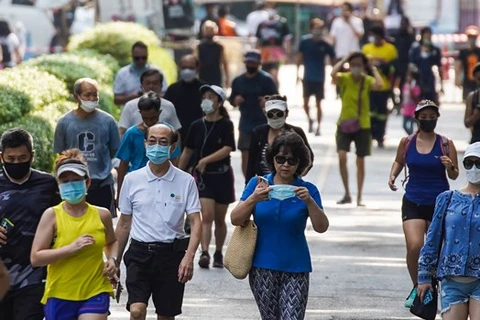
Thailand cuts chicken production as global demand drops ảnh 1Illustrative image (Source: The Nation) 

Bangkok (VNA) -
Thai chickenexports rose less than expected in the first half of this year due to COVID-19,according to the Thai Broiler Processing Exporters Association (TBPEA).

Thailand exported 470,000 tonnes of chickenin the first six months of 2020, representing a year-on-year rise of 2 percent,with export value of 54 billion baht (about 1.73 billion USD), up 1 billionbaht.

The local media recently cited TBPEA managerKukrit Arepagorn as saying the pandemic has caused Thailand’s two main markets,the European Union (EU) and Japan, to cut chicken imports.

Chicken exports to the EU dropped by 10 percentas the COVID-19 situation there is not yet resolved, he said, adding that Thailandexpects to export 280,000 tonnes of chicken to the EU this year, down from330,000 tonnes last year.

Meanwhile, chicken exports to Japanonly rose by 2 percent because the virus outbreak had hit tourism and forcedthe country to postpone the Tokyo Olympic Games, reducing demand.

However, Kukrit said exports to China and Singapore had increased by 100,000tonnes and 20,000 tonnes respectively in the six-month period./.
VNA
See more

WB plans over 3 bln USD in financing for Philippines

Indonesia, RoK eye stronger creative economy collaboration

Assessing the prospects for cooperation, Minister Teuku Riefky Harsya said that under the Strategic Partnership between the two countries, there are significant opportunities to promote cooperation in production, talent exchange, digital game development and other technology-related fields that would benefit the creative industries of both Indonesia and the RoK.

Thailand targets 33 million foreign visitors this year

Thailand targets 33 million foreign visitors this year

TAT forecasts that Thailand will welcome 33 million international tourists in 2026, generating about 1.55 trillion THB (47.5 billion USD) in revenue, along with 200.4 million domestic trips, expected to generate about 1.1 trillion THB.

​ Thailand secures deal to export 500 tonnes of durian to China

​ Thailand secures deal to export 500 tonnes of durian to China

The highlight of the visit was the signing of a memorandum of understanding (MoU) between producers of Sisaket volcanic durian and the Huizhan market for the supply of 500 tonnes of durian. The agreement is expected to expand the market share of Thai fruit in China while enhancing the value of products protected by geographical indications.

UK backs Indonesia’s OECD accession

UK backs Indonesia’s OECD accession

The UK and Indonesia have launched an Economic Growth Partnership and pledged to work together to address technical barriers to trade, enhance regulatory transparency, and facilitate investment and business activities.

Thai broadcaster Jasmine International (JAS) inks an eleventh-hour deal for World Cup rights.

Thai broadcaster secures FIFA World Cup 2026 rights at last minute

JAS finalised the 70-million-USD agreement with FIFA on June 11. The deal grants the company exclusive rights to broadcast not only the FIFA World Cup in 2026 and 2030 but also a wide range of FIFA competitions through 2030, including men's and women's football tournaments, futsal, beach soccer, the FIFA Club World Cup and FIFA eSports events.

Underground cooling solution helps Singapore ease energy demand

Laos, Japan agree to strengthen bilateral cooperation

Lao Prime Minister Sonexay Siphandone and his Japanese counterpart Takaichi Sanae have reaffirmed their commitment to deepening the Comprehensive Strategic Partnership between the two countries, with a particular focus on expanding economic, trade, and investment cooperation.

Thailand imposes stricter rules for online advertisers

Thailand imposes stricter rules for online advertisers

Under the regulations, platforms must establish systems to verify the identities of individuals or organisations wishing to place advertisements before they are published. The measure aims to prevent criminal groups from using advertising space to lure victims or commit technology-related crimes that are causing significant damage.