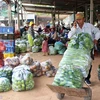
Traceability data are evolving into a critical layer of protection, helping exporters reduce tariff risks, shorten inspection times and strengthen proof of origin, thereby avoiding exclusion from formal distribution networks.
For years, Vietnam’s market has struggled with the presence of fake, low-quality and origin-falsified products, from traditional markets and convenience stores to supermarkets and e-commerce platforms.
Amid rising global demand for Halal products, Tay Ninh, with its strategic location at the Southwest borderline and the Mekong Delta, has been identified as a key area for developing Vietnam’s Halal industry. Many businesses in Tay Ninh have proactively invested in closed-loop production models, ensuring food safety and traceability. This is an important step to improve product quality, enable localities to obtain Halal certification, and pave the way for products to penetrate and thrive in high-potential Muslim markets.
On a global scale, verification and traceability are among the top criteria that businesses must maintain to ensure credibility, enhance competitiveness and meet stringent international trade standards.
In 2024, durian was a leading export among Vietnam’s fruits and vegetables, earning a record of 3.3 billion USD and accounting for 46% of the sector’s total export value. China was the largest market, importing 3.2 billion USD worth of durians, or 97% of the total.
As Vietnam deepens its integration into the global economy through more than 15 free trade agreements (FTAs), including the Comprehensive and Progressive Agreement for Trans-Pacific Partnership (CPTPP) and the EU-Vietnam Free Trade Agreement (EVFTA), origin transparency has become a non-negotiable requirement to access tariff preferences and avoid trade defence measures.
Vietnam could earn 300 million USD from shipping frozen durian to China on the back of the signed protocol on plant quarantine requirements for the product between the two sides, Director of the Plant Protection Department (PPD) under the Ministry of Agriculture and Rural Development Huynh Tan Dat said on September 19.
Hanoi has expanded cultivation areas that meet high-quality standards and have regional codes to ensure product origin and traceability. The capital has also established supply chains for key agricultural products to meet export requirements.
The People’s Committee of Binh Thuan on June 10 held a meeting with localities to implement solutions to combat illegal, unreported and unregulated (IUU) fishing in the south-central province.
Businesses need to increase the added value of their products and ensure origin tracing of materials to enhance sustainable production and export, and minimise export risk, said insiders.
Vietnam not only wants to implement international commitments but to create new values for agricultural development accompanied by environmental protection, preserving resources for future generations, and contributing to global sustainable development.
Digitisation in agricultural product traceability requires the engagement and coordination of all parties, from State management agencies to enterprises, cooperatives and farmers, according to an official from the Ministry of Agriculture and Rural Development.
A forum on promoting digitalisation to support traceability of agricultural and food products was held in Hanoi on February 28, with the support of the Australian Centre for International Agricultural Research (ACIAR) in Vietnam.
The Ministry of Agriculture and Rural Development (MARD) is promoting the granting and management of planting area codes to meet traceability regulations for import and export goods on the world market.
Vietnam’s agricultural produce sent to China are, including those sent via unofficial channels, quality products. Quality has no bearing on them being stopped at customs, Deputy Minister of Agriculture and Rural Development Tran Thanh Nam told the ministry’s meeting in Hanoi on January 12.
The latest COVID-19 outbreaks in the Central Highlands province of Gia Lai have been basically kept under control, it was reported at an online meeting between Deputy Prime Minister Vu Duc Dam and representative of the Ministry of Health (MoH) and the provincial People’s Committee on February 4.
The southern province of Ba Ria - Vung Tau has been working to boost the traceability of its agricultural products, with initial success recorded in the value of those applying the technology.
Singapore’s Parliament on November 4 approved the Air Navigation (Amendment) Bill under which, from January 2, 2020, all drones that weigh more than 250g will have to be registered with the Civil Aviation Authority of Singapore (CAAS) before they can be used in the country.