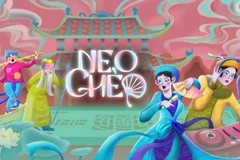
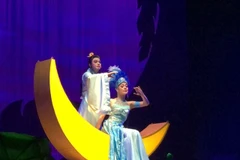
Preserving heritage doesn’t mean keeping it behind glass. It means letting it live, breathe, and grow with each generation. When young people can see themselves reflected in Cheo through a melody, a costume, or a digital artwork, then it becomes part of their own story.
Digitalisation does not mean commercialisation or oversimplification of culture. It is a way of selecting, adapting, and spreading traditional values through a modern language.
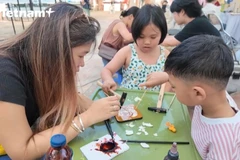
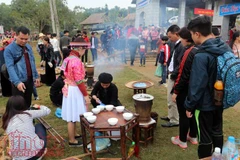
To mark International Children’s Day on June 1, the Ho Van space at the Temple of Literature in Hanoi hosted a special event titled “Growing Up with Tradition,” where children got hands-on with traditional Vietnamese arts.
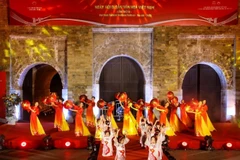
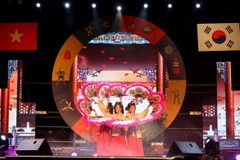
Korean violin artist JMI KO, singers Seok Hun and Hansara, and K-pop dance troupe will perform in Hoi An ancient city of Quang Nam from April 9 to 11 during the Korean Cultural Day event, an annual cultural exchange between the Republic of Korea and the central province.
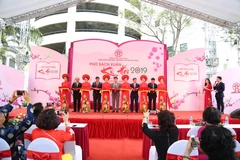
A wide range of activities are being held in a Lunar New Year (Tet) celebrating programme that kicked off on the December 19 Book Street in Hanoi on February 7.
The Culture-Tourism Village of Vietnamese Ethnic Groups in Hanoi will introduce the traditional New Year festivals of ethnic minority groups in mountainous regions throughout January.
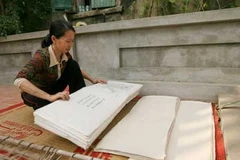
The art of making poonah paper from the bark of a tree for artwork and votive offerings is being revived in Yen Thai, a village outside Hanoi that made the product for at least 600 years.
Cultural researchers and dancers of Hanoi are making every effort to collect and conserve ancient dances of the old capital city of Thang Long, which are at risk of slowly fading into obscurity.