Treating COVID-19 following protocols prove effective

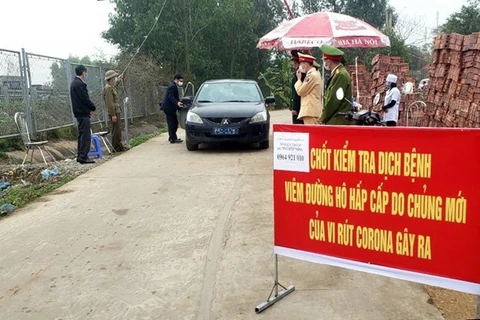
The entire medical system of Vietnam from those in centrally-run areas to others in communes has joined the fight against the COVID-19 outbreak.
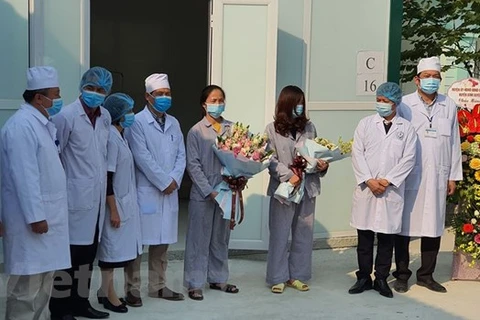
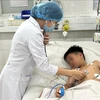
Treating COVID-19 following protocols prove effective ảnh 1Two COVID-19 patients on the day they are discharged from the hospital (Photo: VietnamPlus)

Hanoi (VNA) - At 10 am on February 18, the National Hospital of Tropical Diseases in Hanoi’s Dong Anh district organised a ceremony to release the last two COVID-19 patients treated here.

Earlier, it treated and discharged three patients.

The number of cured patients increases

Both patients discharged are from the northern province of Vinh Phuc, the country's hardest COVID-19-hit area. One of them returned from China's Wuhan city, the epicentre of the novel coronavirus outbreak, while the other had close contact with a COVID-19 patient. They were Pham Van Ch., 29, from Vinh Phuc’s Tam Duong district and N. T. Y., 55, from Son Loi commune in Vinh Phuc’s Binh Xuyen district.

Ch. was among the eight people sent by the Japanese-funded Nihon Plast limited company to be trained in Wuhan for two months and a half. The group later became the source of the disease transmission in Vinh Phuc. Ch. came back to Vietnam on January 17 and developed a sore throat and cough as from January 21.

On January 26, he had a fever and was admitted to the hospital, with his test on the day being positive for the virus.

After three days of treatment, he no longer ran a fever and his condition became stable. However, he was tested positive twice on February 7 and 9. The test turned negative twice on February 11 and 12. Now, he has been free from fever for 10 days and is in stable condition.

Meanwhile, Y., the neighbour of a COVID-19 patient named N. T. D., found herself heated up with headache and body pain on January 30. On February 5, she entered the isolation ward of the Quang Ha medical station, while her fever and pain remained.

The woman was confirmed being positive for the virus on February 9 and was moved to the National Hospital of Tropical Diseases for further treatment.

Her COVID-19 tests showed negative twice on February 12 and 15, with her damaged lung improved. She was discharged in stable condition.

Vietnam has to date recorded 16 COVID-19 cases, including 11 in Vinh Phuc, three in Ho Chi Minh City, one in Khanh Hoa, and one in Thanh Hoa.

A representative from the Ministry of Health said there would be six patients released from hospital on February 18, increasing the number of recoveries in Vietnam to 13.

Vietnam effectively treats patients at different levels of medical facilities

According to associate professor Luong Ngoc Khue, head of the Department of Medical Examination and Treatment under the Ministry of Health, the ministry, following the direction of the National Steering Committee for COVID-19 Prevention and Control, has prioritised treating the disease at different levels of medical facilities right from the beginning.

An infection suspect is set to be detected, diagnosed, quarantined, and monitored first at district-level medical units. When his/her symptoms require more special treatment, he/she will be moved to units at higher levels.

The entire medical system of Vietnam from those in centrally-run areas to others in communes has joined the fight against the COVID-19 outbreak, Khue said, adding that staff at commune-level were in charge of detecting and monitoring quarantined people in a community.

The health sector restricts the transfer of patients to upper levels of hospitals, he said, noting that normal cases are treated at district-level medical facilities.

The process aims at ensuring prompt treatment given to the patients, thus limiting deaths or cross infections.

The Ministry of Health recommends people with suspected symptoms like fever, cough, and shortness of breath, go to local medical establishments for check-ups. The ministry has set up quick-response teams to support these facilities when they face diagnosis and treatment difficulties./.
VNA

See more

The caregivers’ club in Coc village, Pu Luong commune, the north-central province of Thanh Hoa, has established a livelihood support fund, helping households develop their economies through models such as rice cultivation, vegetable growing, fish farming and poultry raising. (Photo: VNA)

Community-based child nutrition care model benefits Thanh Hoa’s locality

After more than one year of implementation with the support of World Vision, the model has delivered positive outcomes in improving nutrition and enhancing the quality of childcare. Household livelihoods have improved, mothers’ awareness and caregiving skills have been strengthened, and notably, the rate of child malnutrition in Coc has declined markedly.

Assoc. Prof. Dr. Duong Duc Hung, Director of Viet Duc University Hospital, presents a token of appreciation in recognition of the noble gesture of the organ donor’s family. (Photo: baochinhphu.vn)

British teen’s organ donation saves three Vietnamese lives

A 19-year-old British tourist who died during a trip to Vietnam has saved the lives of three Vietnamese patients with end-stage organ failure, in a deeply moving act of compassion. The young woman is the first foreign national to donate organs in Vietnam.

A workshop at the One Health Summit, held in Lyon, France, from April 5 to 7, 2026. (Photo: VNA)

Vietnam backs global One Health commitments at Lyon summit

The MAE welcomed the French Government’s organisation of the One Health Summit, describing it as an important forum to advance global political commitments and strengthen international cooperation in preventing zoonotic diseases.

Ilustrative image (Photo: pngtree.com)

Vietnamese scientists unlock genetic insights into rare diseases

Prof. Dr. Nguyen Huy Hoang, Deputy Director of the Institute of Biology under the Vietnam Academy of Science and Technology, and his research team conducted a project titled “Genetic mutation analysis in Vietnamese patients with selected rare diseases using whole-exome sequencing technology.” The project, implemented from 2022 to 2024, aims to clarify the genetic causes of these diseases within the Vietnamese population.

Health workers and residents perform mass wellness exercises, promoting healthy lifestyles in the community. (Photo: VNA)

Ho Chi Minh City targets modern, inclusive healthcare system

On April 5 alone, 58 hospitals and health centres conducted screening programmes across 64 wards and communes, with a focus on outlying areas. Beyond early detection, residents receive consultations, long-term health monitoring guidance, and access to specialised services locally.

Vice Chairwoman of the National Assembly Nguyen Thi Thanh, Minister of Health Dao Hong Lan, and delegates attend the programme. (Photo: nhandan.vn)

Healthy lifestyles, disease prevention highlighted on national health day

Vice Chairwoman of the National Assembly Nguyen Thi Thanh emphasised the need for consistent and effective implementation of the resolution across the political system, with priorities including refining healthcare policies and institutions, strengthening preventive and grassroots healthcare networks, expanding population health management, promoting early detection, and improving school-based physical education and nutrition.

Politburo member, Secretary of the Party Central Committee and Chairman of the Commission for Information, Education and Mass Mobilisation Trinh Van Quyet (front row, fifth from left), together with delegates, participate in a walk after the launch of All People’s Health Day in Hanoi on April 5. (Photo: VNA)

All People’s Health Day promotes early disease prevention

The launch marked the first year the activity has been implemented in a coordinated manner nationwide. Members of the public were able to visit free screening areas, receive nutritional advice, participate in mass exercise performances, enjoy artistic programmes, and join a walk in response following the ceremony.

Volunteer young doctors are expected to provide free health screenings for around 10,000 residents (Photo: VNA)

Free cancer screening, health checks to benefit 10,000 people in Hanoi

Participants will receive comprehensive health checks through a streamlined one-stop process, including blood pressure measurement, height and weight assessment, BMI and cardiovascular risk evaluation, blood tests, general examinations and specialist consultations in internal medicine, paediatrics, obstetrics, ophthalmology, ENT, dentistry and oncology. Rapid blood glucose testing and biochemical screening will also be conducted to detect diabetes and metabolic disorders.