Tremendous potential in Vietnam's supporting industries

Small- and medium-sized enterprises (SMEs) in supporting industries can benefit from multinational groups’ China plus-one strategies that include Vietnam, wrote Filippo Bortoletti, Country Director of the Dezan Shira & Associates Vietnam.
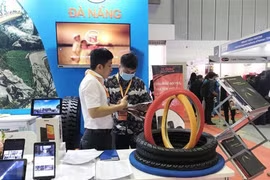
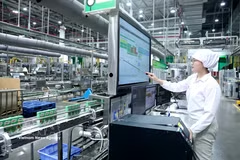
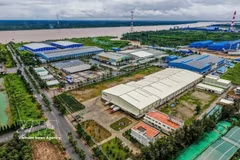
Tremendous potential in Vietnam's supporting industries ảnh 1Illustrative image (Photo: laodong.vn)

Hanoi (VNA) - Small-and medium-sized enterprises (SMEs) insupporting industries can benefit from multinational groups’ China plus-onestrategies that include Vietnam, wrote Filippo Bortoletti, Country Director ofthe Dezan Shira & Associates Vietnam.

In his recent article published on Vietnam Briefing, Bortoletti said in the past 15 years, Vietnam hasseen lots of changes, from the manufacturing boom through watching a vibrantemerging start-up sector gain its legs.

The emergence ofthe China plus-one paradigm has seen supply chain restructuring and riskdiversification strategies implemented at large. Meanwhile, Vietnam has alsoopened up to greater foreign investment, thereby taking advantage of thesetrends to transform itself into a regional manufacturing hub, he wrote.

According to him, while the “China plus-one” trend has prompted large corporationslike Samsung and Nike to relocate their operations to Vietnam, the move of SMEshas been less widely recognised.

Often followingtheir leading multinational customers, these SMEs have also been drawn toVietnam thanks to the country’s favourable business environment.

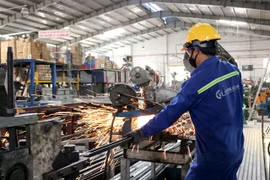
Although theseSMEs may not operate in as glamorous industries as mobile phones and laptops,they play a crucial role in any economy, including Vietnam’s. In fact, SMEs inVietnam facilitate technology transfers and provide skills training that can beeven broader than that offered by larger organisations, highlighting theirimportance to the country’s economic development.

SMEs oftenoperate in a sector crucial for the sustainable development of Vietnam’smanufacturing sector: supporting industries. Vietnam has acknowledged inrecent years the importance of being not just one part of the global supplychain but rather of being a key part of these increasingly complex structures.

In this light,the Government has instituted tax breaks and incentives for supportingindustries looking to establish themselves in Vietnam.

SMEs, whetherthey are new to the region or following the well-trodden path from China intoVietnam, stand to benefit significantly from utilising these incentives, hesaid.

The official said Vietnam’s headway into developing supporting industries andlonger in-country supply chains has been slow. In 2022,Vietnam’s localisation rate was only around 36%, a fraction of its keycompetitors India and China. But for SMEs lookingto diversify into Vietnam, this is only a minor challenge.

Vietnam has become a highly integrated playerwithin Asia in recent years, thanks in part to its participation in variousfree trade agreements. The country has signed agreements with its SoutheastAsian neighbours as well as bilateral and multilateral deals with countriesaround the world, helping to facilitate trade and investment flows across theregion and beyond.

As a result,sourcing components and shipping them to Vietnam for assembly, or shippingparts and components from Vietnam elsewhere for assembly, is increasinglybecoming cheaper and easier.

Furthermore, there is impetus for change across the economy.

Forums andseminars promoting Vietnam as a supporting industry destination are becomingmore and more commonplace. The issues facing development of Vietnam’ssupporting industries are also front and centre at these events.

A number of bigmanufacturers are expanding the footprint of their supporting industries inVietnam. Samsung, for example, has opened a 200 million USD research anddevelopment centre in Hanoi.

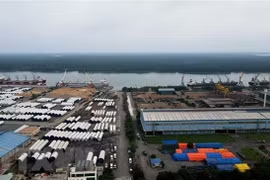
With a vast coastline connecting the burgeoning nation via aseries of ports to the rest of the world, Vietnam is in a very convenientlocation. It’s not just the Pacific access either.

One ofChina’s southern neighbours, Vietnam as a China plus-one destination is a great option. Components andparts for a broad range of manufacturers are already crossing the border, inboth directions, every day to the tune of hundreds of millions of dollars.

Right now,there is tremendous potential for SMEs in supporting industries, particularlyin Vietnam, the author concluded./. 
VNA

See more

A Jatropha cultivation area of Star Japan Co., Ltd in My Son commune, Khanh Hoa province (Photo of Star Japan Co., Ltd)

Vietnam – a potential regional supply hub for Jatropha seed oil

Japan’s research on non-edible oil feedstocks showed that Jatropha is highly drought-tolerant and could grow well on wasteland, eroded sandy land and infertile soil. Given this, areas in central Vietnam, including Ninh Thuan, Binh Thuan and the Central Highlands, have climatic, sunlight and soil conditions suitable for achieving high seed yields and oil content.

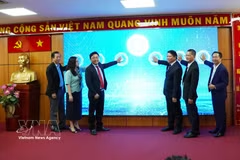
Officials launch the Expo Platform on September 29. It will be officially put into use on October 20, two days before the opening of HCMC Export 2026. (Photo: VNA)

Technology opens new routes for Vietnamese exports

As global markets impose increasingly stringent requirements on standards, traceability, sustainability and green transformation, digitalising product data and bringing buyers closer to production sites can help Vietnamese businesses demonstrate their capabilities and meet market-specific requirements.

Phuong Dinh Anh, Deputy Chief of the Office of the Central Coordination Office for the National Target Programme, speaks at the event.( VNA)

Turning OCOP products into rural tourism experiences

Experts stressed that rural tourism can develop sustainably only when local communities actively participate and benefit from it. Investment in transport, accommodation and attractions must go hand in hand with clean water, waste treatment, hygiene, traditional craft preservation and environmental protection.

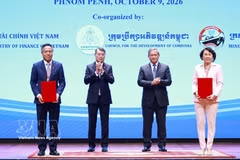
Prime Minister Le Minh Hung and his Cambodian counterpart Hun Manet witness the exchange of cooperation agreements between businesses of the two countries (Photo: VNA)

Vietnam, Cambodia look to elevate economic links

Prime Minister Le Minh Hung said that economic, trade and investment cooperation constitutes an important pillar of bilateral ties, which has achieved positive results. However, considerable room remains for further expansion to match the strong political ties and the potential of both countries.

An overview of the meeting (Photo: chinhphu.vn)

Deputy PM calls for tighter price management of essential goods

Deputy PM Thang, who is also head of the committee, urged ministries and agencies to coordinate closely to deliver effective fiscal and macroeconomic policies. The aim is to control inflation, stabilise the macroeconomy, ensure major economic balances, create room to support growth and bolster the economy’s resilience to external shocks.

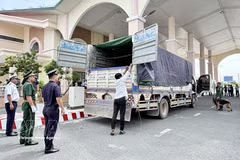
 Khanh Binh International Land Border Gate in An Giang province.( Photo: VNA)

Vietnam-Cambodia trade gathers pace towards 20 billion USD target

After setting a record of more than 11.3 billion USD in 2025, bilateral trade reached about 8.7 billion USD in the first eight months of 2026, up 8.3% year on year. Vietnam is currently Cambodia’s third-largest trading partner, its second-largest source of imports and second-largest export market.

Vietnamese Ambassador to India Trinh Minh Manh discusses potential areas and strengths for cooperation between Vietnam and India’s Gujarat state. (Photo: VNA)

Vietnam, India’s Gujarat state seek to unlock cooperation potential

Vietnam attaches importance to strengthening cooperation with Indian states boasting strong economic potential, including Gujarat, to further advance the two countries’ Enhanced Comprehensive Strategic Partnership, particularly in the economy, trade and investment, said Ambassador Trinh Minh Manh.

At Nestlé Vietnam factory in Hung Yen province (Photo: VNA)

Vietnam seeks to build stronger ecosystem for FDI

The World Bank has stressed the need to connect global companies with domestic suppliers, improve the business climate and develop supply-chain finance solutions. Those steps will let domestic firms gradually meet requirements on quality, technology, costs and delivery times, and position them to become suppliers to multinational corporations.

Construction of technical infrastructure facilities serving APEC 2027 in Phu Quoc Special Zone, An Giang province. (Illustrative photo: VNA)

Vietnam enters investment grade credit rating category for first time

Vietnam has maintained robust growth, outperforming other Southeast Asian economies. Its ongoing government reforms aimed at streamlining the state apparatus, promoting the private sector, improving the institutional framework and developing capital markets will strengthen the country’s growth potential and economic resilience.

Vietnamese Prime Minister Le Minh Hung and Lao Prime Minister Saleumxay Kommasith witness the presentation of investment certificates and investment cooperation agreements between businesses of the two countries. (Photo: VNA)

Vietnam, Laos strengthen “strategic cohesion” in economic sector

The great friendship, special solidarity, comprehensive cooperation and strategic cohesion between Vietnam and Laos, and between Laos and Vietnam, are an invaluable asset of the Vietnamese and Lao Parties, States and people. It is the responsibility of today's generation to transform this invaluable political asset into new resources for the development of the two countries’ people.

West Food Hau Giang JSC’s factory at the Nam Song Hau Industrial Park – Phase 1, Can Tho city (Photo: VNA)

Southern industrial property market enters new phase of competition

Industrial site selection was previously driven largely by land prices, location and access to markets. However, as supply chains become more complex and manufacturing projects face higher technical requirements, businesses are increasingly assessing sites based on their long-term operational capabilities.