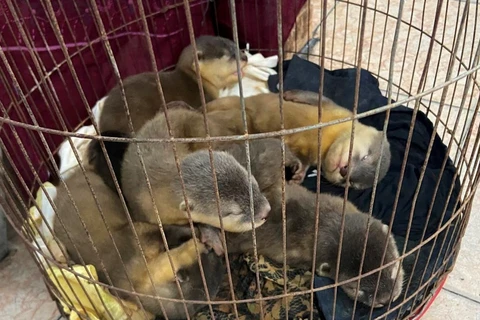
A participant at a training course organised by the USAID Saving Species project (Photo courtesy of the project)
 Hanoi (VNS/VNA) - Prosecution rates for wildlife violations have increased 50 percent over the last three years thanks to a project which focuses on protecting wildlife in Vietnam.
That was one of the key results of the USAID Saving Species project announced in Hanoi last week, at a virtual event that marked the end of its five-year implementation.
The US-supported project began in 2016 with coordination between the United States Agency for International Development (USAID) and the Ministry of Agriculture and Rural Development.
It helped the Vietnamese Government to improve and harmonise the legal system related to wildlife protection, strengthen law enforcement and prosecution of wildlife crimes, and reduce demand and illegal consumption of wildlife.
Reports showed that thanks to the project, prosecution rates for wildlife violations have increased from 25 percent in 2018 to 75 percent in 2021.
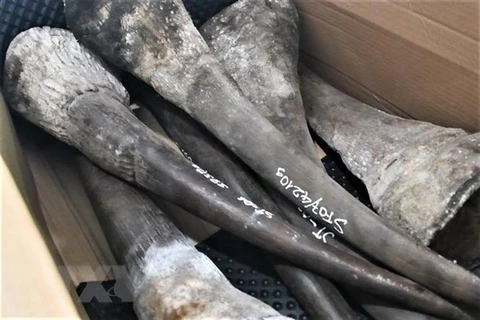
Three social behaviour change communication campaigns run by the project and the CITES Management Authority of Vietnam have raised public awareness about wildlife protection, with a focus on reducing consumption of ivory, rhino horn and pangolin products.
Among high income earners, the percentage of buyers of ivory decreased from 16 percent in 2018 to nine percent in 2021, and the percentage of buyers of rhino and pangolin products decreased from eight percent in 2018 to six percent in 2021.
The project also supported the development, amendment and adoption of four important legal documents that are key to ensuring consistent management and protection of wildlife in Vietnam, resolving legal gaps and overlapping regulations.
It trained more than 2,600 officials from agencies including forestry protection departments, customs officials, environmental police, wet market managers, border guards, courts, and prosecutors to help them more effectively tackle wildlife crimes.
Speaking at the event, Deputy Minister of Agriculture and Rural Development Le Quoc Doanh said: “The joint effort of USAID and the Vietnamese government through USAID Saving Species project has contributed significantly to protect wildlife species and maintaining important eco-services to the national and regional sustainable socio-economic development.”
USAID/Vietnam Mission Director Ann Marie Yastishock added: “USAID is proud to support Vietnam to reduce consumer demand for illegal wildlife products, build wildlife law enforcement and prosecution capacity, as well as augment and harmonise the legal framework for combating wildlife crime in Vietnam.
"We are very pleased to see that the cooperation between the two countries through this project has brought meaningful results. Vietnam is a critical partner of the United States for countering wildlife trafficking.”
Through subsequent projects, USAID will continue to support effective protection of wildlife and the strengthened cooperation of the two countries in wildlife crime prevention and control./.
That was one of the key results of the USAID Saving Species project announced in Hanoi last week, at a virtual event that marked the end of its five-year implementation.
The US-supported project began in 2016 with coordination between the United States Agency for International Development (USAID) and the Ministry of Agriculture and Rural Development.
It helped the Vietnamese Government to improve and harmonise the legal system related to wildlife protection, strengthen law enforcement and prosecution of wildlife crimes, and reduce demand and illegal consumption of wildlife.
Reports showed that thanks to the project, prosecution rates for wildlife violations have increased from 25 percent in 2018 to 75 percent in 2021.
Three social behaviour change communication campaigns run by the project and the CITES Management Authority of Vietnam have raised public awareness about wildlife protection, with a focus on reducing consumption of ivory, rhino horn and pangolin products.
Among high income earners, the percentage of buyers of ivory decreased from 16 percent in 2018 to nine percent in 2021, and the percentage of buyers of rhino and pangolin products decreased from eight percent in 2018 to six percent in 2021.
The project also supported the development, amendment and adoption of four important legal documents that are key to ensuring consistent management and protection of wildlife in Vietnam, resolving legal gaps and overlapping regulations.
It trained more than 2,600 officials from agencies including forestry protection departments, customs officials, environmental police, wet market managers, border guards, courts, and prosecutors to help them more effectively tackle wildlife crimes.
Speaking at the event, Deputy Minister of Agriculture and Rural Development Le Quoc Doanh said: “The joint effort of USAID and the Vietnamese government through USAID Saving Species project has contributed significantly to protect wildlife species and maintaining important eco-services to the national and regional sustainable socio-economic development.”
USAID/Vietnam Mission Director Ann Marie Yastishock added: “USAID is proud to support Vietnam to reduce consumer demand for illegal wildlife products, build wildlife law enforcement and prosecution capacity, as well as augment and harmonise the legal framework for combating wildlife crime in Vietnam.
"We are very pleased to see that the cooperation between the two countries through this project has brought meaningful results. Vietnam is a critical partner of the United States for countering wildlife trafficking.”
Through subsequent projects, USAID will continue to support effective protection of wildlife and the strengthened cooperation of the two countries in wildlife crime prevention and control./.
VNA