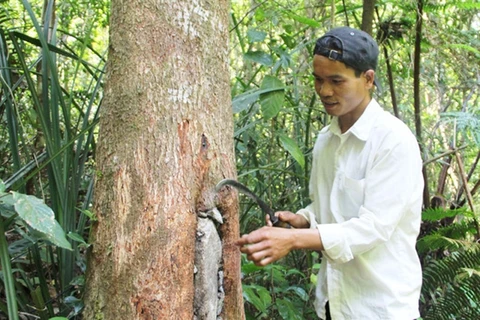
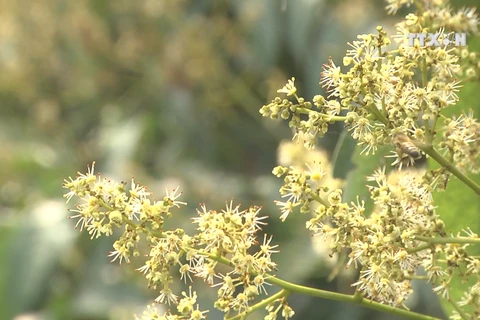
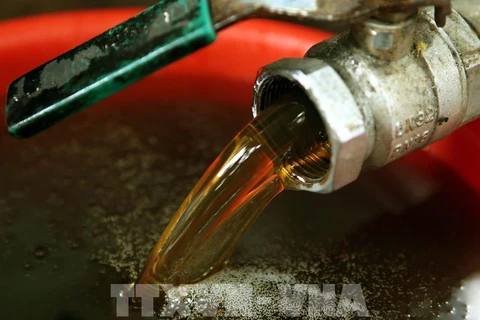
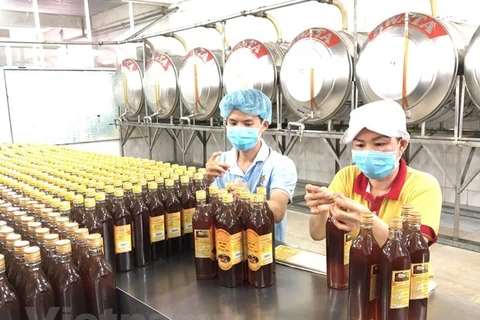
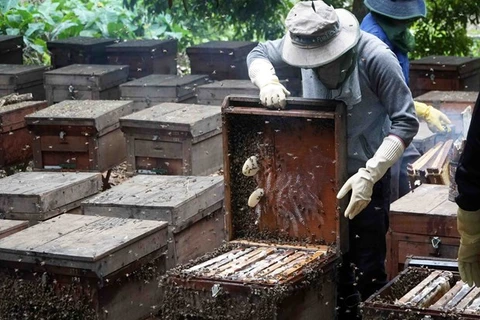
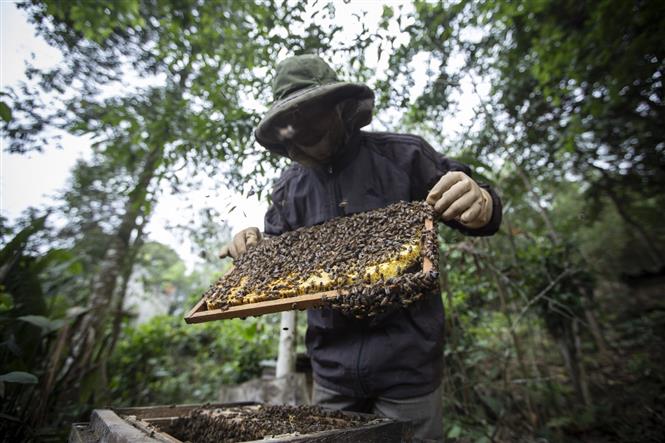
 A beekeeping farm in Hoa Binh province (Photo: VNA)
 Hanoi (VNA) – The US's plan to impose an anti-dumping tariff of up to 400 percent against imported Vietnamese raw honey products would pose very negative impacts on Vietnam's beekeeping industry, of which the US has been the prime import market, said spokeswoman of the Ministry of Foreign Affairs Le Thi Thu Hang.
Answering reporters’ question on Vietnam's reaction to the plan at a regular press briefing on February 17, Hang said it would also adversely impact on Vietnam's agriculture and cultivation as a whole as artificially kept bees also contribute to the pollination of crops.
This will certainly have a direct impact on the livelihoods and employment of many beekeeping and farming families in Vietnam, particularly those in the southern region and the Central Highlands, Hang stressed.
She said that Vietnam always looks forward to promoting the comprehensive partnership with the US, especially in terms of trade and business, which should be geared more towards greater balance, mutual benefits, and sustainability.
The spokeswoman added that Vietnam is ready to and is regularly discussing with the US through existing mechanisms such as the trade and investment framework agreement (TIFA) in order to further promote economic interests and trade relations and bilateral investment relations, and to address any issues that may arise, contributing to the advancement of Vietnam-US ties as well as the interests of the two countries' people.
“The Ministry of Industry and Trade and the Ministry of Agriculture and Rural Development of Vietnam are actively working with US counterparts at different levels to address the matter, and we call upon the US to make sure that any measure they impose in this matter must be based on the spirit of objectivity, fairness, and in line with the World Trade Organisation (WTO)’s regulations, and avoid causing undue damage to Vietnamese beekeepers and beekeeping businesses,” she stressed./.
This will certainly have a direct impact on the livelihoods and employment of many beekeeping and farming families in Vietnam, particularly those in the southern region and the Central Highlands, Hang stressed.
She said that Vietnam always looks forward to promoting the comprehensive partnership with the US, especially in terms of trade and business, which should be geared more towards greater balance, mutual benefits, and sustainability.
The spokeswoman added that Vietnam is ready to and is regularly discussing with the US through existing mechanisms such as the trade and investment framework agreement (TIFA) in order to further promote economic interests and trade relations and bilateral investment relations, and to address any issues that may arise, contributing to the advancement of Vietnam-US ties as well as the interests of the two countries' people.
“The Ministry of Industry and Trade and the Ministry of Agriculture and Rural Development of Vietnam are actively working with US counterparts at different levels to address the matter, and we call upon the US to make sure that any measure they impose in this matter must be based on the spirit of objectivity, fairness, and in line with the World Trade Organisation (WTO)’s regulations, and avoid causing undue damage to Vietnamese beekeepers and beekeeping businesses,” she stressed./.
VNA