Utilising hydropower resources for socio-economic growth

To accomplish socio-economic development objectives in Vietnam, building integrated reservoirs, combining hydroelectricity and irrigation is given priority for development. An insight on the Vietnam Chamber of Commerce and Industry website.

Vietnam has more than 3,450 river and stream systems of different sizes theoretically capable of generating electricity with a total potential production capacity of 35,000 MW and 300 billion kWh of electricity a year. The northern region accounts for some 60 percent, the central some 27 percent, and the southern 13 percent. However, with feasibility taken into account, the country can utilise about 26,000 MW or 100 billion kWh of electricity a year.
To accomplish socio-economicdevelopment objectives in Vietnam, building integrated reservoirs,combining hydroelectricity and irrigation is given priority fordevelopment. An insight on the Vietnam Chamber of Commerce and Industrywebsite.

Vietnam has more than 3,450 river and stream systemsof different sizes theoretically capable of generating electricity witha total potential production capacity of 35,000 MW and 300 billion kWhof electricity a year. The northern region accounts for some 60 percent,the central some 27 percent, and the southern 13 percent. However, withfeasibility taken into account, the country can utilise about 26,000 MWor 100 billion kWh of electricity a year.

Before 1990, somelarge- and small-scaled hydropower projects like Hoa Binh (1,920 MW),Thac Ba (120 MW), Da Nhim (160 MW) and Tri An (400 MW) and a number ofsmall and micro hydropower plants were built.

After 1990,according to the Government’s guidelines for the Vietnam ElectricityIndustry Development Strategy and National Electric Power DevelopmentPlan, renewable energy sources (wind, solar, hydro power, etc.) weregiven investment priority, especially hydropower projects with extrabenefits (water supply, flood prevention, drought prevention, etc).Small-scaled hydropower plants were invested to meet growing energydemand in the country. On that basis, the Ministry of Industry and Tradein collaboration with involved ministries, agencies and localitiescarried out researches on hydropower development in potential rivers andstreams.

By now, the country-wide hydropower developmentplanning has been established and approved, thus laying the groundworkfor formulating investment projects. According to approved plans, thecountry now has 815 hydropower projects with a combined capacity of24,324.3 MW. Of these, 268 projects have been put into operation(14,240.5 MW); 205 projects are construction (6,198.8 MW) and expectedto be operated before 2017. The storage capacity for downstream regionsis 10.51 billion cubic metres.

On large rivers, 113 cascadedhydropower projects have been approved for construction with a totalcapacity of 18,006 MW. Most projects have been built. As many as 56projects have been brought into operation while the rest are expected tobe completed and operated by 2017 and 17 projects are being studied.The above hydroelectric plants have supplied electricity, regulatedwater flows and controlled flooding for downstream areas. Some projectshave been adjusted to improve investment efficiency, mitigateenvironmental and social impacts and fit with new plans and otherprioritised projects.

The investment and construction ofhydropower projects has importantly ensured energy security and promotedthe country’s socioeconomic development towards industrialisation andmodernisation. In 2012, hydropower plants accounted for 48.26 percent ofproduction capacity and 43.9 percent of power output. This is a cleanrenewable energy source generated at a lower cost than other powersources.

The investment, construction and operation ofhydropower projects has created many jobs. The formation ofhydroelectric reservoirs has also importantly and actively regulatedwater for livelihood and agriculture, reduced downstream flooding,improved environment, and develop tourism, aquaculture andtransportation.

Hydropower reservoirs with a total storagecapacity of tens of billions cubic metres of water have played animportant role in storing and supplying water in dry seasons andreducing flooding to ensure better livelihood, production andenvironmental protection for the downstream. According to the Ministryof Natural Resources and Environment, hydropower reservoirs will accountfor about 86 percent of total reservoir capacity of the country (56billion cubic metres versus 65 billion cubic metres in total).

The reservoir system is extremely important to water resources security.

While building hydroelectric plants, many socioeconomicinfrastructure works like power grids, roads, schools, clinics andcultural houses in resettlement areas have been built or upgraded toserve quicker socioeconomic and cultural development.

However,the investment and construction of hydroelectric projects have alsoaffected local people. Resettled residents are vulnerable as theirliving space and farming area are narrowed. These major issues need tobe addressed soon. The government is directing relevant ministries andbranches to carry out projects to stabilise production and livelihoodfor resettled people.

To ensure sustainable hydropowerdevelopment and environmental and social protection, the Prime Ministerhas directed ministries, branches and localities involved to operatehydropower plants as processes approved, ensure power generationefficiency, and regulate sufficient water sources for the downstream.-VNA

See more

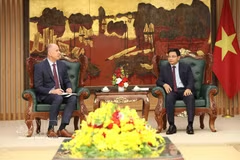
Deputy Prime Minister Nguyen Van Thang meets with Martin Sommer, head of the IMF’s Article IV consultation mission team to Vietnam, in Hanoi on November 13, 2026. (Photo: VNA)

IMF sees positive growth prospects for Vietnam, urges cautious monetary policy

Martin Sommer, head of the IMF’s Article IV consultation mission team to Vietnam, noted that inflation risks in Vietnam remain under control, but several factors could add to price pressures. He therefore called for cautious monetary policy management and readiness to respond promptly if inflationary pressures increased.

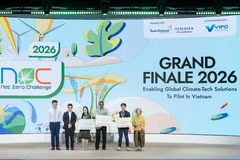
Representatives of the three first-prize-winning startups receive their awards at the event. (Photo: SGGP)

Seven green-tech startups secure 770,000 USD at Net Zero Challenge 2026

In its fourth year, the competition attracted more than 1,100 applications from 80 countries and territories, making it the most competitive edition since its launch in 2023. Nine finalists presented solutions in three categories, namely renewable energy and carbon removal; food systems and sustainable agriculture; and circular economy and waste management.

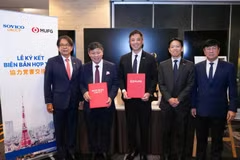
Vietnamese and Malaysian businesses connect at the event (Photo: VNA)

Vietnam, Malaysia connect businesses to boost bilateral trade cooperation

It centred on a business-to-business (B2B) matchmaking session, bringing Vietnamese and Malaysian companies together to discuss import-export needs, seek partners and explore cooperation. Vietnamese businesses aimed to connect with Malaysian importers, distributors and retailers, while expanding access for their products to Malaysia and other markets.

Visitors browse traditional Southern Vietnamese checked scarves on display at the Vietnam-Cambodia Trade Fair. (Photo: VNA)

Vietnam-Cambodia trade fair opens in An Giang

The fair features 150 booths representing 200 businesses, cooperatives, household businesses and production and trading establishments from both countries. The exhibition space is arranged into 10 zones showcasing products from Vietnamese localities and three zones featuring Cambodian products, creating opportunities for businesses from the two countries to promote their products, seek partners and expand markets.

An overview of the press conference to announce the organisation of the second Vietnam International Rice Festival - Can Tho 2026. (Photo: VNA)

Festival to chart new course for rice industry

The second Vietnam International Rice Festival - Can Tho 2026 will take place from November 22 to 25, showcasing the achievements and potential of Vietnam’s rice industry while promoting Can Tho’s image, cultural identity and people, as well as the distinctive river culture of the Mekong Delta.

Japanese business representatives review Ho Chi Minh City’s investment project portfolio at the conference. (Photo: VNA)

Vietnam remains attractive destination for Japanese businesses

Fukai Akihiko, President and Representative Director at Gunma Bank and head of a business delegation from Japan’s Gunma prefecture, said cooperation between Gunma and Vietnam has continued to expand in recent years. Around 15,000 Vietnamese people currently live in Gunma, forming the largest foreign community in the prefecture.

A panoramic view of the site designated for the Ninh Thuan 1 nuclear power plant in Phuoc Dinh commune, Khanh Hoa province. (Photo published by VNA)

Vietnam to access MBIR reactor research capabilities, gradually master nuclear technology

As Vietnam develops its nuclear science and technology and prepares the necessary conditions in terms of human resources, research capacity, safety systems and technical infrastructure, participation in international research programmes and access to MBIR will enable the country to conduct experiments supporting its programme for the peaceful use of atomic energy.

Illustrative image (Photo: chinhphu.vn)

State secret list for financial sector issued

Top secret items include detailed submissions, reports, proposals, explanatory documents, and data concerning state financial and budgetary policies presented to the Party Central Committee, the Politburo, the National Assembly, the National Assembly Standing Committee, or the Government in the event of an emergency related to national defence, national security, social order and safety, or a war for the defence of the Fatherland.

At the 2026 Vietnam Food Forum (Photo: VNA)

Vietnamese food exporters see EU as major market amid stricter standards

The EU–Vietnam Free Trade Agreement (EVFTA) tariff cuts are opening doors. But the EU is also a market with a strict and frequently updated system of standards and regulations, especially in food safety, quarantine, traceability, environmental protection and sustainable development.