Hanoi (VNS/VNA) - Vietnam has a prime opportunity to lead in attracting technological "eagles".
Earlier this month, Foxconn Group received the green light from the Quang Ninh provincial authorities to launch two projects worth 551 million USD in the province. These projects, aimed at producing smart entertainment products and smart systems, fall within Quang Ninh's target industries for investment in processing and manufacturing.
With these initiatives, Foxconn's total investment in Quang Ninh rises to nearly 1 billion USD and surpasses 3 billion USD in Vietnam overall. The company is involved in large-scale electronics and components projects in Bac Giang and Bac Ninh provinces, including the manufacturing of equipment and components for Apple. Last month, Foxconn also invested 383 million USD in a project at the Nam Son Hap Linh Industrial Park in Bac Ninh.
Meanwhile, Amkor Group recently obtained an amended investment certificate to boost its investment by an additional 1.07 billion USD for its semiconductor project in Bac Ninh. This decision has propelled the total investment in the Amkor project to 1.6 billion USD, a staggering 11 years ahead of schedule. Initially, Amkor had projected to invest only 1.6 billion USD in Vietnam by 2035.
In addition to these two investors, recent reports indicate that numerous prominent technology corporations like Samsung, LG, and industry giants such as Hyosung, CJ, and Posco are gearing up to inject billions more into Vietnam in the near future.
At a recent meeting with Prime Minister Pham Minh Chinh during his official visit to the Republic of Korea, Jeong Cheol-dong, CEO of LG Display, said LG had already poured over 5 billion USD into investments in Vietnam and planned to invest an extra 3 billion USD over the next five years. As part of this expansion, the LG Innotel factory aimed to double its capacity, solidifying LG's integrated production hub in Vietnam. Jeong added that LG viewed Vietnam as its critical manufacturing hub.
Meanwhile, Samsung has long regarded Vietnam as a global manufacturing hub, having invested over 22.4 billion USD and consistently increasing its capital in recent years by an average of around 1 billion USD annually. With the opening of its Research and Development (R&D) Centre in late 2022, Samsung has designated Vietnam as the group's global R&D hub - a designation that Vietnam had never anticipated.
This, however, is just the beginning, as Vietnam is increasingly becoming a focal point for global corporations in the semiconductor and AI sectors. Companies like Intel, Amkor, HanaMicron, Marvell, and Synopsys have already invested in Vietnam and continue to do so.
Meanwhile, NVIDIA Corporation is progressively actualising its vision of making Vietnam its “second home”.
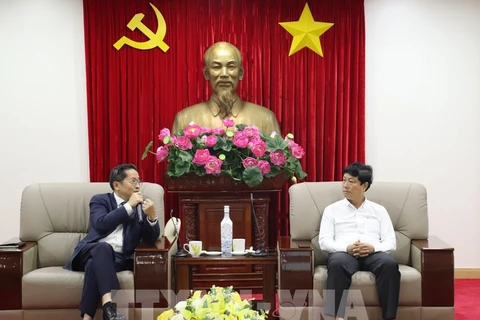
Minister of Planning and Investment (MPI) Nguyen Chi Dung recently engaged in an online discussion with NVIDIA to explore further collaboration plans.
The interest of tech giants in Vietnam is palpable. In a recent statement, the MPI highlighted that not only would numerous large-scale projects spanning semiconductors, energy (including battery production, photovoltaic cells, and silicon bars), component manufacturing, electronics, and high-value-added products see fresh investments and expanded capital in the first half of this year, but Vietnam also held promise in attracting investments across cutting-edge industries like AI, semiconductors, hydrogen, and renewable energy.
The MPI is currently finalising a Draft Decree concerning the establishment, management, and utilisation of the Investment Support Fund. This initiative aims to provide support from the Government to high-tech enterprises, companies engaged in producing high-tech goods, and those undertaking high-tech application projects.
According to Statista Market Insights, Vietnam is poised to experience a Compound Annual Growth Rate of 11.6% in semiconductor revenue from 2023 to 2027, reaching 31.28 billion USD by 2027. Within this projection, integrated circuits, the cornerstone of the semiconductor industry, are anticipated to hit 16.44 billion USD this year.
Google's forecast suggests that Vietnam's digital economy is set to surge elevenfold by 2030, reaching 220 billion USD, nearly half of the country's current GDP. AI will play a pivotal role in Vietnam's realisation of these forecasts, according to Marc Woo, managing director of Google Asia Pacific for Vietnam.
The forecast appears clearly optimistic. However, given the intensifying competition for investment attraction, Vietnam must act swiftly in the present landscape; otherwise, it would miss out on this unparalleled opportunity.
In a recent report to the Government, Minister of Planning and Investment Nguyen Chi Dung highlighted the persisting challenges facing the economy, noting that emerging sectors like the digital economy, green economy, AI, chips, and semiconductors are lagging, risking Vietnam's competitiveness on a global and regional scale.
The MPI reported that despite a steady rise in foreign investment in Vietnam, the number of large-scale projects with advanced technology remained limited. Vietnam has attracted only 108 projects exceeding 500 million USD in investment, averaging 15 projects annually, with a mere 27 falling within the high-tech sector.
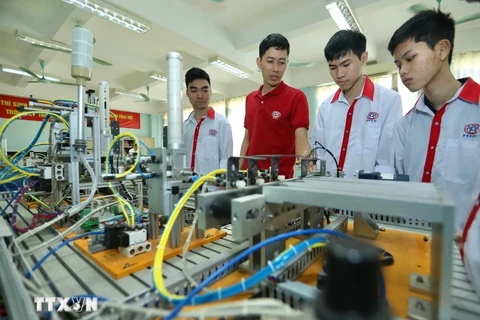
“Immediate steps are required to cultivate skilled human resources, particularly in semiconductor electronics to sustain and enhance investment appeal. Simultaneously, addressing local electricity shortages in regions housing numerous electronics industry ventures is imperative. Additionally, streamlining processes to simplify and expedite post-investment registration procedures, such as obtaining construction permits and fire safety certifications, is crucial,” Dung said.
However, this is just one of the challenges. The pressure to compete for foreign investment in the high-tech sector is intensifying, with many countries, including the US, Europe, the Republic of Korea, Japan, Malaysia, Indonesia, and Thailand, requiring substantial investment support policies.
The RoK, for instance, has unveiled a 26 trillion won (approximately 19 billion USD) support initiative to bolster the chip industry. Malaysia issued the New Industrial Master Plan 2030 by the end of 2023, with an estimated scale of around 20 billion USD, aimed at revitalising Malaysia's industries, particularly in electronics, chemicals, electric vehicles, aerospace, pharmaceuticals, medical equipment, and advanced materials. China has established a 27 billion USD semiconductor investment fund to enhance the self-sufficiency of its semiconductor industry. The US and Europe are prepared to allocate tens of billions of dollars to support investors in the semiconductor sector.
The increasing pressure asks Vietnam to ready its human resources, infrastructure, and other key elements while implementing globally competitive investment support policies to both retain current investors and entice more industry leaders.
At recent discussions, multinational corporations have shown interest in contributing to Vietnam's Investment Support Fund. The MPI is completing the Draft Decree on the establishment, governance, and utilisation of this fund. This initiative is designed to extend governmental support, including financial assistance, to high-tech enterprises; firms engaged in high-tech product manufacturing; those undertaking high-tech application projects; and companies investing in R&D centres, provided they meet specific criteria.
If this proposal is approved, it could serve as a catalyst for Vietnam to attract additional tech powerhouses and solidify its status as a hub for cutting-edge industries.
Efforts made to help firms join global semiconductor supply chain
The MPI has taken various solutions to support domestic firms to join the global semiconductor supply chain more intensively.
Bui Anh Tuan, Chief of the Office of the MPI, said in a recent meeting that the ministry had also given consultancy to competent agencies to perfect relevant policies and laws to facilitate investment, while enhancing international cooperation in this field.
It has coordinated with other ministries and agencies in drafting a project on human resources development in service of the semiconductor industry by 2030 with a vision towards 2050, which was submitted to Prime Minister Pham Minh Chinh for approval, and proposing the establishment of a national steering committee for the development of the sector.
Minister Dung pointed out difficulties facing other sectors in Vietnam, such as retail, housing, and real estate, along with major tasks set for the remaining months of this year. He stressed the need to effectively put in place newly issued policies and regulations, and roll out breakthrough solutions to spur growth, asking agencies to join hands in building socioeconomic plans, orientations, tasks and solutions for 2025.
The minister also urged preparations for the all-level Party congresses, towards the 14th National Party Congress, as well as reforms, breakthroughs and innovation in development during the 2026-2030 period./.