Vietnam calls for more ASEAN-Pacific Alliance exchange activities

Vietnam has called on the ten-member ASEAN and the Pacific Alliance (PA) to increase their exchanges in order to effectively deal with challenges hindering their affiliation.
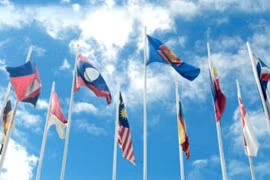
Vietnam calls for more ASEAN-Pacific Alliance exchange activities ảnh 1Illustrative image (Source: AFP/VNA)

Jakarta (VNA) – Vietnam has called on the ten-member ASEAN and the Pacific Alliance (PA) to increase their exchanges in order to effectively deal with challenges hindering their affiliation like geographical distance and cultural differences.

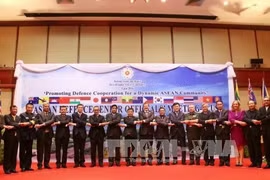
Ambassador Nguyen Hoanh Nam, head of the Vietnamese delegation to ASEAN made the propose at a meeting between the ASEAN’s Committee of Permanent Representative (CPR) and the PA’s Group of External Relations (GER) in Bangkok, Thailand, on May 10.

The two sides have great potential to enhance their cooperation not only in economic field, he said, noting that ASEAN and the PA boast close political ties and have regularly coordinated with each other at international forums.

Other delegates at the event were of the same view, adding that with common interests in many fields and multiple similarities, the two sides can work as a bridge for each other to access new markets.

They said to overcome difficulties such as geographical distance and poor understanding of each other, a suitable approach is needed to realise the potential. First of all, the two sides should decide priority and feasible areas for cooperation in the immediate future, such as reducing poverty, narrowing development gap, facilitating trade and investment, developing small-and medium-sized enterprises (SMEs), and increasing people-to-people exchanges.

Participants agreed that the two sides will swiftly outline a framework document on ASEAN-PA cooperation which will be submitted to the ASEAN-PA Foreign Ministers Meeting scheduled for September in New York for approval.

They suggested the two sides consider enhancing their coordination of stance on issues of shared concern at regional forums and frameworks such as the Asia-Pacific Economic Cooperation forum (APEC), the Trans-Pacific Partnership (TPP) and the Group of 20 (G20).

Established in 2011, the PA’s objective is to promote economic, trade and investment cooperation among its members – Chile, Colombia, Mexico and Peru.

With a population of 206 million and combined GDP of 3.72 trillion USD, the alliance now accounts for 46 percent of total exports and half of imports in Latin America.

The ASEAN-PA relationship was set up in September 2014 on the basis of outcomes of the first ASEAN-PA Foreign Ministers’ Meeting which was held on the sidelines of the 69 th session of the UN General Assembly.

During the second ASEAN-PA Foreign Ministers’ Meeting in September 2015, the two sides consented to scope out their affiliation in a number of priority realms like economy, trade, tourism, culture and SMEs development.

Thailand is the rotating coordinator between ASEAN and the PA in 2016. The role will be transferred to Vietnam next year.-VNA
VNA

See more

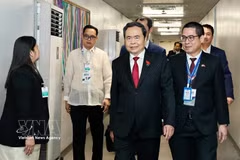
NA President Tran Thanh Man concludes the working visit to the Philippines to attend AIPA-47 on November 18 evening. (Photo: VNA)

NA President concludes successful visit to attend AIPA-47

NA President Tran Thanh Man’s visit to AIPA-47 in the Philippines, along with its agenda and substantive discussions, reflected Vietnam’s determination to further promote the NA’s legislative, supervisory and representative roles in upholding the people’s will and aspirations, while advancing legal harmonisation and creating a favourable institutional framework for inclusive and sustainable development.

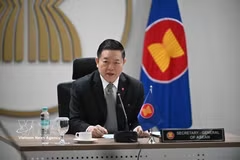
ASEAN Secretary-General Kao Kim Hourn announces the outcomes of the 49th ASEAN Summit and related meetings at the ASEAN headquarters in Jakarta, Indonesia, on November 18, 2026. (Photo: VNA)

49th ASEAN Summit highlights action-oriented regional cooperation

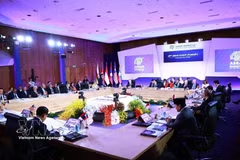
As 2026 marks the first year of implementing the ASEAN Community Vision 2045, leaders underlined the bloc's solidarity and centrality as well as closer coordination among the three community pillars in response to global economic uncertainties and security challenges, with priorities including digital transformation, AI application, energy security and supply chain resilience.

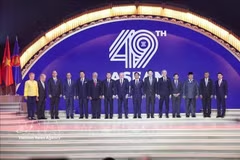
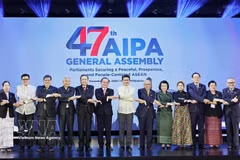
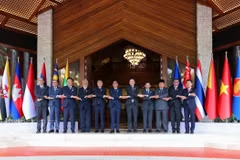
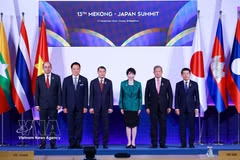
President of the Vietnamese National Assembly (NA) Tran Thanh Man (fifth from left) and other heads of delegations pose for a group photo at the opening ceremony of the 47th General Assembly of the ASEAN Inter-Parliamentary Assembly (AIPA-47) in Manila, the Philippines, on November 18. (Photo: VNA)

Vietnam sends messages to opening of 47th AIPA General Assembly

General Secretary and President Lam stressed that Vietnam will continue working with the parliaments of the AIPA member nations to make more practical contributions to AIPA’s activities, contributing to building a resilient, dynamic, innovative and people-centred ASEAN Community.

ASEAN Secretary-General Kao Kim Hourn (Photo: VNA)

Growing together: 11 nations, one ASEAN home

The new emblem signals an ASEAN that is growing more inclusive while holding to its founding principles of building a peaceful, stable, dynamic region based on equality and cooperation. Its colours come from member states’ national emblems, reflecting diversity inside a single community.

Prime Minister Le Minh Hung and heads of delegations attend the retreat session of the 49th ASEAN Summit. Photo: VNA.

Vietnam makes substantial contributions to 49th ASEAN Summit

Vietnam made positive contributions to discussions and put forward numerous practical, strategic proposals and initiatives to help shape ASEAN cooperation in the coming period. Vietnam also demonstrated a leading role in promoting subregional cooperation and narrowing the development gap.

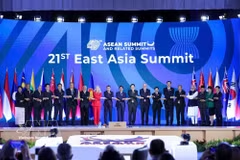
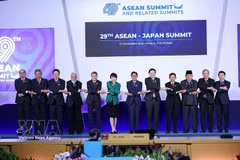
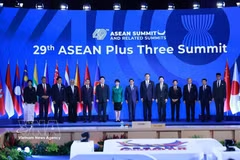
Prime Minister Le Minh Hung (second, right) attends the 29th ASEAN Plus Three Summit (Photo: VNA)

PM concludes working trip to Philippines following 49th ASEAN Summit

During the four-day trip, PM Hung attended a series of multilateral and bilateral activities, including ASEAN meetings, and summits between ASEAN and dialogue partners, engagements with leaders of ASEAN member states and other countries and international organisations. He put forward strategic proposals to strengthen regional cooperation.

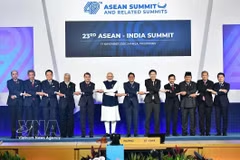
Vietnamese Prime Minister Le Minh Hung (fifth, left), other ASEAN leaders and Indian Prime Minister Narendra Modi pose for a group photo at the 23rd ASEAN-India Summit in Manila, the Philippines, on November 17 (Photo: VNA)

Vietnamese Prime Minister Le Minh Hung attends 23rd ASEAN-India Summit

The PM called for closer cooperation to maintain peace, stability, security, safety and freedom of navigation and overflight in accordance with international law, particularly the 1982 United Nations Convention on the Law of the Sea (UNCLOS). He also proposed considering the establishment of an ASEAN-India maritime dialogue mechanism, and welcomed India’s consistent support for ASEAN’s principled stance on the East Sea.

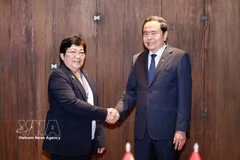
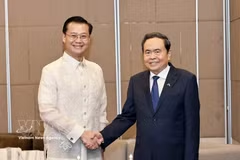
President of the Vietnamese National Assembly Tran Thanh Man (right) and President of the National Parliament of Timor-Leste Maria Fernanda Lay in Manila, the Philippines, on November 17 (Photo: VNA)

Vietnamese NA President meets with leader of Timor-Leste National Parliament on AIPA-47 sidelines

NA President Man expressed his hope that Timor-Leste would continue creating favourable conditions for Vietnamese businesses to invest and operate in the country, affirming that Vietnam stood ready to supply rice to Timor-Leste. Vietnam is also willing to share experience and support Timor-Leste in fulfilling its ASEAN commitments and preparing to assume the ASEAN Chairmanship in 2029.

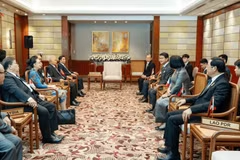
President of the Vietnamese National Assembly (NA) Tran Thanh Man (right) and Philippine Senate President Sherwin T. Gatchalian at their meeting in Manila, the Philippines, on November 17 (Photo: VNA)

Vietnamese NA President meets with Philippine Senate President

President of the Vietnamese National Assembly (NA) Tran Thanh Man called for greater cooperation with the Philippines in trade, investment, food security, the maritime economy, science and technology, innovation, energy, infrastructure, education, culture, tourism and people-to-people exchanges.