Vietnam celebrates 44th World Food Day in Hanoi

The Ministry of Agriculture and Rural Development (MARD), the United Nations (UN) in Vietnam, and the Food and Agriculture Organisation (FAO) of the UN in Vietnam on October 18 jointly organised the commemoration of Word Food Day 2024 (October 16).

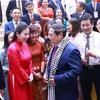
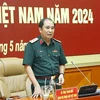
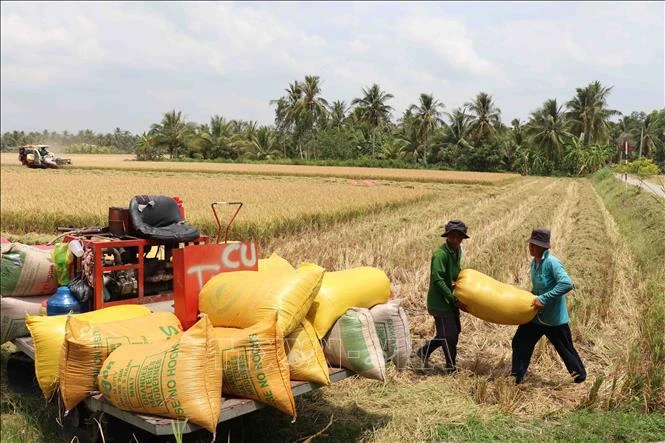
Illustrative photo (Photo: VNA)

Hanoi (VNA) – The Ministry of Agriculture and Rural Development (MARD), the United Nations (UN) in Vietnam, and the Food and Agriculture Organisation (FAO) of the UN in Vietnam on October 18 jointly organised the commemoration of Word Food Day 2024 (October 16).

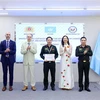
On this occasion, the ministry launched the Plan for International Cooperation Promotion in Agriculture and Rural Development to 2030 and a vision to 2050. They signed the Partnership Agreement for Transparent, Responsible and Sustainable Food Systems Transformation in Vietnam (FST-Partnership), and kicked off the UN joint programme on “Incubation of Innovations in Partnerships and Financing for Agrifood Systems Transformation in Vietnam”.

World Food Day 2024 themed “Right to Foods for a Better Life and a Better Future” is an opportunity to widely share global commitments to ensuring access to adequate food for all, through sustainable and equitable food systems transformation.

Speaking at the event, Minister of Agriculture and Rural Development Le Minh Hoan said that Vietnam's agriculture plays an important role in ensuring food security, social stability and livelihoods for over 60% of the population living in rural areas. It contributed 12% of the country's gross domestic product in 2023 and created jobs for nearly 40% of the workforce, making an important contribution to poverty reduction.

However, the agriculture sector is facing challenges, he noted.

With the goal of proactively, responsibly participating in globalisation and solving the challenges of global agriculture, while integrating into the world for sustainable development of Vietnamese agriculture and rural areas, the ministry has issued a decision approving the Plan for International Cooperation Promotion in Agriculture and Rural Development an international cooperation plan to 2030 with vision to 2050.

FAO Representative to Vietnam Rémi Nono Womdim said that in Vietnam, the proportion of the population that cannot afford a healthy diet is much lower than in neighbouring countries.

In particular, Vietnam has developed and adopted a national roadmap for food system transformation. The roadmap is expected to ensure equitable access to a sufficient and diverse range of nutritious, safe and affordable foods for all Vietnamese people, he added./.
VNA

See more

Staff members of the Hanoi Public Administrative Service Centre handle administrative procedures for local residents. (Photo: VNA)

Hanoi: 95% of administrative procedures to be handled from home

The plan targets that at least 80% of administrative procedures under the city’s authority will be provided as fully online public services, while more than 95% of applications will be received and processed entirely online. By June 30, 2026, about 80% of administrative procedures are expected to be restructured based on integrated data systems, with the figure rising to 95% by the end of the year.

Delegates at the SEAN Future Forum NextGen Workshop 2026 held in Jakarta, Indonesia on March 9 (Photo: VNA)

Vietnam contributes youth perspectives to AFF NextGen initiative

The ambassador expressed confidence that fresh perspectives, innovative thinking and lessons drawn from the workshop will be proposed to AFF 2026, representing the voice of the younger generation in shaping ASEAN’s future in line with their aspirations.

A young volunteer donates blood during the 2026 Red Sunday programme. (Photo: VNA)

Nearly 5,000 people join blood donation campaign in Ho Chi Minh City

According to health authorities, Vietnam collected nearly 1.75 million units of blood in 2025, with 98% from volunteer donors, equivalent to around 1.75% of the population participating in blood donation. Large-scale campaigns such as Red Sunday have played a key role in achieving these results.

More than 30 kilogrammes of various drugs trafficked from Cambodia to HCM City were seized in a police operation in March 2025. (Photo: VNA)

Ho Chi Minh City aims to become drug free by 2030

Every commune, ward or residential area in Ho Chi Minh City is expected to meet official drug-free standards by the end of 2029, while schools, hospitals, government offices, businesses and social organisations across the city are to remain free of drug activity.

Military forces take a resident from a flooded area. Photo: VNA

Da Nang, Oxfam join hands to support flood victims

In the coming time, the Da Nang Red Cross Society will continue to coordinate with Oxfam to implement support activities in Nong Son commune, helping residents overcome difficulties and stabilise their livelihoods.

Training on response to reservoir incidents (Photo: VNA)

Central Civil Defence Fund established to bolster disaster response

The Central Civil Defence Fund is authorised to receive, manage and use voluntary contributions from domestic and foreign entities and individuals, plus transfers from provincial civil defence funds in line with the PM’s decisions and allocations from relevant state financial sources outside the state budget, all earmarked for incident and disaster response and recovery efforts.

Vietnamese women shine in the traditional Ao dai (Photo: VNA)

March shines with elegance of “Ao dai”

In early March, scenes of women in flowing Ao dai taking spring photos by lakes, parks, offices, temples and historical sites have become a familiar sight on the streets of Hanoi. Social media is also filled with images and stories surrounding the elegant attire, which has become a symbolic signal of the season dedicated to honouring women.

Hanoi voters learn about candidates’ biographies and action programmes. (Photo: VNA)

Hanoi thoroughly prepares for NA, People’s Council election

According to the municipal Election Committee, the capital city has established election committees in 126 communes and wards. In addition, 11 electoral boards for National Assembly deputies, 31 electoral boards for the city-level People’s Council, 831 commune-level electoral boards and more than 4,000 polling teams have been set up to serve the election process.