Vietnam-China tourism cooperation expected to further thrive

Thanks to the close cooperation between Vietnamese and Chinese travel firms and harmonised tourism promotion policies of the two countries, the number of Vietnamese and Chinese tourists travelling to the other country has completely recovered with strong growth potential.

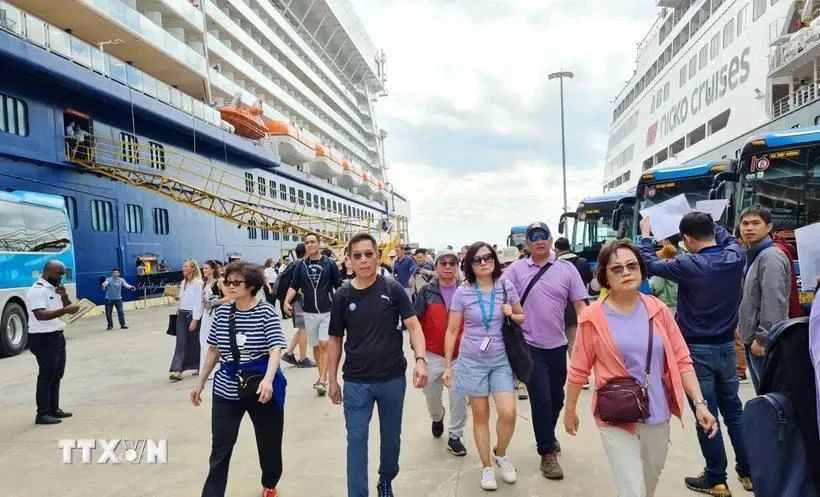
Tourists at the international cruise port in Ha Long city of Quang Ninh province (Photo: VNA)

Hanoi (VNA) – Thanks to the close cooperation between Vietnamese and Chinese travel firms and harmonised tourism promotion policies of the two countries, the number of Vietnamese and Chinese tourists travelling to the other country has completely recovered with strong growth potential.

According to the Vietnam National Authority of Tourism (VNAT), in the first seven months of this year, 2.1 million Chinese visitors arrived in Vietnam, a surge of about 200% year on year, making China the second largest tourist market of Vietnam after the Republic of Korea.

VNAT Vice Director Ha Van Sieu affirmed that after the COVID-19 pandemic, tourism cooperation between Vietnam and China has expanded considerably.

He attributed the result to the sound friendship and cooperation between the two countries and effective tourism promotion implemented by the two countries.

The official revealed that the VNAT will send two tourism promotion delegations to China to join the China International Travel Mart (CITM) and the China-ASEAN Tourism Expo.

At the same time, China has continuously issued attractive entry-exit policies, while improving tourism service quality, diversifying payment methods and continuously organising events to introduce its popular tourist attractions such as Zhangjiajie, which lured 42,200 Vietnamese visitors in the first half of this year.

At a conference to introduce tourist destinations of China’s Nanning province, participants noted that in the first six months of this year, the Chinese locality welcomed 300 Vietnamese tourist groups with more than 19,000 visitors.

Over the years, China has been one of the leading tourist markets of Vietnam, making up about 30% of the total international visitors to the country.

So far this year, tourism routes between Vietnam and China have been bustling. In June, a route for charter flights from Hai Phong city of Vietnam to Lijiang in China was launched, followed by the launching of the Hanoi-Haikou, and Hanoi-Chongqing air routes. These new routes have helped travel firms of the two sides further exploit sources of tourists from each other’s country.

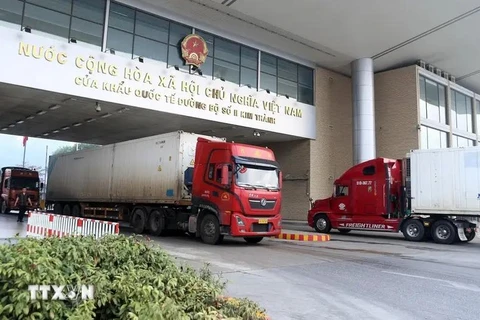
The booming in the number of visitors between Vietnam and Chinese is also thank to the close coordination among travel firms of the two countries, especially in exploiting destinations that can be reached by road or short flights.

Pham Tien Dung, Vice Chairman of the UNESCO Hanoi Travel Club (HUTC), held that the recovery of tourist source from China will bring about chances for Vietnamese tourism to take off this year. However, he stressed the need for Vietnamese destinations to target higher segment of visitors with more spending.

Agreeing with Dung, Nguyen Tien Dat, CEO of AZA Travel, said that sea and island tours in Vietnam have always been attractive to Chinese tourists, especially safe places with reasonable costs.

He held that the tourism sector should focus on luring tourists from large cities such as Beijing and Shanghai who often spend a large amount of money for their trips.

It is forecast that the number of elderly travelers in China will exceed 100 million in 2025, opening up a market of 139.3 billion USD per year. In 2040, the elderly will make up 50% of the country’s total tourism market in 2040, according to China National Committee on Ageing. This fact prompts Vietnam to design policies to lure this group of visitors, said experts.

They asserted that in order to reposition Vietnam as a luxurious destination instead of a low-cost destination, it is necessary to create unique products to encourage tourists to stay longer and spend more, and improve the infrastructure quality to meet their demands./.
VNA

See more

Vice Chairman of the Hanoi People’s Committee hands over investment policy approval for Moscow House project in Hanoi to the Moscow authorities. (Photo published by VNA)

Hanoi, Russian localities step up cooperation in urban railways, technology

Secretary of the Hanoi Party Committee Tran Duc Thang and the delegation held talks with Moscow authorities to review implementation of the 2025-2027 cooperation programme and discuss key priorities for the new period, including urban transport, science and technology, digital transformation, trade and investment, and cultural exchanges.

Vietnamese Ambassador to Mexico Nguyen Van Hai (fourth from right) and others attend the seventh Veracruz International Energy Congress. (Photo: VNA)

Vietnam, Mexico strengthen energy, port cooperation

A number of Mexican state Veracruz businesses expressed their wish to organise a delegation to Vietnam to gain first-hand insights into the market, seek partners and explore investment and business opportunities, initially focusing on trade, energy, agriculture and tourism.

At the working session (Photo: VNA)

Can Tho, Guangxi seek collaboration in logistics, supply chains

Chinese investors now back 35 projects in Can Tho with registered capital of nearly 1.2 billion USD. In the first seven months of 2026, Can Tho’s exports to China hit 77.5 million USD, while imports stood at 64.7 million USD. Key exports included rice, seafood, farm produce, processed agricultural products and apparel while main imports comprised agricultural chemicals, veterinary medicines, fertilisers, chemicals, fabrics and other materials and inputs.

Vietnamese Minister of Finance Ngo Van Tuan grants an interview to the Vietnam News Agency (VNA). (Photo: VNA)

Vietnam, Russia move to boost financial cooperation

On bilateral economic, trade and investment ties, Tuan said two-way trade hit 3.24 billion USD in the first seven months of 2026, up 12% from a year earlier. Vietnam’s exports to Russia totaled 1.33 billion USD, while imports amounted to 1.91 billion USD.

Cai Mep - Thi Vai Port complex in Ho Chi Minh City (Photo: VNA)

Ho Chi Minh City seeks to make seaports new growth driver

To maximise its seaport advantages, Ho Chi Minh City is developing smart and green ports while promoting clean energy, lower emissions and sustainable supply chains. It aims to establish an integrated ecosystem linking seaports with industrial parks, logistics centres, free trade zones, multimodal transport networks and an international financial centre.

Farmers visit the off-season durian orchard of Cao Chi Dai in Vinh Hanh commune, An Giang province (Photo: VNA)

Vietnam promotes finance for green agriculture

Over the past five years, Vietnam has developed and gradually implemented a green finance system to support low-emission and environmentally friendly production, including agriculture. Based on the State Bank of Vietnam's Directive No. 03/CT-NHNN dated March 24, 2015, banks including BIDV, VCB, HDBank and Agribank have introduced green credit packages for waste treatment, high-tech agriculture, digital transformation, regional linkages and emission reduction across production chains.

An overview of the meeting between representatives from Polish businesses and the Agency for Domestic Market Surveillance and Development. (Photo: Agency for Domestic Market Surveillance and Development)

Polish businesses seek suppliers, partners in Vietnam

MAJAMI, a confectionery manufacturer and trader under Sweet House, is seeking distributors for Polish confectionery products in the Vietnamese market. Meanwhile, GABONA, a distributor and wholesaler of professional cosmetics, hair care and make-up products and beauty accessories, is looking for Vietnamese manufacturers of vegan and natural cosmetics.