Vietnam, China bolster cooperation in social, livelihood fields

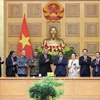
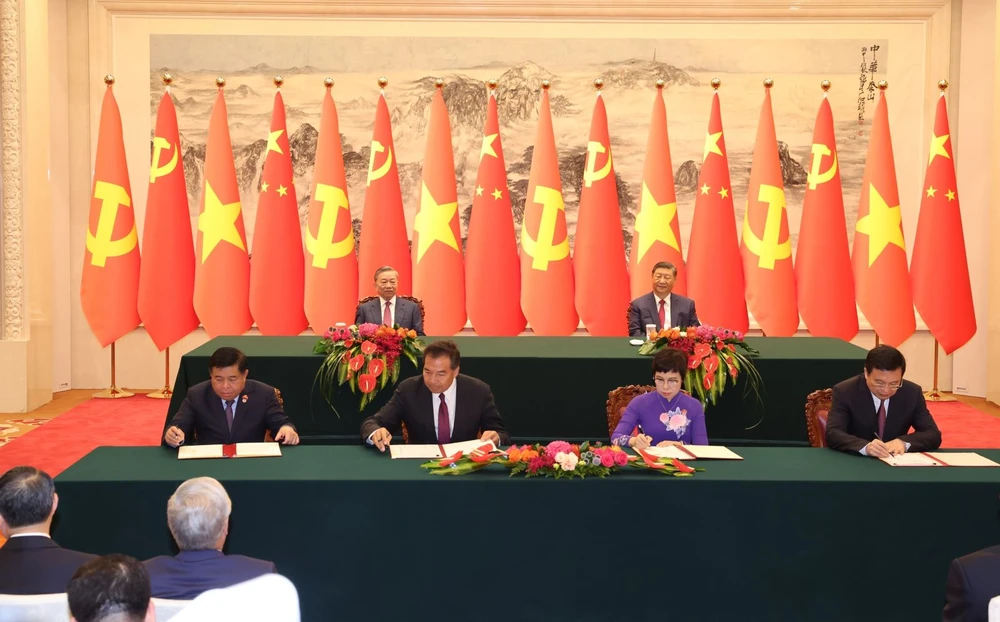
Vietnam and China will step up collaboration in social affairs and people’s livelihoods under a memorandum of understanding (MoU) signed by Minister of Planning and Investment Nguyen Chi Dung and Chairman of the China International Development Cooperation Agency (CIDCA) Luo Zhaohui on August 19.

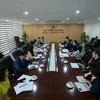
Vietnam and China will step up collaboration in social affairs and people’s livelihoods under a freshly-signed memorandum of understanding. (Photo: VNA)

Beijing (VNA) – Vietnam and China will step up collaboration in social affairs and people’s livelihoods under a memorandum of understanding (MoU) signed by Minister of Planning and Investment Nguyen Chi Dung and Chairman of the China International Development Cooperation Agency (CIDCA) Luo Zhaohui on August 19.

The signing took place as part of the ongoing state visit to China by the General Secretary of the Communist Party of Vietnam Central Committee and State President To Lam and his spouse.

The MoU aims at materialising the common perceptions reached by high-ranking leaders of the two Parties and States on boosting economic cooperation, including development collaboration, and the implementation of the Global Development Initiative (GDI).

Accordingly, both sides agreed to study and carry out projects in the above-mentioned domains to better socioeconomic conditions, thus improving the livelihoods of people, particularly those living in mountainous, remote, and ethnic minority-inhabited areas.

In the coming time, the Vietnamese Ministry of Planning and Investment and the CIDCA will take specific actions to effectively implement projects using the aid from the Chinese Government, and other aid projects within the GDI. They will focus on carrying out those using the 600 million CNY (83.74 million USD) aid provided by the Chinese Government for the Vietnamese Government./.
VNA

See more

An overview of the meeting in Ho Chi Minh City to discuss measures to ease pressures on production and trade, and stablise the domestic market amid the escalating conflict in the Middle East. (Photo: VNA)

Measures sought to address business challenges amid Middle East conflict

Vietnam is facing a three-stage ripple effect - first on transport and fuel-dependent industries, then on sectors relying on their outputs, and ultimately on consumers. Volatility in key commodities like fuel is disrupting the entire supply chain and increasing the risk of market instability.

Workers load rice bags onto a vessel for delivery. (Photo: VNA)

PM directs tasks to accelerate 2026 export growth

During January – February, Vietnam’s total export-import value hit 155.7 billion USD, up 22.3% year-on-year. Of the total, exports were estimated at 76.4 billion USD, up 18.3%, while imports totaled 79.3 billion USD, up 26.3%.

A quick report from data analytics platform Metric shows the number of active sellers across Shopee, TikTok Shop, Lazada and Tiki has dropped to just over 602,000, marking a year-on-year decline of more than 7%. (Illustrative photo: VNA)

Higher marketplace fees weigh on online sellers

Analysts identify rising operational costs as the key factor behind the exodus. In 2025, platforms simultaneously rolled out fee hikes ranging from 10–15%, significantly increasing the financial burden on merchants.

The latest approvals underscore the growing presence of Vietnamese rice in one of the world’s most demanding markets. (Photo: VNA)

Fragrant rice deepens EU market presence

Although the volume of individual shipments remains relatively modest, industry experts say the steady flow of exports reflects stable demand in the EU for high-quality rice.

Promoting stronger foreign direct investment (FDI) inflows is considered an important solution to help drive economic growth. (Photo: VNA)

Vietnam emerges as hub for high-quality FDI

Vietnam is gradually becoming a strategic destination for high-quality global FDI. Investment flows are increasingly directed toward sectors such as high-tech manufacturing, electronics, digital infrastructure, modern logistics, and industries that are closely linked to global supply chains.

Shrimp processing for export at Huy Nam company, An Giang province. (Photo: VNA)

Fisheries sector proactively adjusts to emerging challenges

In addition to food safety regulations, the US continues to closely monitor the origin of imported seafood through the Seafood Import Monitoring Programme (SIMP) administered by the National Oceanic and Atmospheric Administration (NOAA). Requirements linked to the Marine Mammal Protection Act (MMPA) are also a major concern for businesses.