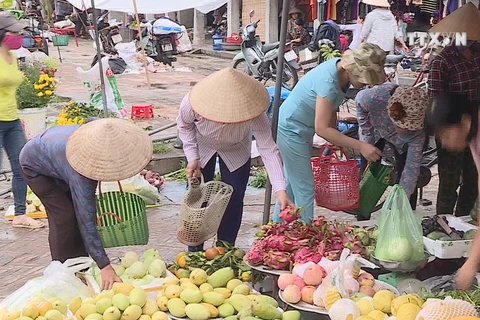
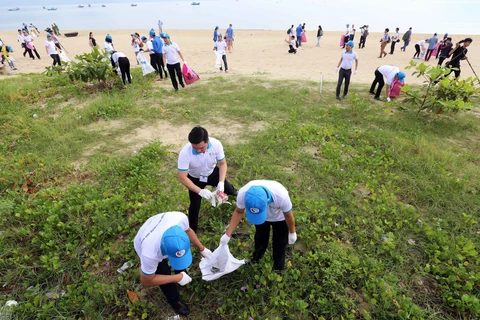
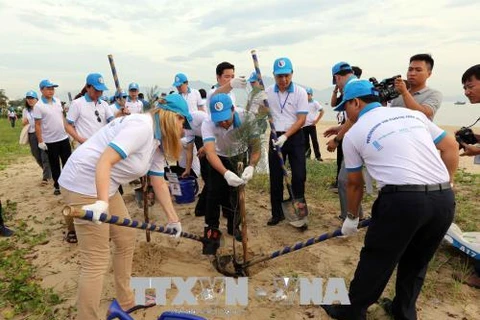
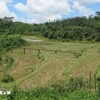
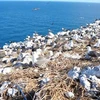
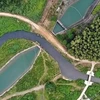
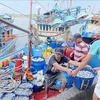
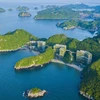
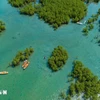
Marine environment is well protected in the sea off the Cham Island in Hoi An city. Plastic bags and waste release in the ocean was banned in 2005. (Photo coutersy of Le Xuan Ai)
 Da Nang (VNS/VNA) - Vietnam has strongly committed to reducing plastic waste country-wide and in the long term, working to eliminate the issue all together.
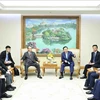
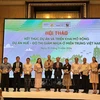
Minister of Natural Resources and Environment Tran Hong Ha was speaking during the 6th Global Environment Facility (GEF-6) Assembly in Da Nang city on June 26.
Ha said the government has proposed an initiative of building regional partnerships in management of plastic waste in the Southeast Asia as well as a global mechanism in promoting positive measures of clearing waste in the ocean.
“Discharge of plastic waste into the ocean is an alarming issue. It has heavily polluted the ocean, damaged the marine ecology system and threatened food security,” Ha said.
“We highly appreciate the contribution of international partners and organisations in assisting Vietnam deal with plastic waste pollution. Vietnam is expecting more international support in promoting our initiatives and commitment to plastic waste reduction for a plastic-free ocean,” he said.
Director General of Vietnam’s administration of Seas and Islands (VASI) Ta Dinh Thi said the GEF-6 was an opportunity for the country to share experience and management skills with global partners and regional countries in the fight against plastic waste pollution on land and at sea.
“We propose to improve human knowledge on current plastic waste pollution and badly affects of the waste in natural resources. Vietnam needs to share experience with international organisations to enhance capacity, education, advanced technology transfer and awareness among local people and businesses,” Thi said.
“Vietnam is listed in the world’s top 20 countries with most plastic waste in the ocean, releasing 500,000 tonnes per year. We are among six countries in the Southeast Asia region that has yet built up waste debris management,” he said.
He added that the country has witnessed the dangers of plastic pollution in the ocean, food chains and the disappearance of marine species in the future.
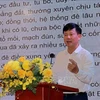
Director of the Centre for Environment and Community Research (CECR) under the Union of Science and Technology of Vietnam Nguyen Ngoc Ly said the country discharges 19,000 tonnes of rubbish, of which 16 percent is plastic waste, every day.
She said education on awareness hasn’t been promoted in the community, while the recognition on waste recycling and classification at home is not a big concern among people.
Ly said a few cities and provinces have successfully implemented recycling programmes.
The Cham Island, a UNESCO-recognised world biosphere reserve site, 20km off the coast of Hoi An city, was the first place in Vietnam to ban the use of plastic bags among islanders and tourists in 2005.
The island administration forbids visitors from bringing plastic bags from the mainland, and it began starting a zero waste campaign this year.
The International Union for Conservation of Nature (IUCN) also started a campaign ‘Saying No’ to single-use plastic cups and straws in Ly Son Island, off the coast of Quang Ngai province.
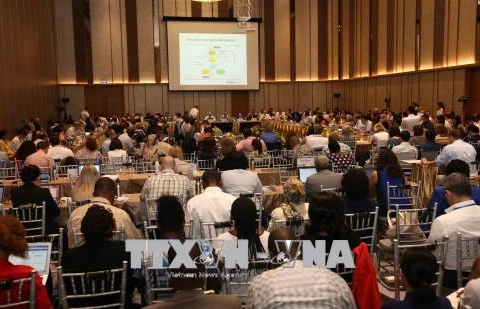
Different dialogue and activities on environmental issues will be discussed after the opening ceremony of the GEF-6 until it ends on June 28.-VNA
VNA