Vietnam cultural days in full swing in US

The Vietnamese Cultural Days in the US kicked off in Washington D.C. on August 8 to mark the 20th founding anniversary of Vietnam-US diplomatic ties (1995-2015).
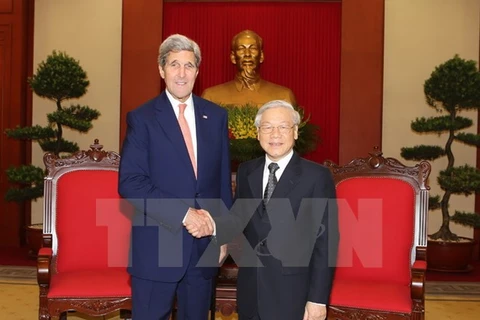
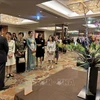
Vietnam cultural days in full swing in US ảnh 1Vietnam, US delegates take photo at the event (Photo: VGP News)

The Vietnamese Cultural Days in the US kicked off in Washington D.C. on August 8 to mark the 20th founding anniversary of Vietnam-US diplomatic ties (1995-2015).

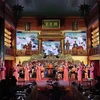
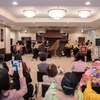
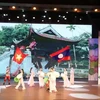
The programme entitled “Huong Sac Viet Nam” (Essence of Vietnam) put the first note to the opening ceremony, entailing a folk music performance and a traditional “ao dai” show.

Addressing the event, Minister of Culture, Sports and Tourism Hoang Tuan Anh said Vietnam and the US have witnessed significant achievements in bilateral comprehensive cooperation over the past 20 years.

He highlighted culture and people-to-people exchange as important factors to promote the friendship, reconciliation and peace between the two nations.

The cultural days programme is expected to help the US people understand more about Vietnam – a beautiful, peaceful, and hospitable nation which is home to 21 tangible and intangible world cultural heritage sites recognised by UNECO, he said.

Deputy Assistant Secretary at the US Department of State’s Bureau of Education and Cultural Affairs, Mara Tekach, said the programme demonstrates the progress in the Vietnam-US relations, especially since they established diplomatic ties 20 years ago.

She added that the Vietnamese community in the US has been playing a significant role in promoting people-to-people exchange and cultural understanding between the two countries.

A fashion show titled “Miraculous Transformation” will be staged on August 9 night to introduce special collections made from Vietnamese ethnic fabric by top Vietnamese designers like Lan Huong, Quang Nhat, Chula, and Minh Hanh.

Slated for August 10, the “Colors of Vietnamese Ethnic Cultures” programme will feature traditional music and dances as well as western music performed on Vietnamese bamboo musical instruments.

Meanwhile, the “Night of Lotus” programme hopes to entertain US audiences and overseas Vietnamese with traditional music and dances celebrating the beauty of lotus as the soul of Vietnam .

Organised by the Vietnam Ministry of Culture, Sports and Tourism, the Vietnamese Embassy in the US, and the Permanent Mission of Vietnam to the United Nations, the Vietnamese cultural days in the US will run until August 12 in Washington D.C. and New York City.-VNA

VNA

See more

At the event “Vietnamese Language in the heart of Kyushu, Japan” (Photo: VNA)

Vietnamese in Japan revive mother tongue among young generations

While the number of Vietnamese-origin children in Japan is surging, opportunities to actually speak Vietnamese in daily life are vanishing fast. Many children can understand the language but default to Japanese in response, gradually relegating their mother tongue to a secondary role, sometimes even treating it as a “second foreign language” inside their own houses.

A tribute to Hung Kings in Ho Chi Minh City (Photo: VNA)

Hung Kings’ Commemoration Day 2026 to spread sacred values, foster national unity

Following the merger of Phu Tho, Vinh Phuc, and Hoa Binh provinces into the new Phu Tho province last year, the Hung Kings Temple Festival has taken on heightened significance. It now serves not only as a tribute to the ancestral homeland but also a unified cultural platform that extends sacred ancestral values to Vietnamese communities at home and abroad.

A traditional art performance at Bach Ma temple in Hanoi (Photo: VNA)

Traditional arts hold untapped economic power

Traditional arts embody deep aesthetic values, worldviews, and national identity, shaping the country’s distinctive “aesthetic identity” and foundational cultural tastes

A performance at the opening ceremony of the Hung Kings Temple Festival and the 2026 Ancestral Land Culture and Tourism Week on late April 17 (Photo: VNA)

Hung Kings Temple Festival, associated tourism week kick off

The annual festival serves as a major national cultural event, offering an opportunity for people across Vietnam and overseas Vietnamese communities to pay tribute to their ancestors, express gratitude, and strengthen the great national solidarity.

A ritual at Hue Nam Temple Festival (Photo: VNA)

Hue Nam Temple Festival: From imperial relic to distinctive cultural celebration in Hue

Historically known as Ngoc Tran Son Tu, the temple was renamed Hue Nam during the reign of King Dong Khanh in the late 19th century, symbolising royal gratitude to the Mother Goddess. It is also the only temple in Hue that harmoniously combines royal ceremonial elements with folk religious practices, creating a distinctive blend of court ritual and popular belief.

Participants in the 20th Cong hien (Devotion) Awards presentation ceremony in Hanoi on April 15 (Photo: VNA)

Devotion Awards mark two decades of honouring excellence in music, sports

Nguyen Thien Thuat, Editor-in-Chief of the The Thao & Van Hoa newspaper and Head of the organising board of the awards, said, noting that their achievements reflect the spirit of the Politburo’s Resolution No. 80, which emphasises preserving national cultural values while selectively absorbing the essence of world culture.

Artisans and students take part in cultural activities and exchanges in the Xoan singing performance space at Hung Lo ancient communal house in Phu Tho province (Photo: VNA)

Ancestral legends revived through contemporary performance

Beyond cultural value, well-organised festival programmes linked with tourism and media can contribute to the development of cultural industries and enhance Vietnam’s cultural soft power, positioning heritage-based events as distinctive national cultural brands in the international arena.

Khue Van Cac (Khue Van Pavilion) stands as a defining cultural symbol of Hanoi, closely associated with Vietnam’s long-standing tradition of valuing education and honouring knowledge. (Photo: VNA)

Greater efforts needed for heritage to shape Hanoi’s identity

As suggested by UNESCO experts, heritage should be approached as an integrated system encompassing space, people and everyday life. This perspective can inform urban planning, cultural tourism development and the creation of clear economic drivers.