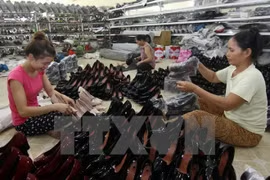
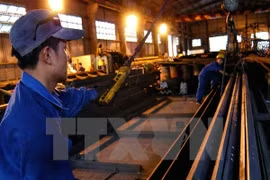
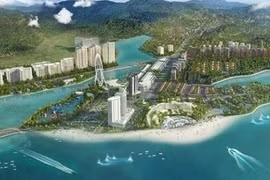
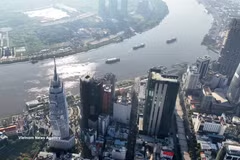
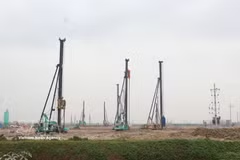
A view of HCM City. The World Economic Forum’s latest global competitiveness list, released on Wednesday, ranked Vietnam 55th overall, up five places from last year and 20 from five years ago (Photo: tuoitre.vn)
Hanoi (VNS/VNA) - The World Economic Forum’s latest globalcompetitiveness list, released on September 27, ranked Vietnam 55th overall, upfive places from last year and 20 from five years ago.
The Global Competitiveness Report 2017-18 said the country had made notableimprovements in all sectors, notably among the basic requirement factors (75thout of 137), including institutions, infrastructure, macroeconomic environment,health and primary education.
Higher education and training also advanced (84th), as firms perceive that thelack of an educated workforce constitute a significant hurdle to doingbusiness.
Trade also propelled Vietnam upward, with the country seventh in terms of theratio of imports to gross domestic product, the Geneva-based WEF noted in thereport. The US withdrawal from the Trans Pacific Partnership may have hurt somefuture trade opportunities for Vietnam, but the report stated that “thecountry’s growth is nonetheless projected to remain robust from strongexports”.
The report suggested Vietnam also boost its competitiveness by closing gaps ininnovation and sophistication factors with countries at a similar stage ofdevelopment, such as the Philippines.
It also showed the five most problematic factors that concern investors includeaccess to financing, inadequately educated workforce, corruption, poor workethic and tax regulations.
The WEF’s global competitiveness report also presented a mixed picture forAsia, with big strides by Indonesia and Vietnam and falls for Japan and India.
The report ranked Indonesia 36th overall, up from 41st last year.
Compared with five years ago, it has climbed 14 places. This is largely thanksto its growing economy, eighth on the domestic market size index.
The Southeast Asian country improved in 10 of 12 ‘key’ categories, includinghealth, primary education and infrastructure. And though it did not step up inthe innovation category, the report praises the country as "oneof the top innovators among the emerging economies", ranking it 12th ingovernment procurement of advanced technology products.
Other Asian successes included Malaysia, in 23rd place, China, in 27th andThailand, in 32nd. Each moved up a peg or two.
The Philippines also rose one spot, to 56th.
Japan headed in the opposite direction. It now ranks ninth after falling forthe second year in a row.
The world’s third-largest economy maintains its good performance ininfrastructure, health and primary education, but is struggling on the macroeconomicfront due to massive public debt.
This year, Japan also slid in some of its stronger categories, notably railroadinfrastructure quality, in which it fell to second place. And although itmaintained its eighth-place position in innovation, it dropped to 23rd from18th in university-industry collaboration in research and development.
India, which had been leaping ahead the past two years, fell one place to 40th.Singapore once again failed to reach the top, slipping into third behind theUS.-VNA
VNA