Vietnam hoped to become healthcare destination

Thanks to significant achievements in medicine, increasing quality, and reasonable costs of medical examination and treatment services, Vietnam's healthcare establishments have attracted more and more foreign patients, including those from developed countries such as the US and Canada.
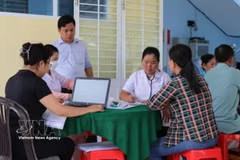
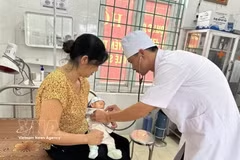
Vietnam hoped to become healthcare destination ảnh 1Illustrative image (Photo: medlatec.vn)

Hanoi (VNA) - Thanks to significant achievements in medicine, increasing quality, and reasonable costs of medical examination and treatment services, Vietnam's healthcare establishments have attracted more and more foreign patients, including those from developed countries such as the US and Canada.

Hospitals in Vietnam have successfully treated foreign patients for many times.

Recently, a Cambodian underwent a spine endoscopy surgery at Duc Giang General Hospital, and 24 hours after surgery, the patient was able to move independently without absolutely no pain.

In early December, doctors at Saint Paul General Hospital in Hanoi successfully treated a 4-year-old Australian girl diagnosed with a common bile duct cyst. The patient was treated after a single-hole laparoscopic surgery through the navel, which only Vietnam and China routinely perform.

Assoc. Prof. Dr. Luong Ngoc Khue, Director of the Department for Medical Examination and Treatment under the Ministry of Health (MoH), has noted that in recent years, the development of medical techniques has attracted many overseas Vietnamese to come back to the country for medical treatment. Several major hospitals in Vietnam have recently attracted a significant number of foreign patients for medical check-ups and treatments.

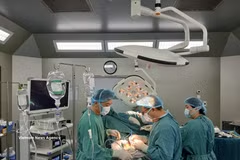
Vietnam hoped to become healthcare destination ảnh 2In early December, doctors at Saint Paul General Hospital in Hanoi successfully treated a 4-year-old Australian girl diagnosed with a common bile duct cyst. (Photo: Saint Paul General Hospital)

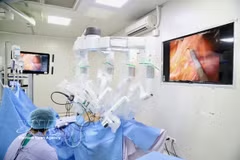
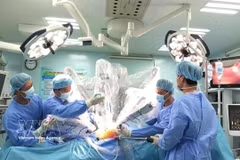
Vietnamese doctors have attained high professional qualifications through systematic training and succeeded in mastering many high-level treatment techniques such as using robotics, endoscopic surgery, and organ transplant.

One of the strengths of the domestic healthcare system is its lower costs compared to those in other countries with the same quality, he added.

Khue, however, noted that Vietnamese people still spend 2 billion USD on medical treatment abroad each year.

The MoH has set a goal to retain domestic affluent patients and attract half a million foreigners working in Vietnam to use local healthcare services rather than seeking medical treatment in other regional countries or returning to their home countries for treatment.

In the national health system development plan for the 2021-2030 period, with a vision towards 2050, the ministry proposed to upgrade five special-grade hospitals to modern hospitals with healthcare services meeting international standards.

The proposal aims to reduce the number of Vietnamese people going abroad for treatment, as well as to attract foreign patients to Vietnam.

By 2030, the rates of central- and provincial-level hospitals with high-quality international treatment areas are hoped to reach 95% and 80%, respectively. Meanwhile, the rate of foreigners using healthcare services in Vietnam is expected to grow by at least 1% per year./.
VNA

See more

Male plastic surgery: Why masculine aesthetics require a different approach

Male plastic surgery: Why masculine aesthetics require a different approach

Plastic surgery has long been associated with procedures for women, but men also seek treatment for abdominal fat, enlarged breasts and age-related changes around the eyes and face. The American Society of Plastic Surgeons (ASPS) includes liposuction, gynecomastia surgery and eyelid surgery among procedures performed on male patients.

A speaker delivers presentations at the conference (Photo published by VNA)

Vietnam, Denmark expand cooperation in high-tech healthcare

Ambassador Nguyen Le Thanh called on Vietnamese and Danish partners to identify priority areas and promote research and training programmes, knowledge transfer and technology application in line with Politburo's Resolution No. 57-NQ/TW on breakthroughs in science – technology development, innovation and national digital transformation.

Ho Chi Minh City has favourable conditions for developing the ecosystem, including a large population, diverse healthcare needs and an extensive public and private medical network. (Illustrative photo: VNA)

Ho Chi Minh City develops multi-tier elderly care network amid population ageing

Dr. Huynh Minh Chin, Deputy Director of the department, said rising elderly care needs are putting pressure on traditional family-based care, as older people increasingly face multiple chronic illnesses, mobility problems, malnutrition, dementia and depression, requiring continuous support and closer coordination among hospitals, grassroots healthcare facilities, families and social support institutions.

Local residents in Mondulkiri province, Cambodia, receive free medical check-ups and health consultation. (Photo: VNA)

Free medical examinations provided to remote communities in Cambodia

Vietnamese Ambassador Nguyen Minh Vu said the programme has been jointly organised by the embassy and the hospital annually in various Cambodian localities to provide healthcare support to disadvantaged households and contribute to the Cambodian Government’s efforts to improve public health. The initiative also reflects close cooperation in healthcare and the strong bonds between the people of Vietnam and Cambodia.

With the assistance of robotic-assisted laparoscopic surgery, doctors successfully perform a complex operation (Photo: VNA)

Vietnam advances towards high-quality, specialised healthcare

Recent developments in Hanoi and other localities highlight efforts to develop specialised treatment, standardise professional practices and apply artificial intelligence (AI) and advanced medical techniques, towards a more modern healthcare system.

Collecting a sample from a pediatric patient for influenza testing (Photo: VNA)

Ho Chi Minh City acute respiratory infections surge over 64%

According to the Ho Chi Minh City Centre for Disease Control (HCDC), influenza viruses are are among the fastest-rising pathogens, with 151 positive samples in a single week. Influenza A is the dominant strain, with A/H1N1pdm09 in 116 samples, or nearly 77%.

A doctor at Trung Nguyen Medical Station in Te Lo commune, Phu Tho province, examines a child patient. (Photo: VNA)

Phu Tho builds hospital culture to improve patient satisfaction

In recent years, alongside efforts to improve the quality of medical examinations and treatment, Phu Tho province’s health sector has focused on creating civilised, friendly hospital environments and strengthening healthcare workers’ sense of responsibility and service-oriented attitudes, with the aim of earning patients’ trust and satisfaction.