Vietnam logs 2,012 COVID-19 cases on August 4

Vietnam recorded 2,012 COVID-19 cases on August 4, while 7,712 patients were given the all clear the same day, according to the Ministry of Health.
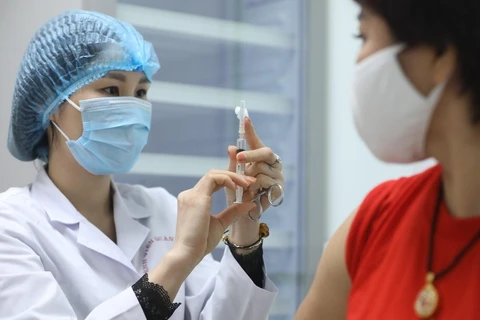
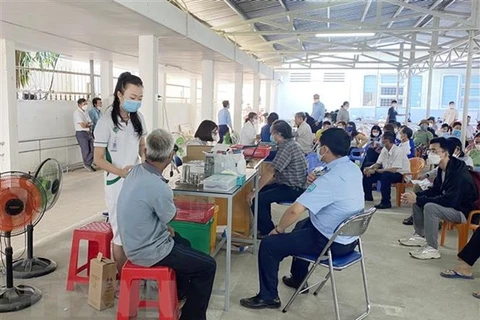
Vietnam logs 2,012 COVID-19 cases on August 4 ảnh 1Most of severe COVID-19 cases are the elderly with underlying diseases. (Photo: VNA)
Hanoi (VNA) – Vietnam recorded 2,012 COVID-19 cases on August 4, while 7,712 patients were given the all-clearthe same day, according to the Ministry of Health.

The northern city of Hai Phong registered an additional402,830 COVID-19 cases after verifying information. As a result, the nationalcaseload so far came to 11,189,968.   

The number of recoveries rose to 9,948,174.Meanwhile, there are 112 patients in serious conditions needing breathingsupport.

No death from COVID-19 was recorded in the past 24hours. The total fatalities stood at 43,094.

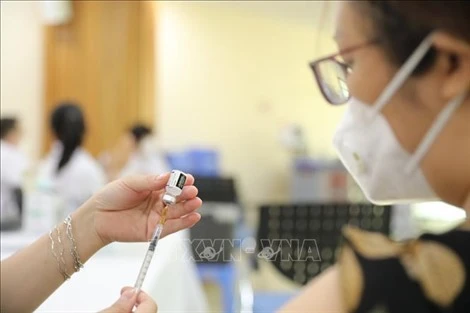
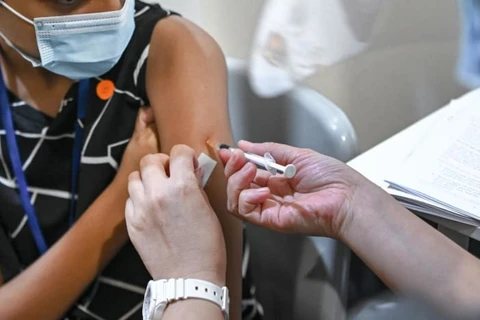
On August 3, an additional 642,476 dosesof vaccines were administered, raising the total number of doses of COVID-19 vaccines injected to 247,339,252./.
VNA
See more

Professor Dr Tran Van Thuan, Deputy Minister of Health. (File photo: VNA)

More than 300 medical staff assigned to serve 14th National Party Congress

Deputy Minister of Health Tran Van Thuan called on experts and healthcare workers to uphold a strong sense of responsibility, professionalism and expertise to ensure that medical services for the 14th National Party Congress are delivered safely, effectively and with the highest level of care.

Health check-up offered to citizens in Gia Lai province. (Photo: VNA)

Health ministry maps out three phases for hospital fee exemption

Health insurance participants from near-poor households and those aged 75 and above who are receiving social pension allowances will be entitled to 100% coverage of medical examination and treatment costs within the scope of health insurance benefits.

A patient pays hospital fees using cashless transactions (Photo: qdnd.vn)

Hanoi aims for modern healthcare system

Hanoi's health sector will continue to expand the comprehensive use of digital technology in professional practices to improve management efficiency and service quality, aiming to develop a modern, transparent, and people-centred healthcare system.

Doctors from the Vietnam Young Physicians Association provide free medical examinations and treatment for residents of the capital. (Photo: VNA)

3.37 billion USD earmarked for public health care, population quality improvement

The programme’s overarching goal is to ensure that all people receive primary healthcare management and early, preventive care delivered close to home, thereby reducing disease burden; to increase the total fertility rate and strive for a balanced sex ratio at birth; to adapt to population ageing while improving population quality; to improve care for vulnerable groups; and to contribute to improvements in physical and mental health, stature, life expectancy and overall quality of life, towards building a healthier Vietnam.

A representative of the Health Strategy and Policy Institute shares the results of a study titled “Assessment of Vietnam’s Readiness for Self-Care and Its Influence Factors”. (Photo courtesy of the organiser)

Vietnam ranks 4th in health self-care readiness

Self-care is an essential component of primary healthcare, with WHO defining it as the ability of individuals, families, and communities to promote and maintain health, prevent disease, and cope with illness with or without the support of healthcare professionals.

A proton machine in a hospital in Singapore. Proton beam therapy provides more options for cancer patients. (Photo courtesy of IHH Healthcare Singapore)

Proton therapy, an alternative method for cancer patients

In recent years, Vietnam's Ministry of Health has held numerous meetings with relevant units to assess the progress in developing proton therapy centres in the country. The project for establishing proton therapy centres is set to commence preparations in 2025 and aims for completion between 2026 and 2030.

At the event (Photo: VNA)

First hospital in Mekong Delta earns US AACI accreditation

Nam Can Tho University Hospital on December 15 hosted a ceremony to announce its accreditation by the American Accreditation Commission International (AACI), a US-based body, becoming the first facility in the Mekong Delta and among a select few in Vietnam to earn the distinction.

A health worker administer IPV polio vaccine to a child in Dong Thap province. (Photo: VNA)

Vietnam proactively takes polio prevention measures amid outbreak in Laos

The meeting took place following an assessment by the World Health Organisation (WHO) warning that Vietnam is facing a very high risk of polio import and re-emergence. The risk arises after neighbouring Laos officially declared a polio outbreak on October 7, following the detection of circulating vaccine-derived poliovirus type 1 (cVDPV1).

National health target programme prioritises the most vulnerable groups (Photo: VietnamPlus)

National target programme on health prioritises most vulnerable groups

The National Assembly on December 11 adopted a resolution on the National Target Programme on Healthcare, Population, and Development for the 2026–2035 period, marking a significant step in Vietnam’s long-term commitment to improving public health and population quality.

A view of the International Conference on Molecular Diagnostics in Microbiology and Diseases, organised by Rencontres du Vietnam and the International Centre for Interdisciplinary Science and Education (ICISE) in the central province of Gia Lai on December 11. (Photo: VNA)

Nearly 100 international scientists attend molecular diagnostics conference in Vietnam

The conference features almost 80 presentations across plenary sessions, parallel sessions and poster sessions, focusing on leading research trends such as point-of-care diagnostics; predictive biomarkers used to anticipate individual responses to therapy; and the development of new tools and platforms for rapid molecular-level detection and diagnosis.

Digital transformation in healthcare is being strongly promoted. (Photo: Organising Committee of the 2024 “Technology with Heart” Award, co-hosted by Vietnam News Agency and Viettel)

AI and precision medicine: Emerging prospects for Vietnam-Canada cooperation

Canada has strong experience in compiling and analysing genomic data, while Vietnam has a large population with diverse genetic structures. This complementarity can help Vietnam narrow its technological gap and enhance its capacity to treat rare diseases — an area many countries are prioritising for development.