Vietnam looks for innovation cooperation opportunities in US

The Ministry of Planning and Investment (MPI) is strengthening connections and expanding the participation of new members in the Vietnam Innovation Network, including Vietnamese and international experts and intellectuals.

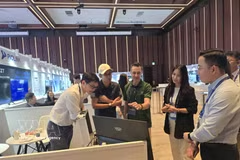
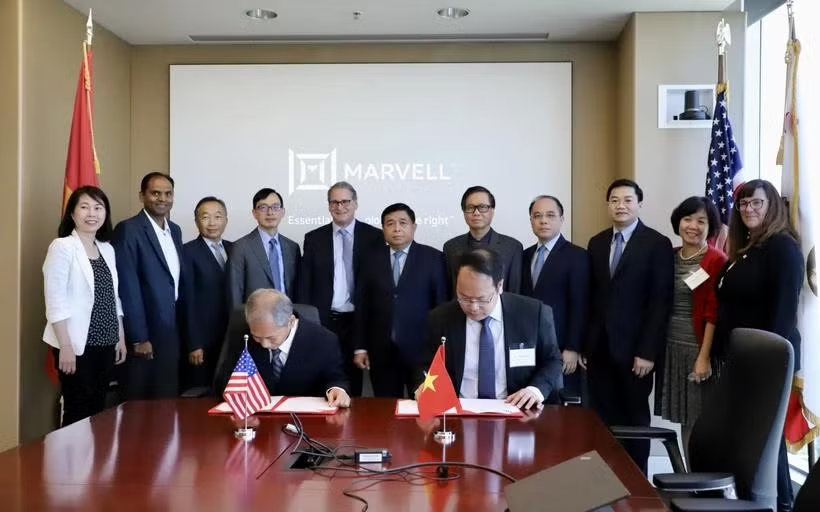
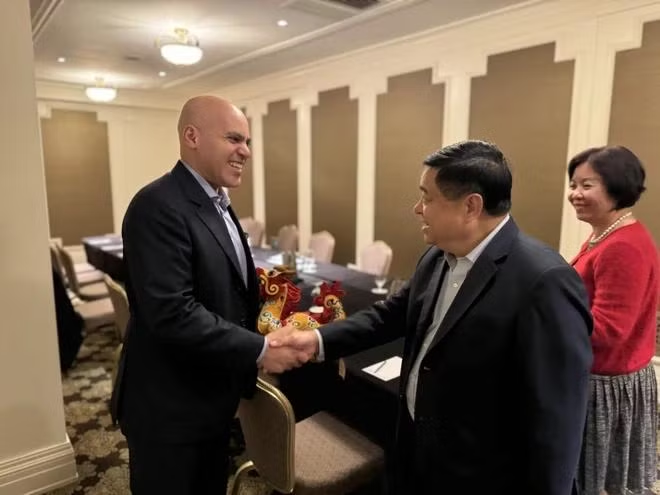
Minister Nguyen Chi Dung has a working session with Marvell Company. (Photo: VietnamPlus)

Hanoi (VNA) – The Ministry of Planning and Investment (MPI) is strengthening connections and expanding the participation of new members in the Vietnam Innovation Network, including Vietnamese and international experts and intellectuals.

Minister of Planning and Investment Nguyen Chi Dung had a working session with members of the Vietnam Innovation Network and technology giants in Silicon Valley in San Francisco, during his working trip to the US on June 22-26.

Preparing infrastructure facilities to attract investment

During the meeting, the minister acknowledged efforts in coordination and connection made by the Vietnam Innovation Network in Silicon Valley.

He highly appreciated the participation of members in major programmes and projects run by the National Innovation Centre (NIC), and the MPI, including a project to develop human resources for semiconductor industry to 2030, with an orientation to 2050, a project to build AI application research and training centre, and the Vietnam Innovation Challenge programme.

He requested the network’s members to promote connections with the world's leading experts, institutes, and universities that can collaborate and provide training programmes; and organisations that can support Vietnam in innovation activities.

The network should continue to connect with new members, including Vietnamese and international experts and intellectuals, based on generating long-term benefits for the country, he said.

Will Abby, executive vice president and chief sales officer of the ARM company owned by SoftBank Group said that the company's technology is applied in more than 95% of smartphones and software operating systems around the world.

To date, 70% of the world's population uses ARM chip-based products and the firm has a monopoly on chip architecture. Chip design businesses in Vietnam are all ARM customers, Abby said.

However, he noted that ARM does not have a representative or office in Vietnam and is building a plan to launch an office, he added.
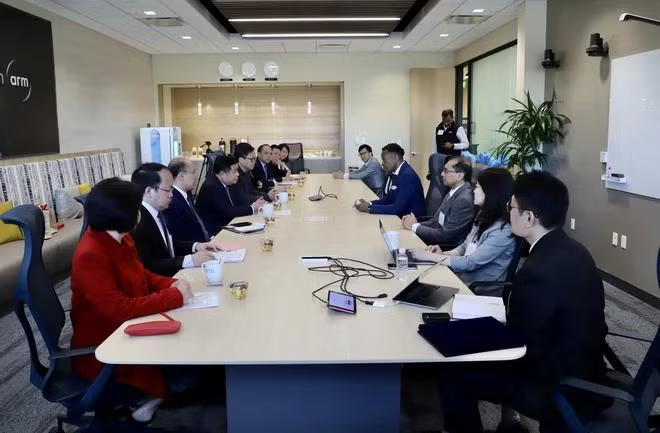
VN-US2.webp
ARM’s technology is applied in more than 95% of smartphones and software operating systems around the world. (Photo: MPI)

Minister Dung stated that Vietnam needs to train 50,000 semiconductor engineers, including 15,000 design engineers. Therefore, the Vietnamese government has been improving the business and investment environment for high-tech investment projects, especially in semiconductors and AI.

Vietnam is also preparing infrastructure, human resources, and institutions to attract and cooperate with large technology corporations, including ARM, he added.

He asked ARM to consider an investment cooperation plan in Vietnam, especially in human resources development and training, and connecting with ARM’s partners in Asia and around the world, adding that ARM should open a representative office, and R&D centre at NIC in Hoa Lac to promote business activities, research cooperation, and introduce new technologies.

He also pointed out the opportunity for cooperation between ARM and NIC in developing a shared semiconductor laboratory for training, business incubation, and supporting Vietnamese startups to develop chip design using ARM's technology and intellectual property.

Developing digital talents

Marvell, a leading US chip design company with an annual revenue of 5.5 billion USD and valued at about 160 billion USD, has been operating in Vietnam since 2013.

The company currently has around 400 employees, 97% of whom are highly qualified engineers specialising in chip designing and electronics. Marvell Vietnam currently has two offices in Ho Chi Minh City.
VN-US3.webp
Minister Nguyen Chi Dung meets with Kareen Ghanem, Google Group's Director of government relations and public sector policy. (Photo: MPI).

Marvell can expand its investment and R&D centre in Vietnam to become a leading hub, Dung said. He also hinted at Marvell's research into opening a representative office and R&D centre at NIC to bolster business operations, research collaboration, and introduction of new technologies.

Regarding training digital talents, Kareen Ghanem, Google Group's Director of government relations and public sector policy, said that Google has invested and cooperated in digital transformation, e-commerce, innovation, and startups, and it is planning to produce mobile phones.

Recently, Google has cooperated closely with NIC to implement digital talent training and business incubation programmes, which are participated in by a lot of Vietnamese training institutions and students, he said.

Minister Dung pledged to closely coordinate with ministries, agencies, and localities to create favourable conditions for Google to invest, research and develop in Vietnam. He suggested elevating the relationship between the MPI and Google to a comprehensive strategic cooperation by promoting high-tech investment projects in Vietnam and cooperation with NIC./.
VNA

See more

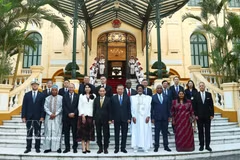
General Secretary of the Communist Party of Vietnam (CPV) Central Committee and President To Lam and the foreign ambassadors at the meeting (Photo: VNA)

Top leader receives new foreign ambassadors

Vietnam wishes to step up cooperation with the countries in such areas as economy, trade and investment; cutting-edge science and technology applications, semiconductors, artificial intelligence, new materials, digital transformation, sustainable agriculture, the environment, energy and renewable energy, the marine economy and maritime transport.

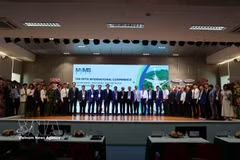
Delegates at the event (Photo: VNA)

Over 400 scientists attend international material conference

Discussions focus on six key areas, including advanced materials and their applications for sustainable development; environmentally friendly material processing technologies; product lifecycle engineering; sustainable machine design; low-carbon industries and the circular economy; and artificial intelligence and digital transformation in material and mechanical engineering.

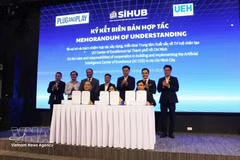
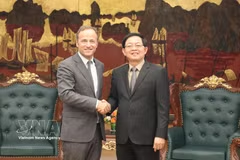
Deputy Prime Minister Ho Quoc Dung (R) and Pierre Barnabé, Chief Operating Officer of French technology group Dassault Systèmes. (Photo: VNA)

Vietnam, France step up cooperation in AI, digital twin technology

At the meeting, the Deputy PM praised the group's contributions to promoting technology cooperation between Vietnam and France, particularly its collaboration with the Ministry of Finance and the National Innovation Centre (NIC) to establish a Centre of Excellence (CoE) for digital twins and artificial intelligence (AI) in Hanoi.

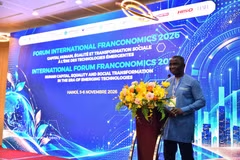
Rigobert Pinga Pinga, Acting Representative of OIF for Asia-Pacific speaks at the event. (Photo: VNA)

Franconomics 2026 explores human-centred technological transformation

Addressing the opening ceremony, Nguyen Anh Tuan, Rector of VNU-IS, said Franconomics was launched in 2019 as a multidisciplinary platform connecting scientists, policymakers, businesses and international organisations to discuss socio-economic issues relevant to Vietnam and the Francophone community.

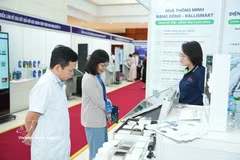
A new technology exhibition area arranged within the framework of the International Research and Innovation Funders Forum in Hanoi (Photo: VNA)

Vietnam promotes int'l cooperation in science, technology and innovation

Science is opening up new opportunities in artificial intelligence, healthcare, semiconductors and clean energy, while challenges such as climate change, energy security and epidemics require international cooperation. Science, technology, innovation and digital transformation are central to Vietnam’s new growth model.

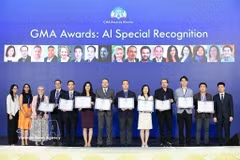
GMA Awards are presented to honour outstanding AI courses at the Global MOOC & Online Education Conference 2026. (Photo: VNA)

Responsible AI, teaching overhaul, global ties dominate GMC 2026

Panelists said AI can support knowledge delivery, information processing and personalised learning, but cannot replace teachers in building independent thinking, critical capacity, emotional intelligence and humanistic values. Universities therefore need to overhaul teaching, testing and assessment and redefine lecturers’ role in an AI-integrated environment.

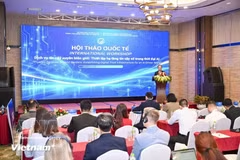
An overview of the seminar (Photo: VNA)

Coordinated development of energy, AI and infrastructure needed for industrial growth

Vietnam is emerging as a regional bright spot for data infrastructure development, driven by growing demand for AI, cloud computing, 5G commercialisation and digital transformation. However, the country needs coordinated preparations, including green power supplies, international submarine cable connectivity and operational capabilities meeting global standards.

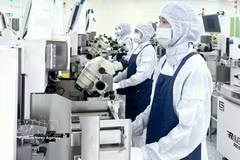
Production line at Hana Micron Vina Co., Ltd in Bac Ninh city (Photo: VNA)

Vietnam works to bridge gap between chip research and commercialisation

According to the Ministry of Science and Technology, Vietnam’s semiconductor industry has made notable progress. In 2025, it generated more than 21 billion USD in revenue and attracted over 14 billion USD in foreign investment through more than 240 projects. The country is now home to around 60 chip design companies and over 7,000 semiconductor design engineers.

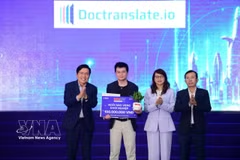
The Golden Startup Star award, worth 100 million VND, is presented to the Doctranslate.io project (Photo: VNA)

AI-powered translation platform wins Golden Startup Star award

Doctranslate.io offers contextual translation, audio recording, transcription and content summarisation services for communication, meetings and international events. Supporting 80 languages, the platform aims to add more less widely spoken languages.

Participants at the Vietnam–RoK AI and Digital Technology Forum 2026. (Photo: VNA)

Vietnam, RoK promote AI cooperation

Vietnam attaches importance to international cooperation while building its own technological capabilities, gaining greater mastery of key technologies and strengthening its participation in global AI value chains, and the RoK is its important partner in this process.

Deputy Minister of Science and Technology Pham Duc Long speaks at the international seminar entitled “Trusted Services Beyond Borders: Establishing Digital Trust Infrastructure for an AI-Driven World” on October 29, 2026. (Photo: VNA)

Vietnam promotes cross-border digital trust in AI era

As AI becomes increasingly involved in digital transactions, digital content's origin and integrity must be verified proactively, rather than merely detecting false information after it emerges, an official has said.

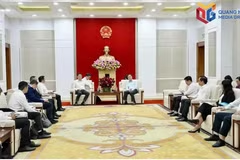
An overview of the reception (Photo: Quang Ninh Newspaper)

Quang Ninh, China’s Guangxi seek stronger cooperation in digital economy, AI

The city leader expressed his hope that the delegation would engage in professional exchanges with Quang Ninh’s departments and agencies to translate into concrete initiatives the cooperation areas in science and technology, artificial intelligence (AI) and the digital economy agreed upon by senior leaders of the two sides.

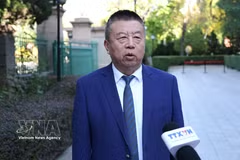
He Zhenwei, Chairman of the China Overseas Development Association in an interview with the Vietnam News Agency (Photo: VNA)

Vietnam, China explore greater scope for high-tech cooperation

Vietnam is attracting growing interest from Chinese businesses, not only in trade and traditional manufacturing but also in high-tech sectors such as artificial intelligence (AI), the digital economy, the low-altitude economy and smart agriculture, Chinese businesses and associations told Vietnam News Agency correspondents in China.

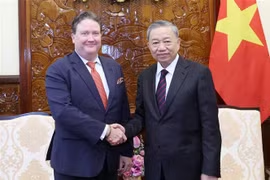
Minister of Science and Technology Vu Hai Quan (R) receives the Artemis Accords from US Ambassador to Vietnam Jennifer Wicks (Photo: Ministry of Science and Technology)

Vietnam joins Artemis Accords on space exploration

Vietnam views space science and technology as a strategic sector that can lift national science-technology capacity and support sustainable growth. The country wants to work with member nations on peaceful, safe, equitable, transparent and sustainable space exploration under international law, with tangible benefits for people and the planet.