Vietnam may approve homegrown Nano Covax vaccine for emergency use

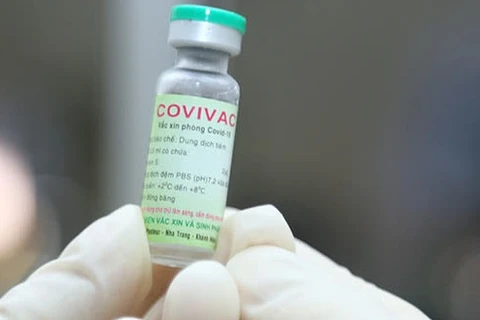
Vietnam is evaluating its domestically developed COVID-19 vaccine, Nano Covax, for possible approval for emergency use in the country.
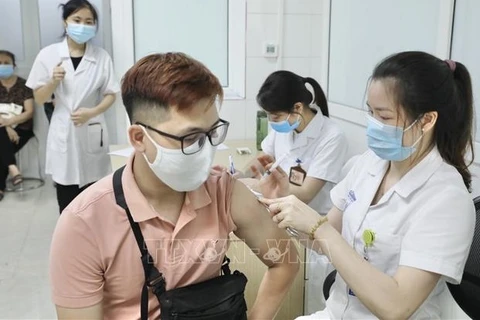
Vietnam may approve homegrown Nano Covax vaccine for emergency use ảnh 1A volunteer received  a shot of Nano Covax vaccine in the third phase of clinical trials on July 2 (Photo: VNA)
Hanoi (VNA) - Vietnam is evaluating its domestically developed COVID-19vaccine, Nano Covax, for possible approval for emergency use in the country.

TheMinistry of Health and the Ministry of Science and Technology held a meeting onJuly 22 to review the outcomes of clinical trials of the vaccine, which isproduced by Nanogen Pharmaceutical Biotechnology JSC based on recombinantDNA/protein technology.

Basedon the evaluation, the vaccine may be approved for emergency use.

Itwent through the first phase trial from December 18, 2020, and the second phasefrom February 26, 2021. The third phase started on June 11, 2021.

Resultsfrom the first two trial phases showed that all volunteers developed antibodiesagainst SARS-CoV-2.

Atthe meeting, a representative from Nanogen said more than 13,620 volunteers hadbeen vaccinated with Nano Covax vaccine so far.

Thethird and the final phase saw participation of 13,000 volunteers with 1,004people getting two jabs.

Thecompany said it would continue to complete documents relating to the productsand outcomes of the trials to submit to the Ministry of Health next week.

Chairmanof the Advisory Council for the Registration of Circulation of Drugs andMedicinal Ingredients Le Van Truyen said the council supported the research anddevelopment of homegrown vaccines but registration dossiers for approvingvaccines in emergency situations must meet scientific and legal standards.

DeputyMinister of Science and Technology Bui The Duy said under the current complexdevelopment of the pandemic, the ministry hoped health experts would evaluateoutcomes of the clinical trials scientifically and create conditions to speedup research and production of the vaccine.

DeputyMinister of Health Tran Van Thuan said the ministry supported and createdconditions for Nanogen as well as other domestic companies and units toresearch and develop vaccines with the hope that Vietnam would soon be able toproduce “Made in Vietnam” vaccines to help ensure vaccine supply forcoronavirus control.

Regardinglicensing conditions, Thuan asked Nanogen to work with agencies to completedossiers about the outcomes of the first and second phases of human trials andsoon update results of the third phase.

Based onthe outcomes of trials and the opinions of domestic and foreign experts as wellas the pandemic situation and vaccine demand, the Ministry of Health will studyand consider the licensing of the Nano Covax vaccine for emergency use.

NanoCovax is the most promising candidate among four domestic vaccines beingdeveloped by Vietnam. If approved, commercial production could start soon.

Theother vaccines are being developed by the Institute of Vaccines and MedicalBiologicals, the Vaccine and Biological Production Company No. 1, and theCenter for Research and Production of Vaccines and Biologicals.

Vietnamhas so far approved six vaccines for emergency use, namely Janssen, Moderna,Sputnik V, Pfizer, Sinopharm and AstraZeneca.

TheGovernment is making efforts to secure at least 150 million vaccine doses to inoculate70 percent of the population.

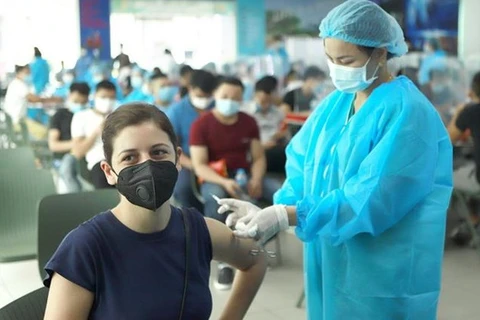
Asof July 23 morning, 4,411,659 doses of the vaccines, mainly AstraZeneca, havebeen administered in Vietnam, with 334,560 people having received the full twodoses./.
VNA

See more

The caregivers’ club in Coc village, Pu Luong commune, the north-central province of Thanh Hoa, has established a livelihood support fund, helping households develop their economies through models such as rice cultivation, vegetable growing, fish farming and poultry raising. (Photo: VNA)

Community-based child nutrition care model benefits Thanh Hoa’s locality

After more than one year of implementation with the support of World Vision, the model has delivered positive outcomes in improving nutrition and enhancing the quality of childcare. Household livelihoods have improved, mothers’ awareness and caregiving skills have been strengthened, and notably, the rate of child malnutrition in Coc has declined markedly.

Assoc. Prof. Dr. Duong Duc Hung, Director of Viet Duc University Hospital, presents a token of appreciation in recognition of the noble gesture of the organ donor’s family. (Photo: baochinhphu.vn)

British teen’s organ donation saves three Vietnamese lives

A 19-year-old British tourist who died during a trip to Vietnam has saved the lives of three Vietnamese patients with end-stage organ failure, in a deeply moving act of compassion. The young woman is the first foreign national to donate organs in Vietnam.

A workshop at the One Health Summit, held in Lyon, France, from April 5 to 7, 2026. (Photo: VNA)

Vietnam backs global One Health commitments at Lyon summit

The MAE welcomed the French Government’s organisation of the One Health Summit, describing it as an important forum to advance global political commitments and strengthen international cooperation in preventing zoonotic diseases.

Ilustrative image (Photo: pngtree.com)

Vietnamese scientists unlock genetic insights into rare diseases

Prof. Dr. Nguyen Huy Hoang, Deputy Director of the Institute of Biology under the Vietnam Academy of Science and Technology, and his research team conducted a project titled “Genetic mutation analysis in Vietnamese patients with selected rare diseases using whole-exome sequencing technology.” The project, implemented from 2022 to 2024, aims to clarify the genetic causes of these diseases within the Vietnamese population.

Health workers and residents perform mass wellness exercises, promoting healthy lifestyles in the community. (Photo: VNA)

Ho Chi Minh City targets modern, inclusive healthcare system

On April 5 alone, 58 hospitals and health centres conducted screening programmes across 64 wards and communes, with a focus on outlying areas. Beyond early detection, residents receive consultations, long-term health monitoring guidance, and access to specialised services locally.

Vice Chairwoman of the National Assembly Nguyen Thi Thanh, Minister of Health Dao Hong Lan, and delegates attend the programme. (Photo: nhandan.vn)

Healthy lifestyles, disease prevention highlighted on national health day

Vice Chairwoman of the National Assembly Nguyen Thi Thanh emphasised the need for consistent and effective implementation of the resolution across the political system, with priorities including refining healthcare policies and institutions, strengthening preventive and grassroots healthcare networks, expanding population health management, promoting early detection, and improving school-based physical education and nutrition.

Politburo member, Secretary of the Party Central Committee and Chairman of the Commission for Information, Education and Mass Mobilisation Trinh Van Quyet (front row, fifth from left), together with delegates, participate in a walk after the launch of All People’s Health Day in Hanoi on April 5. (Photo: VNA)

All People’s Health Day promotes early disease prevention

The launch marked the first year the activity has been implemented in a coordinated manner nationwide. Members of the public were able to visit free screening areas, receive nutritional advice, participate in mass exercise performances, enjoy artistic programmes, and join a walk in response following the ceremony.

Volunteer young doctors are expected to provide free health screenings for around 10,000 residents (Photo: VNA)

Free cancer screening, health checks to benefit 10,000 people in Hanoi

Participants will receive comprehensive health checks through a streamlined one-stop process, including blood pressure measurement, height and weight assessment, BMI and cardiovascular risk evaluation, blood tests, general examinations and specialist consultations in internal medicine, paediatrics, obstetrics, ophthalmology, ENT, dentistry and oncology. Rapid blood glucose testing and biochemical screening will also be conducted to detect diabetes and metabolic disorders.