Vietnam nearing goal of universal health insurance

Fifteen years following the Party Central Committee Secretariat’s Directive No. 38-CT/TW on promoting health insurance in the new situation, the implementation of the health insurance policy for the 2009-2024 period has gained many achievements, with the goal of universal health insurance likely to be reached.

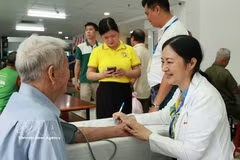
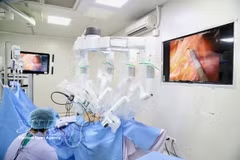
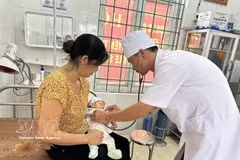
Illustrative image (Photo: VNA)

Hanoi (VNA) – Fifteen years following the Party Central Committee Secretariat’s Directive No. 38-CT/TW on promoting health insurance in the new situation, the implementation of the health insurance policy for the 2009-2024 period has gained many achievements, with the goal of universal health insurance likely to be reached.

As of late 2023, over 93.6 million people, or 93.35% of the country's population, are covered by health insurance, exceeding the goal set in the Government’s Resolution No. 01/NQ-CP as well as the National Assembly’s Resolution No. 68/2022/QH15 on socioeconomic development plan for 2023, and an impressive surge from the 39.7 million, or 46.1% of the population, recorded in 2008 before the directive was issued.

Maintaining the pace of health insurance growth amid people's difficult living conditions has once again affirmed the steadfastness and determination of the political system in general and the social insurance sector in particular in effectively implementing the universal health insurance roadmap.

With the consistent viewpoint of taking people and businesses as the subject and centre of service, the Vietnam Social Security (VSS) always strives to ensure full, timely and legitimate benefits for participants. The number of health insurance card holders going for medical examination and treatment increases rapidly year after year.

From 2009 to 2023, the average number of medical examinations and treatments covered by health insurance per year was over 141 million, an increase of 59.5% from 2009, with an average cost of 66. 2 trillion VND (2.6 billion USD) a year, up 330% against that in 2009.

Notably, during the period when the whole country was affected by the COVID-19 pandemic, the pivotal role of the health insurance policy in the social security system was further promoted, contributing to health care and stabilisation of people's lives, and enhancing faith in the humane social security policy of the Party and State.

In addition, the VSS has focused on solutions to create utilities and benefits for participants, beneficiaries and State management agencies in preventing the profiteering of health insurance funds.

The sector has also sped up administrative procedure reform, with 115 procedures in 2015 cut down to 25, and expanded the application of information technology and digital transformation in professional work./.

VNA

See more

Male plastic surgery: Why masculine aesthetics require a different approach

Male plastic surgery: Why masculine aesthetics require a different approach

Plastic surgery has long been associated with procedures for women, but men also seek treatment for abdominal fat, enlarged breasts and age-related changes around the eyes and face. The American Society of Plastic Surgeons (ASPS) includes liposuction, gynecomastia surgery and eyelid surgery among procedures performed on male patients.

A speaker delivers presentations at the conference (Photo published by VNA)

Vietnam, Denmark expand cooperation in high-tech healthcare

Ambassador Nguyen Le Thanh called on Vietnamese and Danish partners to identify priority areas and promote research and training programmes, knowledge transfer and technology application in line with Politburo's Resolution No. 57-NQ/TW on breakthroughs in science – technology development, innovation and national digital transformation.

Ho Chi Minh City has favourable conditions for developing the ecosystem, including a large population, diverse healthcare needs and an extensive public and private medical network. (Illustrative photo: VNA)

Ho Chi Minh City develops multi-tier elderly care network amid population ageing

Dr. Huynh Minh Chin, Deputy Director of the department, said rising elderly care needs are putting pressure on traditional family-based care, as older people increasingly face multiple chronic illnesses, mobility problems, malnutrition, dementia and depression, requiring continuous support and closer coordination among hospitals, grassroots healthcare facilities, families and social support institutions.

Local residents in Mondulkiri province, Cambodia, receive free medical check-ups and health consultation. (Photo: VNA)

Free medical examinations provided to remote communities in Cambodia

Vietnamese Ambassador Nguyen Minh Vu said the programme has been jointly organised by the embassy and the hospital annually in various Cambodian localities to provide healthcare support to disadvantaged households and contribute to the Cambodian Government’s efforts to improve public health. The initiative also reflects close cooperation in healthcare and the strong bonds between the people of Vietnam and Cambodia.

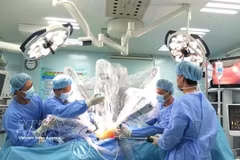
With the assistance of robotic-assisted laparoscopic surgery, doctors successfully perform a complex operation (Photo: VNA)

Vietnam advances towards high-quality, specialised healthcare

Recent developments in Hanoi and other localities highlight efforts to develop specialised treatment, standardise professional practices and apply artificial intelligence (AI) and advanced medical techniques, towards a more modern healthcare system.

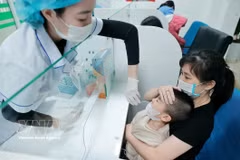
Collecting a sample from a pediatric patient for influenza testing (Photo: VNA)

Ho Chi Minh City acute respiratory infections surge over 64%

According to the Ho Chi Minh City Centre for Disease Control (HCDC), influenza viruses are are among the fastest-rising pathogens, with 151 positive samples in a single week. Influenza A is the dominant strain, with A/H1N1pdm09 in 116 samples, or nearly 77%.

A doctor at Trung Nguyen Medical Station in Te Lo commune, Phu Tho province, examines a child patient. (Photo: VNA)

Phu Tho builds hospital culture to improve patient satisfaction

In recent years, alongside efforts to improve the quality of medical examinations and treatment, Phu Tho province’s health sector has focused on creating civilised, friendly hospital environments and strengthening healthcare workers’ sense of responsibility and service-oriented attitudes, with the aim of earning patients’ trust and satisfaction.