Hanoi (VNA) - Right after the European Commission (EC) issued a “yellow card” warning against the Vietnamese seafood industry for illegal, unreported, and unregulated (IUU) fishing in October 2017, Vietnam has made significant efforts to gradually meet the requirements made by the EC.
According to the Ministry of Agriculture and Rural Development, through four inspections in Vietnam, the EC delegation recognised the right direction and strong instructions from the Vietnamese Government and agreed with the country that the shift to a responsible fishery industry has recorded improvements.
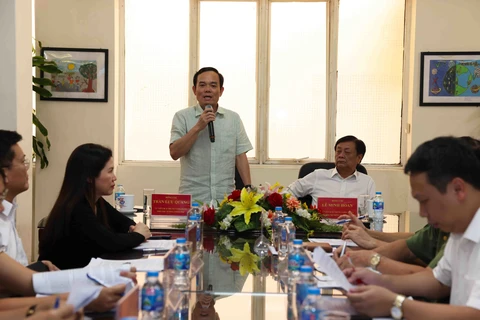
Minister Le Minh Hoan highlighted some notable results regarding this issue. “The system for fisheries monitoring has been reorganised, with 28 coastal provinces now having fisheries control forces. A Supreme People’s Court resolution criminalising IUU-related offences has taken effect.”

He pointed out three challenges that Vietnam needs to address to implement the EC’s recommendations. The first challenge is the violation of foreign waters by fishing vessels. The second is the deactivation of Vessel Monitoring Systems (VMS) on these vessels. The third issue is that some boats remain unregistered, uninspected, and lack exploitation licences.
According to James Borton, a non-resident senior fellow at Johns Hopkins SAIS Foreign Policy Institute, where he studies environment security in the South China Sea (called the East Sea in Vietnam), Europe represents a huge market for Vietnam and because of the restrictive “yellow card,” additional costs have occurred on the delivery of fishery products because of pre-checks in the supply line and longer delivery time.
Since the EC issued a “yellow card” warning for Vietnamese seafood industry in 2017, the value of Vietnam’s seafood exports to the EU market has decreased by an average of 6-10% per year. The EU, once Vietnam’s second largest seafood import market (accounting for 17-20% of the country’s total seafood export value), has dropped to fifth place (after Japan, the US, the Republic of Korea and ASEAN), according to the Vietnam Directorate of Fisheries.

Over the past seven years, the EC has conducted four inspections on combating IUU fishing in Vietnam. During the inspections, the EC has acknowledged and highly appreciated the strong political determination and efforts of the Government of Vietnam and the Prime Minister, as well as Vietnam's specific actions in combating IUU fishing.
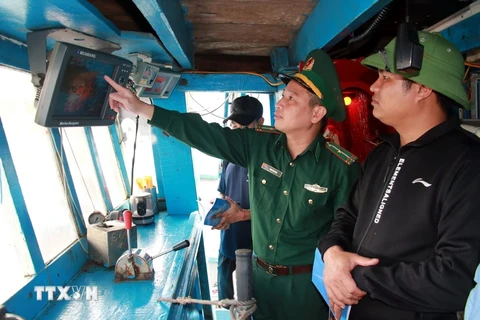
The major concern of the EC is that there remain limitations in monitoring, controlling, and supervising activities of fishing vessel and sanctioning vessels that engage in IUU fishing. After the fourth inspection, the EC delegation continued to recommend that Vietnam take strict measures against local organisations and individuals who do not fulfill their assigned duties and tasks, as well as businesses that operate illegally.
According to Borton, the EU carding system is a global initiative aimed at curbing illegal fishing. Countries like Vietnam and others engaged in such activities are particularly concerned about receiving the ultimate sanction, a red card, which would completely ban their exports. In 2023, the EU’s stringent monitoring led to warnings for 27 countries, with Cambodia red-carded and Vietnam placed in the yellow card category again.

Paul-Antoine Croizé, Chairman of Food, Agriculture & Aquaculture Business Sector Committee of EuroCham, said the yellow card is a warning signal, not a red card. “And so as such, it has no direct effect on restricting market access. It also has no direct financial impact for the Vietnamese exporters. However, it creates increased scrutiny in the European Union and some complexities for the importers, therefore indirectly making it more challenging for Vietnamese producers. It also brings some uncertainty, as per the evolution of the yellow card and as such, creates a little bit of risk at the importer level.”
Borton added that 2024 proves to be a pivotal year for Vietnam in gaining recognition as a nation committed to upholding international rules-based order, and demonstrating to the US that it deserves formal designation as a market economy.
“Furthermore, Vietnam recognises the need to bolster both political and financial support to solidify Vietnam’s status as recognised maritime economy. Ensuring compliance with anti-IUU fishing regulations demands the commitment of all stakeholders, including artisanal and commercial fishermen, coastal communities, and the broader public,” he said.
As part of the efforts to prepare for the EC’s upcoming examination, the Government has issued two decrees specifying a number of regulations in the Fisheries Law, as well as administrative punishments in the field.
On April 10, 2024, the Party Central Committee’s Secretariat issued a Directive on strengthening the Party’s leadership over IUU fishing prevention and control and promoting the sustainable development of the fisheries sector.
The promulgation of these legal documents demonstrates Vietnam’s strong political determination to create a comprehensive legal framework regarding IUU fishing prevention and control following the EC’s recommendations.
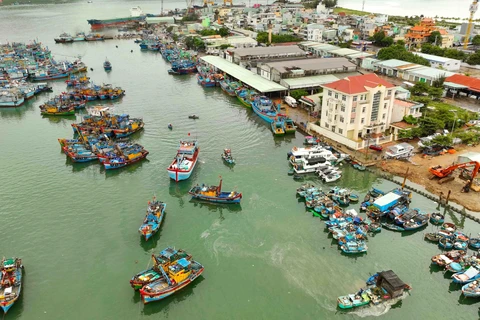
Localities nationwide are also intensifying measures to register, inspect, and license fishing vessels, as part of national efforts to tackle IUU fishing.

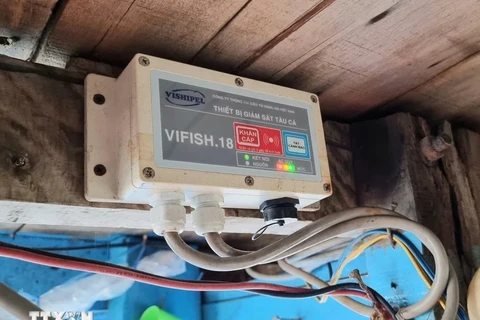
For example, Kien Giang province, which is home to the largest fleet of fishing vessels in the Mekong Delta, has licensed more than 7,000 fishing vessels. Among these, more than 3,600 vessels that are 15 meters or longer have been equipped with Vessel Monitoring Systems (VMS), according to the provincial Department of Agriculture and Rural Development.
In another example, the south-eastern province of Ba Ria-Vung Tau, selected by the EC for inspection in 2023, has reported progress in addressing the issues highlighted by the EC. Tran Thi Thu Huong, head of the Division for Economic Affairs of the People’s Committee of Vung Tau city, reported that over 98% of local fishing vessels with length of 15m or more have now installed VMS devices.
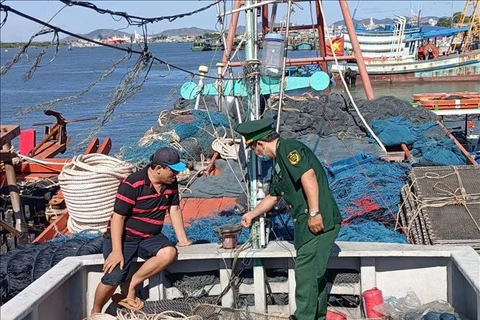
The Border Guard Command and relevant authorities in the south-central coastal province of Binh Dinh, which was also inspected by the EC last year, have taken strong actions to tackle IUU fishing in preparation for the EC’s upcoming fifth inspection.
Binh Dinh reported that 14 fishing vessels of the province with 81 crew members had been detained and penalised from the beginning of 2023 to June 2024 for encroaching foreign waters. Since early 2023, the provincial border guard has imposed administrative fines totaling 425 million VND (17,000 USD) on 17 vessels that engaged in IUU fishing.
In the coming time, experts said Vietnam needs to continue show its anti-IUU fishing efforts in order to have the “yellow card” lifted as soon as possible. This is not only the matter of strictly implementing the 2017 Fisheries Law but also that of protecting coastal security and the marine ecosystem./.