Hanoi (VNA) - Vietnam’s efforts to remove the “yellow card” imposed by the European Commission (EC) for illegal, unreported, and unregulated (IUU) fishing have generated positive results. In an interview with the Vietnam News Agency, Dr. Nguyen Khac Giang, a Visiting Fellow at the Vietnam Studies Programme of the Singapore-based ISEAS-Yusof Ishak Institute, says that while there have been widely recognised notable improvements, the biggest challenge for Vietnam is how to meet the EC’s recommendations while ensuring stable livelihoods for millions of fishermen.

1. In your opinion, what are the most outstanding results that Vietnam has achieved in the fight against IUU fishing?
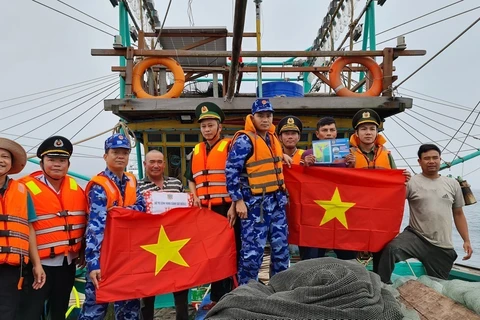
Combating illegal, unreported and unregulated (IUU) fishing has been identified by the Vietnamese government as one of the top priorities since the EC issued the “yellow card” warning against Vietnam’s seafoodin October 2017. The Vietnamese government, along with the entire political system from the central to local levels, has been actively engaged in this effort, demonstrating a strong determination and commitment to resolve this issue.
One of the most notable achievements that Vietnam has gained in addressing the “yellow card” issue is the establishment of a legal framework against IUU fishing, especially the promulgation of laws, major decrees, guiding circulars, and specific guidance documents distributed to ministries, agencies, and local authorities. It can be said that there is a strong consensus in terms of policy from the central to local levels. This concerted effort has been widely recoginzed at home and also highly appreciated by the EC.
Another notable outcome is the embrace of international cooperation in tackling IUU fishing. Vietnam has been very active and willing to expand cooperation not only with countries in the region that also face IUU fishing problems, such as Indonesia, the Philippines, and Malaysia, but also with the United Nations and other nations like the US and Australia through various cooperative agreements. Vietnam has also been setting up hotlines with countries that share maritime borders, such as the Philippines, Indonesia, Malaysia, Thailand, and Cambodia. The country has joined a number of Asia-Pacific international agreements under the auspices of the United Nations in the field.
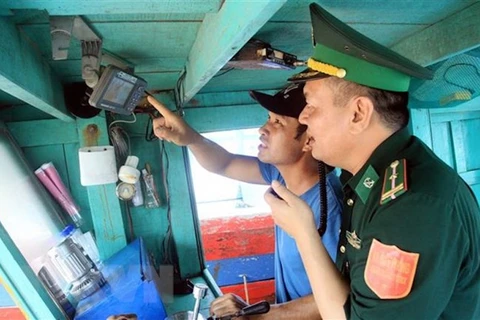
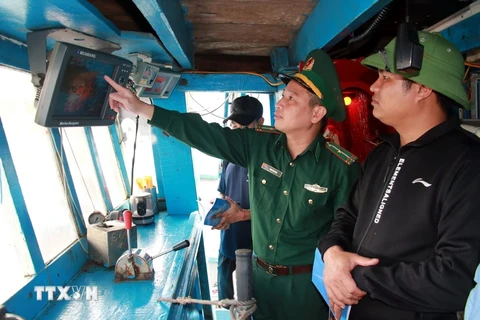
Another positive development is that Vietnam has made significant efforts to strengthen law enforcement. Local authorities have intensified inspections and monitoring of fishing vessel activities, and have encouraged fishermen to install vessel monitoring systems (VMS) devices. This has made it easier to monitor the activities of fishing vessels.
However, a long coastline of over 3,000km running through 28 out of 63 provinces and cities along with the large number of fishing vessels and millions of fishermen pose a substantial challenge for Vietnam in enforcing the comprehensive legal framework on fighting IUU.
So far, the EC has always highly appreciated Vietnam’s efforts in tackling IUU fishing. However, only two key issues remain unresolved: IUU fishing in the foreign waters and the traceability of fishery products.
However, overall, the EC has still highly appreciated Vietnam’s efforts as the country has addressed nearly all of the EC’s recommendations made a few years ago. This shows that Vietnam has been very proactive in combating IUU fishing. Nevertheless, to completely resolve this issue and have the “yellow card” lifted, it cannot be done overnight. Moreover, it is impossible to impose too strict punishment as it also involves other issues such as social welfare and the livelihoods of millions of fishermen. The EC itself also understands the difficulties and the dilemma that Vietnam is facing.
2. The EC is scheduled to send an inspection team to Vietnam in October this year. In your opinion, what does the EC expect to see in Vietnam during the upcoming working trip?
During this year’s inspection, the EC wants to see more clearly the results of Vietnam’s efforts in combating IUU fishing, and to see whether the difficulties Vietnam is facing are due to objective or subjective matters.
If the difficulties are due to objective reasons, for example, Vietnam needing more technical support, such as for installing the monitoring system of fishing vessel movements and tracing the origin of seafood products, then the EC, with its high level of technical development, will likely find ways to support Vietnam in solving those technical problems.
The important thing is that if the EC sees tangible progress, at least in terms of commitment and law enforcement, it is likely to consider the removal of the “yellow card” for Vietnam. During the on-site inspection to Vietnam this year, the EC will likely choose to visit certain localities in the central region which have long coastlines and many fishing vessels, to inspect the actual situation, such as the installation of vessel monitoring systems and measures to monitor and assess the law enforcement of fishing vessels.
What Vietnam can do is striving to minimize violations by strengthening inspection and supervision of fishing vessel activities, increasing communication campaigns to raise fishermen’s awareness, reducing the number of fishing vessels, focusing on those of better quality and scale to fish legally, and strictly handling any violations. When the EC delegation sees such progress, it is likely that they will consider lifting Vietnam’s yellow card status.
3. How has the EC’s “yellow card” affected Vietnam’s seafood industry?
The EC’s “yellow card” has made it much more difficult for Vietnam’s exports to other countries, with Vietnamese products subject to increased inspection.
Furthermore, consumers, especially in developed countries which are major markets of Vietnam such as Japan, Europe and the US, have become more concerned about sustainable development issues. Therefore, issues related to tariffs, rules and regulations have also become more stringent, causing further delays in exports. Particularly for fishery products, the requirement for freshness is crucial. If products are stored for a long time and subject to longer inspections, it can lead to significant degradation of quality of Vietnamese seafood products.
Another indirect impact is related to the image of Vietnamese goods, not only fishery products but also aquaculture products (such as basa fish). Consumers may choose products from other markets, even though the prices of Vietnamese goods are very competitive compared to similar products from other markets.
4. One of the key unresolved issues is illegal fishing in foreign waters. Why does this situation still exist and what do you think Vietnam can do to resolve this issue?
The first reason is that nearshore fisheries resources have been depleted, and there is almost nothing left to harvest. Secondly, some of the traditional fishing grounds of Vietnamese fishermen are located in disputed maritime areas. Thirdly, when the fisheries resources are depleted, people are under economic pressure to find alternative fishing grounds to exploit.
As for the government, it is not simple to implement comprehensive governance and surveillance systems across 28 coastal provinces, with a large number of fishing vessels and millions of fishermen. Even when vessels are required to install VMS, some turn off the device as soon as they leave port. This problem stems from a lack of awareness among the fishermen. Meanwhile, Vietnam’s fisheries surveillance force faces limitations, both in terms of personnel and tools to effectively handle violations.
Some countries have criminalised IUU violations, which has quickly proven effective. However, that measure can adversely affect the livelihoods of people, especially in the context of Vietnam, where the majority of fishing vessels are small, and the profits are not high. Severe penalties, such as confiscating or burning vessels, for example, will greatly affect the lives of fishermen. The Vietnamese government also recognises these problems as well as the EC’s recommendations regarding strict punishment for violations. However, it is difficult to quickly adopt all of these recommendations. It is necessary to carefully consider options to ensure the people’s livelihoods.
Currently, a possible solution is that Vietnam should downsize its fishing fleet and utilise more modern vessels which are qualified to secure fishing contracts with the countries it wishes to operate in. Another solution is providing vocational training for those who may lose their jobs due to the downsizing of the fleet. And lastly, developing a state-owned fleet that can take part in both surveillance and production activities./.