Vietnam seeks sustainable development of fisheries

Fisheries output is expected to reach 8.2 million tonnes this year, much higher than the target of 6.5 – 7 million tonnes set under a 2016 -20 sustainable seafood development programme, according to the Directorate of Fisheries.
Vietnam seeks sustainable development of fisheries ảnh 1Breeding marine fish in floating cages in Kien Giang Province’s Phu Quoc District. (Photo: VNA)

Can Tho (VNS/VNA) – Fisheries output is expectedto reach 8.2 million tonnes this year, much higher than the target of 6.5 – 7million tonnes set under a 2016-20 sustainable seafood development programme,according to the Directorate of Fisheries.

The export value is expected to be 10 billion USD against atarget of 8- 9 billion USD.

The output last year was 8.15 million tonnes, 4.38 millionfrom aquaculture.

Yet the Government has invested only 14.5 trillion VND (626million USD) in the programme, or 29 percent of the amount earmarked, forbuilding fishing ports, storm shelters for fishing boats, seafood farmingareas, fish fry farms, and other infrastructure.

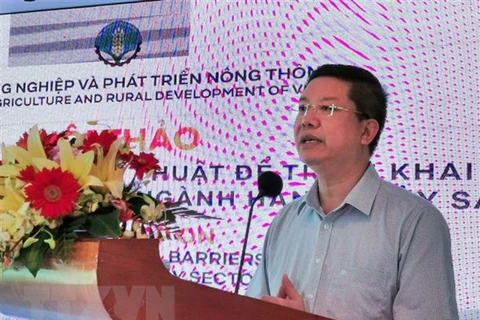
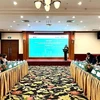
Speaking at a seminar to review the programme in Can Tho citythis week, Deputy Minister of Agriculture and Rural Development Phung Duc Tiensaid the investment has been too low with the development of infrastructure notmeeting the requirement even as the country signs more and more internationaltrade agreements.

Aquaculture has huge potential and so the country needs toreduce its catch at sea and increase marine aquaculture to develop fisheriessustainably, he said. 

He presented a draft strategy for seafoodproduction for the period up to 2030 to gather public opinion before submittingto the Government for approval.

It aims to expand the fisheries sector until it accounts for30 percent of agriculture, forestry and fisheries.

It seeks to increase output to 10 million tonnes a year, 25 –30 percent from the sea and 70 – 75 percent from aquaculture.  

It aims to increase exports to $18 - 20 billion a year andcreating 3.5 million jobs.

It requires all processors who export seafood to comply withfood safety and environmental protection requirements.   

Luu Hoang Ly, director of the Bạc Liêu Province Department ofAgriculture and Rural Development, said the strategy should have a loanprogramme for developing seafood production and managing farms.

Besides, infrastructure should be created to serve shrimpfarming, he added.

Officials from the Cuu Long (Mekong) Delta, which accountsfor 70 percent of the country’s aquaculture output, said in recent years theinvestment in fisheries has been inadequate to fulfil the country’s potentialin aquaculture.

Zoning plans should regulate the number of fishing boatsallowed for each province, they said.

There should be zoning plans for local aquatic species thathave high export potential like eel, frog and giant river prawn, they said.

The strategy should help fishermen who work near shore switchto aquaculture or services, they added.

Nguyen Thanh Dung, vice chairman of the Can Tho city People’sCommittee, said aquaculture production and seafood processing in the delta andelsewhere face many difficulties and challenges like low technology, insufficientinfrastructure, lack of funding, climate change, pollution, and diseaseoutbreaks. 

The strategy would play an important role in restructuringfisheries to increase value addition and achieve sustainability, ensuring thecountry integrates globally and catches up with other countries in science andtechnology, he said./.
VNA
See more

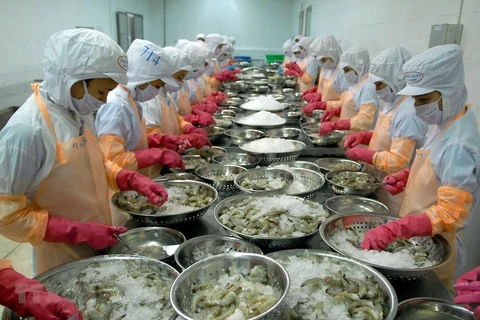
Shrimp processing for export at Huy Nam company, An Giang province. (Photo: VNA)

Fisheries sector proactively adjusts to emerging challenges

In addition to food safety regulations, the US continues to closely monitor the origin of imported seafood through the Seafood Import Monitoring Programme (SIMP) administered by the National Oceanic and Atmospheric Administration (NOAA). Requirements linked to the Marine Mammal Protection Act (MMPA) are also a major concern for businesses.

Pham Van Cong, Chairman of the Vietnam Cashew Association, speaks in a conference reviewing the industry’s 2025 performance and deploying procurement plans for 2026 in HCM City on March 13. (Photo: VNA)

Cashew sector braces for challenges in 2026 amid global uncertainties

Vietnam’s cashew industry recorded export turnover of about 5.5 billion USD in 2025, the highest level ever. He noted that the result reflects the industry’s remarkable development, dynamism and timely adaptation to complex and unpredictable challenges both domestically and globally.

An Phát Complex Industrial Park in Hai Phong City is one of the eco-friendly industrial parks. (Photo: VNA)

Green industrial parks become new magnet for FDI

Statistics show that about 80% of FDI enterprises prioritise investing in industrial parks with green energy infrastructure, reflecting a growing shift in investment preferences amid tightening global environmental standards.

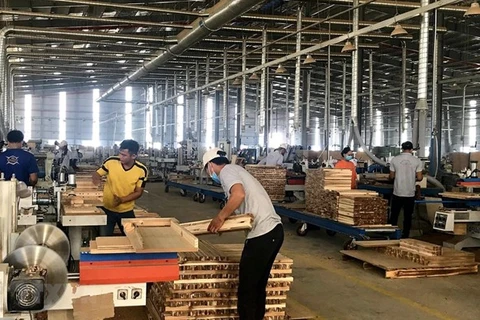
Wood panel production at the Thuan An Wood JSC in Ho Chi Minh City (Photo: VNA)

Vietnamese businesses ride wave of investment in green manufacturing

Recent developments in private investment show that as confidence in the private sector has grown and is a key driver of economic development, investors are strengthening support for enterprises not only through capital but also management expertise and market connectivity.

Officers and soldiers of Son Tra Border Guard Station, Da Nang City Border Guard Command tell local fishermen about IUU fishing. (Photo: VNA)

Fishing solidarity groups help Vietnam with IUU “yellow card” warning removal

Over the years, coastal authorities in Da Nang have intensified efforts to educate fishermen about regulations, particularly the need to avoid illegal fishing in foreign waters. Local administrations and competent forces have also strengthened vessel registration and inspection procedures, installed vessel monitoring systems and ensured transparent declarations of catches at ports.

Representatives of Central Retail Vietnam and Lotte Plaza Market sign a distribution cooperation agreement at the networking event in Ho Chi Minh City on March 13. (Photo: VNA)

Vietnamese firms step up cooperation with international distribution chains

Connecting Vietnamese businesses with international distribution networks has been a key component of government-led trade promotion programmes for many years, which are designed to help domestic companies place goods directly into global retail systems rather than exporting solely through intermediaries.

Direct Hanoi–Amsterdam flights by Vietnam Airlines to begin on June 16. (Photo: Vietnam Airlines)

Vietnam Airlines to launch direct Hanoi–Amsterdam service on June 16

Under the plan, the Hanoi–Amsterdam route will commence operations on June 16, 2026, with an expected frequency of three return flights per week using modern wide-body Airbus A350 aircraft. This will be the first direct air link between Vietnam and the Netherlands, helping to shorten travel time and enhance connectivity between Vietnam and one of Europe’s key economic, logistics and aviation transit hubs.

Farmers harvest the 2025 Winter–Spring rice crop in An Giang province. (Photo: VNA)

An Giang accelerates export shift to meet green consumption trends

To enhance competitiveness, authorities are assisting businesses in obtaining globally recognised certifications such as GlobalG.A.P., Organic and HACCP, enabling key exports including rice, seafood and clean agricultural products to strengthen their position in global markets, according to Quang Xuan Lua, Director of the An Giang Centre for Trade and Investment Promotion.

Motorcycle riders refill their vehicles at a petrol station in Hanoi (Photo: VNA)

E5 RON92 biofuel price falls in latest adjustment

Since the beginning of this year, domestic fuel prices have undergone 14 adjustments, including five decreases and nine increases for RON95 and six declines and eight hikes for E5 RON92. Meanwhile, diesel price has fallen three times and risen 11 times.