Vietnam sees great strides in saving extremely premature low weight infants

Doctors in hospitals in Vietnam have mastered advanced techniques to save premature babies weighing only 400 grams.
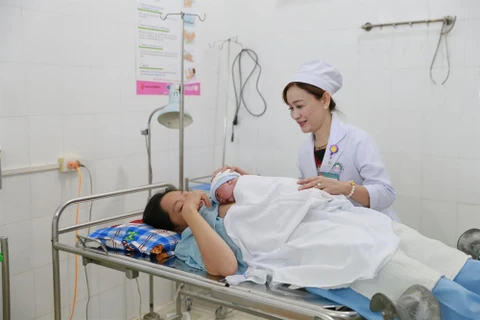
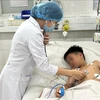
Vietnam sees great strides in saving extremely premature low weight infants ảnh 1Illustrative photo (Photo: laodong.vn)

Hanoi (VNA)– Doctors in hospitals in Vietnam have mastered advanced techniques to savepremature babies weighing only 400 grams.

About 20years ago, doctors could handle cases in which newborns were at least one kg.

The National Hospitalof Obstetrics and Gynecology on January 3 announced that its doctors hadsuccessfully nurtured a 500-gram premature baby weighing only 500 grams at 25 weeks' gestation.

Dr. Le Minh Trac,Director of the hospital’s Centre for Neonatal Care and Treatment, said thatpremature and low-weight newborns are at high risk of feeding difficulties andbeing susceptible to infection. Doctors have successfully applied strategies toraise extremely low birth weight babies such as intubation from the beginning,early massage, and early feeding.

The baby was fed breastmilk from the beginning and completely gastrointestinal on day 12. In the 40thday, the baby got pneumonia, however, after that, he got better.

With the efforts of the centre’s doctors and nurses, the baby thrived spectacularly.Overcoming all difficulties, on January 3, the baby was 97 days old (equivalentto 38 weeks' gestation), weighing 2 kilos. The baby could breatheair on his own and smile spontaneously. He also had a good sucking reflex.

The success is a resultof very strict care of pregnant women and newborns by obstetricians andpediatricians at the National Hospital of Obstetrics and Gynecology.

Earlier, in September2021, the hospital made a record when saving an infant weighing just400 grams.

Now, the survival rateamong premature infants with the weight of 1-1.5 kg reaches nearly 90% whilethose with the weight of less than 1 kg have a survial rate of nearly 30%.

In February this year,doctors at the Hanoi Hospital of Obstetrics and Gynecology saved a newborn whoweighed only 400 grams after 27 weeks' gestation.
According to doctors,the baby faced the risk of asphyxiation in the delivery room and respiratoryfailure after birth.

After 20 minutes ofintensive resuscitation, the baby's beige skin was pinker, and the baby hadreflexes of limbs and opened her eyes. The baby was put on a ventilator andtransferred to an incubator. After nearly four months, thanks to intensivetreatment and nurturing, the baby was 2.1 kg and was returned to her mother.

Another 400-grampremature baby was born at Bach Mai Hospital on August 3, 2022, in 22 weeksand four days of pregnancy.

She was the mostpremature and smallest baby that has been saved in Vietnam.

According to thehospital, the infant was raised in an incubator for three months and four days.After that, she was transferred to intensive care room.

At that time, a USexpert examined her and was surprised that her brain was developing normallydespite she was born very prematurely.

Doctors at differentdepartments in Bach Mai Hospital joined hands to save and raise hersuccessfully.

Ten years ago,Vietnam's obstetrics and gynecology marked a milestone when it successfully saveda premature baby weighing 500 grams.

The number ofsuccessful cases has increased year by year. The survival rate of prematurebabies under one kilo increased from 18% to 40% in 2011.

In the US which has the most advancedneonatal care techniques, the premature birth rate of infants weighing 500grams is 41%, while the rate at Vietnam’s National Hospital of Obstetrics andGynecology is 31%./.

VNA

See more

Screening and early cancer detection using advanced medical equipment at a healthcare facility (Photo: VNA)

Vietnam targets Southeast Asia’s leading medical tourism position by 2030

Medical tourists to Vietnam currently mainly comprise overseas Vietnamese and visitors from Cambodia, Laos, the Republic of Korea, Japan, Australia and several European countries. Popular services include cosmetic dentistry, assisted reproduction, aesthetic medicine, general health check-ups and some advanced medical specialties.

An ambulance from the pre-hospital emergency care service in Phu Quoc special zone in An Giang province. (Photo: VNA)

Pre-hospital emergency care system to be launched nationwide

From 2027, the national pre-hospital emergency management platform will be put into operation, connecting data with the 113, 114 and 115 emergency call systems to facilitate rapid emergency dispatch and improve public access to emergency services.

Foreign patients travel to Vietnam for robotic cancer surgery at one-tenth of US costs

Foreign patients travel to Vietnam for robotic cancer surgery at one-tenth of US costs

With robot-assisted surgery costing tens of thousands of dollars in the US and Singapore, a growing number of international patients are traveling to Vietnam for robotic cancer surgery, including procedures for prostate, gynecological and gastrointestinal cancers, using the US made da Vinci Xi system at costs starting from just 3,000 USD.

Under a phased rollout beginning in 2026, every resident in Ho Chi Minh City will receive at least one annual health check-up or health screening. (Photo: VNA)

Ho Chi Minh City develops integrated multi-tier healthcare system

Under the new model, healthcare is organised into interconnected levels based on people's needs rather than administrative boundaries. Patients can move seamlessly between levels while their electronic health records and treatment information remain connected through digital platforms, referral systems, telemedicine, electronic medical records, and integrated health databases.

Doctors conduct heart and lung examinations for workers. (Photo: VNA)

Draft policy encourages people to prepare for old age from middle age

A draft circular guiding the implementation of the National Target Programme on Health Care, Population and Development (2026-2035) marks a shift from focusing solely on elderly care to encouraging healthy and independent ageing through early preparation. It covers healthy lifestyles, regular health check-ups, financial planning, suitable employment and home-based elderly care skills.

The meeting between the Vietnam Military Medical University delegation and leaders of the Lao Ministry of National Defence in Vientiane (Photo: VNA)

Vietnam, Laos deepen military medical cooperation

Since 1954, Vietnam Military Medical University has trained 687 Lao military medical personnel, including 322 doctors, 67 master's degree holders, 10 doctorate holders, and dozens of specialist physicians, alongside hundreds of pharmacists and medical technicians.

Vietnam's first penis transplant from a brain-dead donor is successfully performed at Viet Duc University Hospital. (Photo published by VNA)

Vietnam reaches new milestone in reconstructive transplant surgery

As the first operation of its kind in Vietnam, the hospital spent months developing treatment protocols, studying international experience and assembling a multidisciplinary team that included experts in transplantation, andrology, microsurgery, anaesthesia, immunology and pathology.

Dr. Nguyen Thanh Xuan is performing brain surgery on a patient (Photo published by VNA)

National strategy aims to build advanced medical ecosystem

Vietnam's adjusted healthcare network master plan for 2021–2030, with a vision to 2050, also outlines a regional structure covering the country's six socio-economic regions. It envisages 17 provincial general hospitals serving regional functions, at least one highly specialised hospital in each region, and at least one advanced medical facility in every province and city.