Vietnam shows strong political commitment to maximising green energy transition

Green transition in the energy sector is a key trend in the world and is one of Vietnam’s current top priorities. Vietnam is among countries with great potential to invest in new renewable energy sources such as solar, wind and ocean wave power, and biogas.
Vietnam shows strong political commitment to maximising green energy transition ảnh 1Installing rooftop solar power at Duong river surface water plant JSC (Photo:nhandan.vn)

Hanoi (VNA) - Green transition in the energy sector is a key trend in the world and is one of Vietnam’s current top priorities. Vietnam is among countries with great potential to invest in new renewable energy sources such as solar, wind and ocean wave power, and biogas.

According to experts, to take advantage of its inherent potential, Vietnam needs to have incentive policies to expand the renewable energy market, promote and deploy new technologies, provide appropriate opportunities as well as encouraging the use of renewable energy in all important areas.

The world today still depends mainly on traditional energy such as oil, coal, and natural gas. However, these sources are gradually running out. According to scientists' calculations, they can only last 70 to 100 years.

Dr. Chu Duc Hoang, Chief of the Office of the National Technology Innovation Fund under the Ministry of Science and Technology, said traditional energy not only causes serious environmental pollution from greenhouses emissions that produce harmful effects to water and soil, but are also gradually depleting, posing a threat to stable energy supply in the future.

Vietnam’s energy industry has developed strongly in recent years, in all stages of exploration, exploitation, production, transmission, distribution and import and export of energy. However, the scale and efficiency of the energy industry are still low.

In particular, Vietnam's energy demand is also increasing rapidly with about 10% a year during 2001-2010, about 7% a year in the period from 2011 to present. Electricity demand climbed by 13% a year during the 2001-2010 and nearly 10% a year from 2011 to present.

Greenhouse gas emissions from the energy sector accounted for about 63% of Vietnam's total greenhouse gas emissions in 2010 and about 67.7% in 2020. Emissions are forecast to make up about 73.1% and 79.7% in 2030 and 2050 respectively according to the normal scenario.

The 26th Conference of the Parties participating in the United Nations Framework Convention on Climate Change (COP26) with strong political commitments of many countries, including Vietnam, to reduce greenhouse gases shows the trend. Green energy production and consumption as well as energy transition are becoming an urgent and important issue in sustainable development strategies, associated with environmental protection of countries around the world.

Committing to achieving the goal of complete decarbonisation by mid-century makes Vietnam an even more attractive destination for foreign corporations to invest in renewable energy infrastructure, including offshore wind power projects. With a coastline of more than 3,200 km, shallow water depth and high, stable wind speed, Vietnam fully meets the important prerequisites necessary to develop reliable offshore wind power projects.

Dr. Chu Duc Hoang said that facing the challenge of climate change and the risk of energy depletion, the transition to green energy is not just an option but an urgent need. In this transition, technology plays a key role. Tech will create efficient solutions for capturing and storing energy to optimising its use in both production and daily consumption. Therefore, technological innovation is an inevitable trend for countries, corporations, and businesses to successfully convert from traditional energy to clean energy./.


VNA

See more

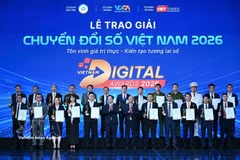
Representatives of organisations and individuals receive the 2026 Vietnam Digital Awards (Photo: VNA)

Vietnam Digital Awards 2026 honours 56 organisations, products and solutions

The 2026 awards place greater emphasis on practical effectiveness, applicability and the ability of digital transformation models to generate wider impact. They recognise not only technological innovations but also the benefits these technologies bring to people and society. Beyond acknowledging achievements, the awards also encourage initiatives capable of shaping the future.

The transformation of museums from “static repositories” into “dynamic experiential spaces” is driving the development of cultural industries. (Photo: VNA)

Digital heritage opens new avenues for cultural preservation, public access

The Southern Women’s Museum has so far digitised 1,113 artefacts, but only 113 are currently accessible to the public. According to deputy director of the museum Pham Thi Dieu, thousands of other artefacts are awaiting an exhibition system under an expansion project. The museum hopes to complete the system in 2027, enabling online visitors to explore the digitised collections.

A citizen interacts with an AI-powered robot for guidance on administrative procedures at the Public Administration Service Centre of Xuan Huong–Da Lat ward, Lam Dong province. (Photo: VNA)

Vietnam taps Vietnamese talent in Canada to advance AI cooperation

As Vietnam-Canada relations enter a new phase under their strategic partnership, mobilising this resource is consistent with the orientation of Politburo Resolution No. 23-NQ/TW on overseas Vietnamese affairs, particularly the goal of harnessing knowledge, science and technology for national development.

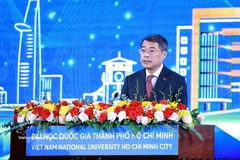
Prime Minister Le Minh Hung speaks at the ceremony (Photo: VNA)

VNU-HCM must become hub for national top talent: PM

VNU-HCM should become a leading national hub for education - training, scientific research, science -technology, innovation and digital transformation, striving to rank among Asia’s top 100 higher education establishments by 2030 and one of the region’s leading research university systems by 2045, with at least four disciplines in the global top 50.

A consumer scans a QR code to pay for OCOP products from Viet Ket Herbal Medicine Company Limited in Nhan Thang ward. Photo: Bac Ninh Newspaper.

Bac Ninh promotes cashless transactions in digital environment

With the digital economy accounting for a leading share of gross regional domestic product (GRDP) nationwide, the northern city of Bac Ninh is accelerating cashless payments in public services, online shopping and the marketing of products on digital platforms.

Viettel's Hoa Lac 2 Data Centre (Source: Viettel)

AI - infrastructure for next-generation digital economy

By combining its established electronics manufacturing base with growing capabilities in semiconductor design, AI research, cloud computing and data centres, Vietnam can become a strategic link in the regional AI ecosystem.

The signing of an MoU between the Department of Digital Technology and Artificial Intelligence and the Institute for Agricultural Research and Development at the forum. (Photo: VNA)

Vietnam, Australia step up digital technology, AI cooperation

An Australian diplomat said Australian businesses are keen to engage in Vietnam’s digital development, particularly in semiconductors, AI and cybersecurity. They also hope to share expertise and support Vietnamese companies in technology and investment.

A customer uses the LiveBank 24/7 service of Tien Phong Commercial Joint Stock Bank (TPBank). (Photo: TPBank)

AI adoption in banking requires strict supervision

Banks are increasingly applying AI in data analysis, personalised services, fraud detection and risk management. In August, the Joint Stock Commercial Bank for Foreign Trade of Vietnam (Vietcombank) launched its One Data Platform (ODP) project to support advanced analytics and lay the groundwork for AI and machine learning applications.

Delegates launch the commune-level digital transformation application on October 9 (Photo: VNA)

Commune-level digital transformation app launched

The app is designed to help grassroots officials, businesses, household businesses and citizens find suitable solutions, acquire relevant skills and access consultancy during their digital transformation journey.

Project to build big data database on law approved

Project to build big data database on law approved

The project is expected to help reform lawmaking and law enforcement, advance smart legal governance, promote a culture of legal compliance and make the law a national competitive advantage in the new era.