Vietnam will be able to access a huge market of 3.4 billion people when it joins the Regional Comprehensive Economic Partnership (RCEP).
Countries in RCEP will have a combined GDP of 21 trillion USD, accounting for 29 percent of the world's GDP, said Nguyen Anh Duong, Deputy Director of the Central Institute for Economic Management (CIEM).
Speaking during a workshop held in Hanoi on July 17 on the impact of RCEP on Vietnam's economy and the opportunities and challenges it would pose, Duong said regulations on origin in RCEP would be simpler and more liberal than in other economic pacts. In addition, the parties would make more commitments on freedom of trade in goods and services and investment.
Negotiations on RCEP officially began in 2012 with six countries: Australia, China, India, Japan, the Republic of Korea and New Zealand. The pact aims to build a regional free trade area. The RCEP states' total GDP will be higher than the combined GDP of countries in the Trans-Pacific Partnership (TPP), which will account for 26 percent of the world's GDP, and it will have a rapidly growing middle class.
According to Duong, RCEP is expected to offer major opportunities to Vietnam by improving its access to investment and export markets in the member states of the Association of Southeast Asian Nations (ASEAN), as well as partners with demand for diverse goods. At the same time, it could make imports of technology and machinery cheaper, thus creating opportunities for Vietnam to join the region's production value chain, Duong said.
The pact could also help Vietnam reduce transaction fees, create a friendly business environment and enhance its role in resolving trade and investment disputes, he said.
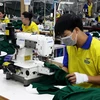
Sectors such as seafood, agriculture, construction, garments and textiles, as well as leather footwear, would have additional opportunities for growth, he added. For example, the country would have major opportunities in distribution and in the hotel and restaurant business in the countries in RCEP, especially in Japan and the ASEAN states, besides opportunities in providing services to Australia, Duong said.
However, Vietnam would also face challenges in banking services as the RCEP countries in the region, such as Singapore, Japan, the RoK and Australia, have highly developed banking sectors.
Vo Tri Thanh, CIEM's deputy director, said RCEP and TPP would not clash but support each other to help Vietnam integrate further into the world economy.
"The two pacts have a common feature of commitment to freedom in trading goods and services, and in investment. Talks on both RCEP and TPP are expected to end this year," Thanh said.
In RCEP, ASEAN is looking for cooperation and equal development. The TPP is a free trade agreement aimed at resolving the issues of labour standards, a competitive environment, State-owned enterprises, State purchases and intellectual property.
"Some people thought that TPP and RCEP will compete with each other and overlap. However, in my view, the two pacts could supplement each other," Thanh added.
Vietnam would have more benefits than challenges by joining RCEP, he noted.
Earlier, an ANZ Bank report said that Vietnam and Thailand would be the countries to benefit the most from RCEP.
Vietnam's GDP is expected to grow 8 percent in five years after signing the RCEP, while Thailand's GDP is expected to grow 13 percent. The RCEP states will account for 85 percent of the world FDI flow.
Thanh suggested that Vietnam should take advantage of RCEP by improving the competitiveness of domestically produced items and focusing on some industries that could benefit from the deal.-VNA
Countries in RCEP will have a combined GDP of 21 trillion USD, accounting for 29 percent of the world's GDP, said Nguyen Anh Duong, Deputy Director of the Central Institute for Economic Management (CIEM).
Speaking during a workshop held in Hanoi on July 17 on the impact of RCEP on Vietnam's economy and the opportunities and challenges it would pose, Duong said regulations on origin in RCEP would be simpler and more liberal than in other economic pacts. In addition, the parties would make more commitments on freedom of trade in goods and services and investment.
Negotiations on RCEP officially began in 2012 with six countries: Australia, China, India, Japan, the Republic of Korea and New Zealand. The pact aims to build a regional free trade area. The RCEP states' total GDP will be higher than the combined GDP of countries in the Trans-Pacific Partnership (TPP), which will account for 26 percent of the world's GDP, and it will have a rapidly growing middle class.
According to Duong, RCEP is expected to offer major opportunities to Vietnam by improving its access to investment and export markets in the member states of the Association of Southeast Asian Nations (ASEAN), as well as partners with demand for diverse goods. At the same time, it could make imports of technology and machinery cheaper, thus creating opportunities for Vietnam to join the region's production value chain, Duong said.
The pact could also help Vietnam reduce transaction fees, create a friendly business environment and enhance its role in resolving trade and investment disputes, he said.
Sectors such as seafood, agriculture, construction, garments and textiles, as well as leather footwear, would have additional opportunities for growth, he added. For example, the country would have major opportunities in distribution and in the hotel and restaurant business in the countries in RCEP, especially in Japan and the ASEAN states, besides opportunities in providing services to Australia, Duong said.
However, Vietnam would also face challenges in banking services as the RCEP countries in the region, such as Singapore, Japan, the RoK and Australia, have highly developed banking sectors.
Vo Tri Thanh, CIEM's deputy director, said RCEP and TPP would not clash but support each other to help Vietnam integrate further into the world economy.
"The two pacts have a common feature of commitment to freedom in trading goods and services, and in investment. Talks on both RCEP and TPP are expected to end this year," Thanh said.
In RCEP, ASEAN is looking for cooperation and equal development. The TPP is a free trade agreement aimed at resolving the issues of labour standards, a competitive environment, State-owned enterprises, State purchases and intellectual property.
"Some people thought that TPP and RCEP will compete with each other and overlap. However, in my view, the two pacts could supplement each other," Thanh added.
Vietnam would have more benefits than challenges by joining RCEP, he noted.
Earlier, an ANZ Bank report said that Vietnam and Thailand would be the countries to benefit the most from RCEP.
Vietnam's GDP is expected to grow 8 percent in five years after signing the RCEP, while Thailand's GDP is expected to grow 13 percent. The RCEP states will account for 85 percent of the world FDI flow.
Thanh suggested that Vietnam should take advantage of RCEP by improving the competitiveness of domestically produced items and focusing on some industries that could benefit from the deal.-VNA