Vietnam to develop night-time economy

Prime Minister Nguyen Xuan Phuc has approved a project to develop the night-time economy in Vietnam to allow some activities to run overnight until 6am of the next day in some major tourism cities and zones.
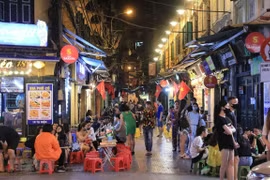
Vietnam to develop night-time economy ảnh 1A night market in Phu Quoc (Source: zing.vn)

Hanoi (VNS/VNA) - Prime Minister Nguyen Xuan Phuc has approved aproject to develop the night-time economy in Vietnam to allow some activitiesto run overnight until 6am of the next day in some major tourism cities andzones.

The project aims to exploit the potential of the night-time economy in Vietnamto promote overall economic growth, improving incomes for residents whilelimiting risks and negative impacts on political security, social order andsafety.

Under the project, night-time activities would have expanded opening hours insome key tourism areas, including Hanoi, Quang Ninh, Hai Phong, HCM City, DaNang, Hoi An, Thua Thien-Hue, Can Tho, Da Lat and Phu Quoc.

After the pilot implementation, evaluation of the economic efficiency andmanagement efficiency would be carried out to develop an operating model forthe night-time economy and bring it to other localities.

Specific night-time activities allowed under the plan were not disclosed.

Under the project, policies to encourage enterprises and business households toparticipate in the night-time economy would be developed, including improvingtheir capacity to access official financial sources, especially banking credit.

Tourism promotion for night-time activities would be enhanced together withbuilding night-time tourism products based on the cultural factors of eachlocality.

The PM also asked provincial and municipal People’s Committees to studynight-time economic models appropriate for their areas.

Both the negative and positive impacts of night-time activities must becarefully studied, the PM asked.

The PM also asked to develop plans for areas to implement night-time activitiesin the future.

According to Tran Dinh Thien, former Director of the Central Institute forEconomic Management, it was necessary to carefully study the model for thenight-time economy in Vietnam.

Security would be a major factor when developing a night-time economy, expertssaid.

In an article in Cong Thuong (Industry and Trade) magazine on February 25, Luu ThanhTam from the HCM City University said that although some tourism products whichhappened from 6pm to 3am of the next day were very profitable, these productswere not well-developed in Vietnam.

The night-time economy was not just night markets, discos, bars, karaoke jointsor pedestrian streets but should include shopping, dining and a range of otherservices such as transportation, trade and cross-border financial transactions,he said.

According to Tam, to develop the night-time economy, it was necessary to havespecific planning. In the early stage, only large investors and high-qualityservices should be allowed until efficient management measures were raised.

Under current regulations, public activities are not allowed after midnight.Only clubs inside tourist accommodation establishments rated at least threestars or higher are permitted to open after midnight but not later than 2:00 amthe following day./.
VNA

See more

Phuong Dinh Anh, Deputy Chief of the Office of the Central Coordination Office for the National Target Programme, speaks at the event.( VNA)

Turning OCOP products into rural tourism experiences

Experts stressed that rural tourism can develop sustainably only when local communities actively participate and benefit from it. Investment in transport, accommodation and attractions must go hand in hand with clean water, waste treatment, hygiene, traditional craft preservation and environmental protection.

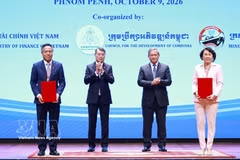
Prime Minister Le Minh Hung and his Cambodian counterpart Hun Manet witness the exchange of cooperation agreements between businesses of the two countries (Photo: VNA)

Vietnam, Cambodia look to elevate economic links

Prime Minister Le Minh Hung said that economic, trade and investment cooperation constitutes an important pillar of bilateral ties, which has achieved positive results. However, considerable room remains for further expansion to match the strong political ties and the potential of both countries.

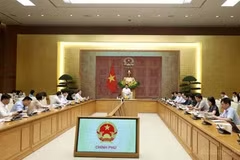
An overview of the meeting (Photo: chinhphu.vn)

Deputy PM calls for tighter price management of essential goods

Deputy PM Thang, who is also head of the committee, urged ministries and agencies to coordinate closely to deliver effective fiscal and macroeconomic policies. The aim is to control inflation, stabilise the macroeconomy, ensure major economic balances, create room to support growth and bolster the economy’s resilience to external shocks.

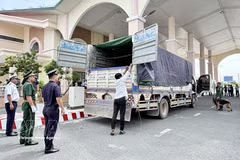
 Khanh Binh International Land Border Gate in An Giang province.( Photo: VNA)

Vietnam-Cambodia trade gathers pace towards 20 billion USD target

After setting a record of more than 11.3 billion USD in 2025, bilateral trade reached about 8.7 billion USD in the first eight months of 2026, up 8.3% year on year. Vietnam is currently Cambodia’s third-largest trading partner, its second-largest source of imports and second-largest export market.

Vietnamese Ambassador to India Trinh Minh Manh discusses potential areas and strengths for cooperation between Vietnam and India’s Gujarat state. (Photo: VNA)

Vietnam, India’s Gujarat state seek to unlock cooperation potential

Vietnam attaches importance to strengthening cooperation with Indian states boasting strong economic potential, including Gujarat, to further advance the two countries’ Enhanced Comprehensive Strategic Partnership, particularly in the economy, trade and investment, said Ambassador Trinh Minh Manh.

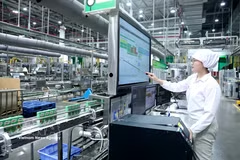
At Nestlé Vietnam factory in Hung Yen province (Photo: VNA)

Vietnam seeks to build stronger ecosystem for FDI

The World Bank has stressed the need to connect global companies with domestic suppliers, improve the business climate and develop supply-chain finance solutions. Those steps will let domestic firms gradually meet requirements on quality, technology, costs and delivery times, and position them to become suppliers to multinational corporations.

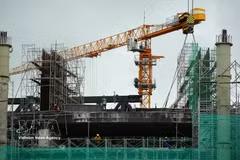
Construction of technical infrastructure facilities serving APEC 2027 in Phu Quoc Special Zone, An Giang province. (Illustrative photo: VNA)

Vietnam enters investment grade credit rating category for first time

Vietnam has maintained robust growth, outperforming other Southeast Asian economies. Its ongoing government reforms aimed at streamlining the state apparatus, promoting the private sector, improving the institutional framework and developing capital markets will strengthen the country’s growth potential and economic resilience.

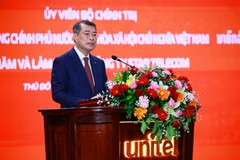
Vietnamese Prime Minister Le Minh Hung and Lao Prime Minister Saleumxay Kommasith witness the presentation of investment certificates and investment cooperation agreements between businesses of the two countries. (Photo: VNA)

Vietnam, Laos strengthen “strategic cohesion” in economic sector

The great friendship, special solidarity, comprehensive cooperation and strategic cohesion between Vietnam and Laos, and between Laos and Vietnam, are an invaluable asset of the Vietnamese and Lao Parties, States and people. It is the responsibility of today's generation to transform this invaluable political asset into new resources for the development of the two countries’ people.

West Food Hau Giang JSC’s factory at the Nam Song Hau Industrial Park – Phase 1, Can Tho city (Photo: VNA)

Southern industrial property market enters new phase of competition

Industrial site selection was previously driven largely by land prices, location and access to markets. However, as supply chains become more complex and manufacturing projects face higher technical requirements, businesses are increasingly assessing sites based on their long-term operational capabilities.

Members of the RoK delegation visit booths showcasing signature agricultural products of Da Lat – Lam Dong. (Photo: VNA)

Lam Dong seeks stronger economic, tourism links with RoK

Lam Dong is particularly interested in sectors in which Korean businesses have strengths, including agriculture, green energy, the circular economy, high-quality tourism, healthcare, education, human resources training and digital transformation, an official said.