Vietnam to gradually shape semiconductor ecosystem: official

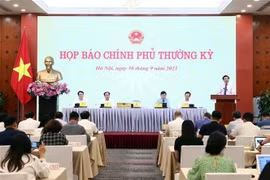
Director of the Department of Science and Technology for Economic Technical Branches Nguyen Phu Hung has talked more about Vietnam’s recent strategic cooperation with Japan, the Republic of Korea, and the US in semiconductor chip development during an interview granted to Vietnam News Agency at the regular press conference of the Ministry of Science and Technology (MoST).
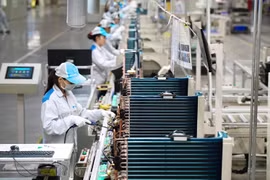
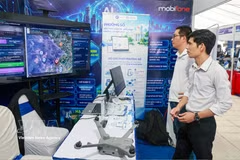
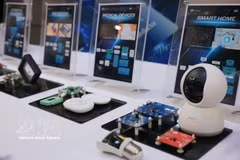
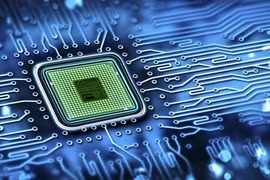
Vietnam to gradually shape semiconductor ecosystem: official ảnh 1Illustrative image (Photo: vietnamnet.vn)

Hanoi (VNA) – Director of the Department of Science and Technology forEconomic Technical Branches Nguyen Phu Hung has talked more about Vietnam’srecent strategic cooperation with Japan, the Republic of Korea, and the US insemiconductor chip development during an interview granted to Vietnam NewsAgency at the regular press conference of the Ministry of Science andTechnology (MoST).

Hungsaid cooperation between Vietnam and the US in particular, as well as othercountries in the field, has demonstrated significant opportunities for Vietnam.Vietnam has full potential to become one of the key players in the global valuechain for this product.

In thejoint statement on the comprehensive strategic partnership between Vietnam andthe US, both sides acknowledged Vietnam's immense potential to become a keyplayer in the semiconductor industry and its rapid development of thesemiconductor ecosystem. The two countries will actively cooperate to enhanceVietnam's position in the global semiconductor supply chain, he said.

Healso admitted that Vietnam now only has 5,000 semiconductor engineers, a modestworkforce when it comes to the high-tech technology of the industry. Each typeof semiconductor chip requires advanced technology, necessitating a skilledworkforce. Therefore, in the coming years, Vietnam needs to focus on training,developing human resources, promoting research and technology transfer toquickly grasp core technologies in semiconductor development.

Accordingto the official, the MoST set mastering chip design as a top priority in thesemiconductor value chain, as design accounts for some 50-60% of a chip'svalue. Alongside collaboration with other countries, Vietnam is activelyattracting investment from foreign companies and corporations to invest in labsand innovation centres in universities and research institutes.

Herevealed that in the coming time, the MoST will continue giving priority tonational sci-tech programmes related to semiconductor chips, work closely withministries and agencies to push for the national semiconductor chip programme,and build investment policies and incentives for the provision of equipment forthe measurement and testing of semiconductor chip products that meet ISO/IEC17025:2017 standards, thus contributing to shortening production duration.

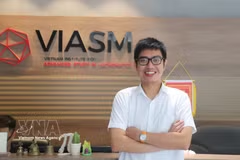
Vietnam to gradually shape semiconductor ecosystem: official ảnh 2Director of the Department of Science and Technology for Economic Technical Branches Nguyen Phu Hung (Photo: most.gov.vn)

Itwill also step up technology search and transfer as well as  bilateral andmultilateral cooperation programmes with countries which have advantages inscience and technology. This effort aims to establish strong research groups capableof rapidly applying and mastering core technologies in this field, he said.

Inconclusion, he believed that with the directions set by the MoST, theGovernment-directed policies and the concerted efforts of ministries andagencies, Vietnam will become one of the emerging semiconductor production hubsin the world in the future./.
VNA

See more

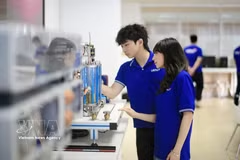
USTH students access modern equipment (Photo: VNA)

Vietnam’s AI ambition runs into talent wall

AI is becoming a foundational technology, cutting across industrial production, healthcare, education, finance, governance and public service delivery. But turning technological potential into practical value requires a workforce able to study, master and apply AI to Vietnam’s real-world problems.

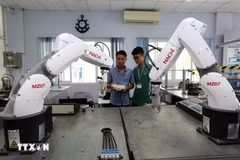
Trainees practise programming and operating robots at the Ho Chi Minh City High-Tech Park Training Centre. (Photo: VNA)

Vietnam, Malaysia hold potential for cooperation in robotics industry

Businesses from both countries should lead joint research and field-testing projects in areas such as electronic component inspection, warehouse transport, agricultural monitoring and medical logistics, said Samirul Ariff Othman, a policy, economic and business analyst at Global Asia Consulting and visiting lecturer at Universiti Teknologi PETRONAS.

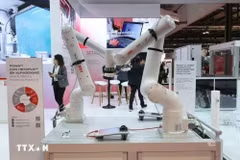
Illustrative image (Photo: SGGP)

Ericsson establishes R&D capability in Vietnam

This initiative builds on Ericsson’s growing software engineering and testing capabilities in the country, and will further strengthen Vietnam’s contribution to Ericsson’s global technology development.

An AI-powered robot at the 2026 Seoul AI Conference. (Photo: VNA)

RoK’s AI robotics drive opens cooperation opportunities with Vietnam

Dao Tuan Hung, President of the Business Association of Vietnamese in Korea (BAVIK), said Vietnam should adopt a practical approach by prioritising specialised robots, including autonomous mobile robots (AMR/AGV), collaborative robots and machine vision systems, in sectors such as agro-fishery processing, textiles and garments, electronics and logistics.

Russian survey vessel Akademik M.A. Lavrentyev (Photo: VNA)

Russian survey vessel docks in Hai Phong

This is the third joint marine scientific survey in Vietnamese waters, running from November 4 - December 12, and one of the opening field activities under the Vietnam–Russia roadmap for marine scientific research cooperation for 2026-2035.

Smart products, chips and semiconductor materials are displayed at the launch ceremony of the national semiconductor chip prototyping support centre in Hanoi on June 26, 2026. (Photo: VNA)

Vietnam-Japan semiconductor cooperation paves the way for high-tech investment

The two countries are implementing five semiconductor research projects involving leading universities, with funding agreements signed in July. The projects cover three-dimensional integrated circuits, advanced semiconductor materials, secure artificial intelligence (AI) chips and power electronic components.

An exhibition space at the “Da Nang Semiconductors and High-Tech 2026” conference, organised by the Da Nang People’s Committee. (Illustrative photo: VNA)

Mobilising international resources to drive Vietnam’s technology development

Vietnam previously focused mainly on attracting overseas experts and intellectuals to work in the country over the long term, but this approach encountered certain difficulties. Cooperation methods are now shifting towards greater flexibility, allowing experts to take part in conferences and scientific seminars, contribute to addressing major national challenges, or participate in short-term training and research programmes.

Assoc. Prof. Dr. Dinh Ngoc Thach, lecturer and researcher in automatic control theory and robotics at the French National Conservatory of Arts and Crafts (Cnam) (Photo: VNA)

Core technologies key to sustainable robotics development in Vietnam: expert

Vietnam should select suitable robotic platforms and gradually build capacity in core technologies, including sensing, environmental perception, positioning, state estimation, AI, control and system integration. This will help develop technologies applicable across multiple sectors while avoiding fragmented investment and dependence on a single product category.

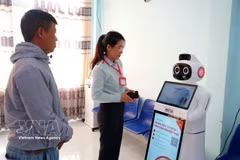
AI robots have become effective assistants in providing administrative services and reducing the workload of officials in Lam Dong province (Photo: VNA)

AI robots help streamline administrative procedures

Operating around the clock, AI robots provide information on administrative procedures, required documents, processing times, fees and relevant regulations, complementing assistance from civil servants.

High prospects for Vietnam-Italy cooperation in robotics industry

High prospects for Vietnam-Italy cooperation in robotics industry

Vietnam and Italy have highly complementary strengths in this robotics field. Italy has experience in machinery manufacturing, industrial robotics applications and an established business network, while Vietnam has a dynamic market, strong demand for production modernisation and a promising young engineering workforce.

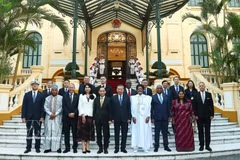
General Secretary of the Communist Party of Vietnam (CPV) Central Committee and President To Lam and the foreign ambassadors at the meeting (Photo: VNA)

Top leader receives new foreign ambassadors

Vietnam wishes to step up cooperation with the countries in such areas as economy, trade and investment; cutting-edge science and technology applications, semiconductors, artificial intelligence, new materials, digital transformation, sustainable agriculture, the environment, energy and renewable energy, the marine economy and maritime transport.

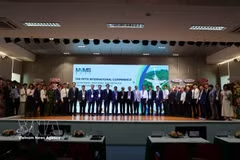
Delegates at the event (Photo: VNA)

Over 400 scientists attend international material conference

Discussions focus on six key areas, including advanced materials and their applications for sustainable development; environmentally friendly material processing technologies; product lifecycle engineering; sustainable machine design; low-carbon industries and the circular economy; and artificial intelligence and digital transformation in material and mechanical engineering.