Vietnam tourism needs better destination management: experts

Although Vietnam’s tourism has become more attractive and diverse after the COVID-19 pandemic, the country should do better in managing destinations, experts said.
Vietnam tourism needs better destination management: experts ảnh 1A popular destination for foreign tourists in Ha Giang province. (Photo: VietnamPlus)

Hanoi (VNA) – Although Vietnam’s tourism has become more attractive and diverse after the COVID-19 pandemic, the country should do better in managing destinations, experts said.

After the pandemic, Vietnam's tourism industry has developed, according to international experts, faster than Thailand and Japan. Vietnam is continuously honoured in prestigious international awards such as World Travel Awards and World Culinary Awards. The government creates conditions for the tourism industry to develop by loosening visa policies and issuing e-visas to citizens of all countries and territories around the world.

According to Wong Soon-hwa, Honorary Chairman of the Tourism Management Institute of Singapore, Vietnam is best positioned in Southeast Asia for tourism industry development.

Wong, who is former chairman of the Pacific Asia Travel Association, said that Vietnam has a large land area of more than 331,000 sq.km and a large population of nearly 100 million people, creating abundant human resources for the tourism service industry.

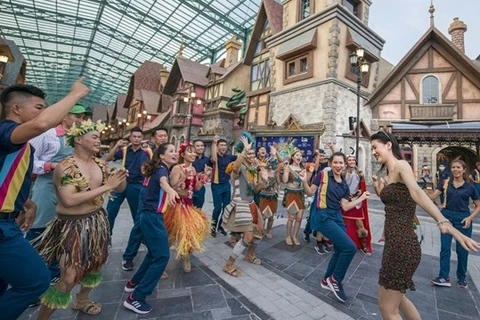
Vietnam tourism needs better destination management: experts ảnh 2Special tourism products add more experience for foreign travellers. (Photo: VietnamPlus)

Thanks to its stable political situation, Vietnam is always a top priority for foreign investors, he continued.

However, Vietnam is still not the top tourist attraction in the region and is lagging behind countries like Thailand and Malaysia.

In the first 10 months of the year, Vietnam welcomed 10 million international visitors while Thailand welcomed more than 21.5 million visitors. Therefore, in order for tourism to develop further, it is necessary for Vietnam’s tourism industry to better manage destinations as well as learn experiences of countries in the region.

Albert Zhang, co-founder of Traveloka, an online travel service platform, defines "destination" not just as a list of names on a map but also as experiences that tourists and local people create together.

For a country blessed by nature like Vietnam, destination management is extremely important, he emphasised.

According to Wong, sustainability and balancing the quality and quantity of tourists is the key to managing a destination.

In addition to the advantages of natural beauty, diverse products and infrastructure investment, it requires cooperation between relevant parties, including the State, businesses and local community, he said adding that the government must always play a leading role.

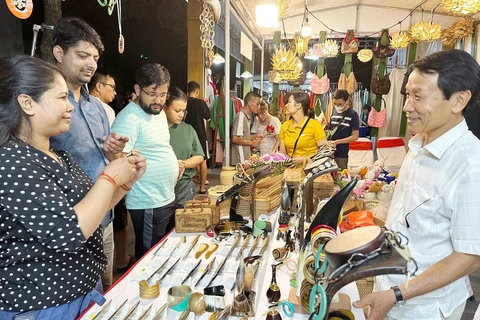
Vietnam tourism needs better destination management: experts ảnh 3A foreign visitor enjoys the experience of making lotus tea in Hanoi. (Photo: VietnamPlus)

The government needs to provide infrastructure, human resources and a quick approval process so investors can get started, Wong noted. In addition, the government should publicise investment plans as well as completion time so that investors know what the government is doing.

Singapore's Sentosa island is much smaller than Phu Quoc but welcomes more than 20 million visitors each year. Domestic tourists make up a significant number of that figure, he said.

Vietnam can also refer to Sentosa's development model to apply to domestic destinations, according to Wong.

Another important factor that helps Vietnam manage destinations better and attract international investors is law enforcement. According to Wong, every country has its own laws or regulations. What makes one destination stand out from another is how that country enforces its laws, he said.

Dinh Ngoc Duc, Head of the International Relations Department of Vietnam National Authority of Tourism said that if a destination wants to be successful, the government needs to "put tourist experience first".

The experience here is to provide tourists with professional services, competitive prices when they pay for something they get in return. They also need a clean and beautiful environment, friendly and civilised people, and a safe destination and sustainable development. In addition, tour products must be unique and have convenient procedures such as simple immigration and convenient travel to places of interest, he added./.
VNA

See more

Representatives of participating organisations pose for a group photo at the exchange programme marking China Tourism Day on May 19, 2026. (Photo: VNA)

Vietnam, China eye stronger tourism ties through cultural exchanges

Tourism exchanges between the two countries have expanded steadily in recent years, with a growing number of Vietnamese travellers to Chinese destinations such as Guilin, Lijiang, Zhangjiajie and Tianchi Lake, and Chinese tourists continuing to favour Vietnamese destinations including Hanoi, Ho Chi Minh City, Ha Long Bay, Da Nang and Nha Trang.

Several Vietnamese tourism products are introduced to visitors at the fair. (Photo: VNA)

Vietnam captivates visitors at Algeria tourism fair

Vietnam displays large photographs of renowned destinations such as Hoan Kiem Lake, Trang An Landscape Complex, Phong Nha-Ke Bang National Park, Hoi An Ancient Town, Ban Gioc Waterfall and the terraced rice fields of Mu Cang Chai at the International Tourism and Travel Fair (SITEV 2026) in Algeria.

Sun PhuQuoc Airways opens the gateway for the world to experience the paradise Phu Quoc. (Photo: Sun Group)

US media outlines what makes Phu Quoc Southeast Asia’s most sought-after destination

According to TTW, Phu Quoc is emerging as "one of the most desired destinations in Southeast Asia" due to a rare convergence of pristine natural beauty and a heavily invested, modern tourism ecosystem. From sweeping white sands and turquoise waters to global-class resort and entertainment complexes, the island is drawing an increasing number of international travelers seeking an experience that seamlessly balances luxury with a rich local identity.

Local culture makes Vietnamese destinations appealing. (Photo: VNA)

Vietnam targets tourism breakthrough by filling gaps

Industry officials said advances in sci-tech, innovation and digital transformation are already wrenching tourism away from a bulk-volume model toward one built on data, customised experiences and smart governance. Deeper global integration is further widening market access, tightening value chain links and sharpening Vietnam’s destination brand.

The 7 Wonders Day will be held on July 7 to celebrate Ha Long Bay as one of the best known world natural heritage site. (Photo: courtesy of Ha Long Bay - Yen Tu World Heritage Management Department)

7 Wonders Day to spotlight UNESCO heritage jewel Ha Long Bay

A special event entitled 7 Wonders Day with a series of attractions and experiences for both residents and visitors will be held in Ha Long city, Quang Ninh province, on July 7 to honour the elected New 7 Wonders of the World and Nature.

Con Co “steel island”: a green gem in the open sea. (Photo: VNA)

Con Co “steel island”: a green gem in the open sea

Unlike well-established destinations, this small island quietly preserves its layered heritage: tens-of-thousands-year-old basalt formations, pristine tropical forests and enduring wartime memories. Together, they create a distinctive “green gem” in the open sea, subtle yet captivating enough to hold any visitor.

The Hue–Da Nang “Central Heritage Connection” train takes passengers along one of Vietnam’s most spectacular coastal railway routes. (Photo: nhandan.vn)

Heritage rail journey brings new identity to central Vietnam tourism

The heritage train offers passengers not only a means of transport, but also a sense of connection linking destinations across central Vietnam, tourism with transport, and nostalgic memories with contemporary experiences. While older travellers are reminded of journeys from decades ago, younger passengers and international visitors are discovering a greener, culture-rich way to explore the region.

Many Vietnamese travellers love to plan the trip by themselves even when it requires a lot of time. (Photo courtesy of Booking.com)

Vietnamese travellers enjoy planning for trips

The Booking.com’s Travel Trends 2026 data revealed that a growing number of Vietnamese travellers, about 74% of respondents, are channelling “Main Character Planning Energy”, where planning and booking is just as enjoyable as the trip itself.

Hai Tac Island in An Giang province is increasingly attractive to visitors. (Photo: VNA)

Slow travel increases connections, reshapes tourism trends

Rather than rushing to “check in” at as many attractions as possible, slow travel allows visitors to immerse themselves in local life. Travellers may spend time wandering through a highland market, learning to cook a traditional dish, cycling around a coastal fishing village, or simply enjoying the tranquil rhythm of life in the countryside.

Sunlight streams into the Dinosaur Eye while visitors join the Son Doong adventure tour (Photo: VNA published)

Quang Tri province boosts tourism promotion through international television, films

A special documentary on Son Doong Cave, the world’s largest cave, was aired on March 29 in the renowned “60 Minutes” programme of CBS News. The report retraced the discovery of Son Doong Cave and years of expeditions conducted by the British Cave Research Association, offering global audiences a comprehensive look at the cave through scientific, historical and human perspectives.