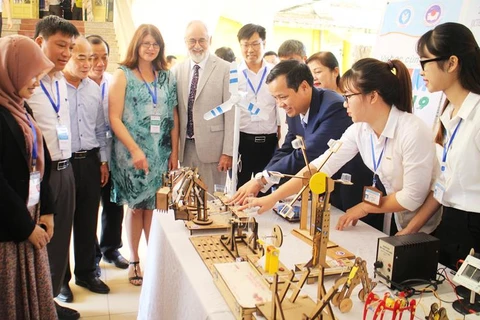
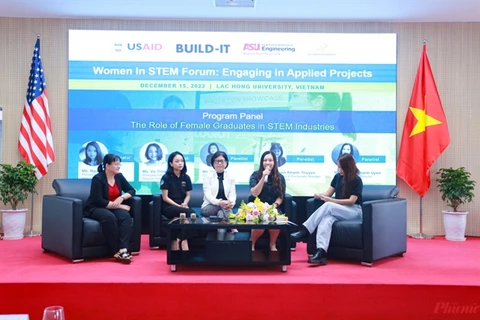
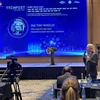
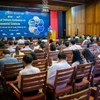
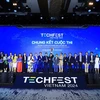
Students participate in experiential activities at the 8th national STEM festival. (Photo: VNA)
 Hanoi (VNA) - Vietnam needs a comprehensive investment strategy and support policies to encourage universities to invest in the education of high-quality STEM (Science, Technology, Engineering and Mathematics) professionals, thereby laying the groundwork for the country's scientific and technological advancement, educational experts have said.
STEM is considered a highly promising field. However, in Vietnam, the proportion of university students in STEM-related fields is relatively low compared to other countries in the region and Europe, especially in fields such as Science and Mathematics.
According to the Ministry of Education and Training, the number of university students studying STEM fields in the country is only about 55 students per ten thousand people. The percentage of university students in STEM fields has ranged from 27% to 30% of all university students in Vietnam in recent years.
In 2021, this rate reached approximately 28.7%. This percentage was much lower than some other countries in the region and Europe, such as Singapore (46 %), Malaysia (50%), the Republic of Korea (RoK) (35%), Finland (36 %) and Germany (39 %).
In particular, the percentage of university students studying Natural Sciences and Mathematics was approximately 1.5 %, which was one-third that of Finland, one-fourth of the RoK, and one-fifth of Singapore and Germany.
Furthermore, the postgraduate STEM education in Vietnam is quite modest compared to developed countries, and it constitutes a very small proportion of the total scale of education across all fields.
The ministry’s 2021 statistics showed that the number of postgraduate students in STEM fields was only 2.2 per ten thousand people, which was roughly one-seventh of the RoK and Israel, less than one-tenth of Singapore, one-fifteenth of the European Union average, and one-twentieth of Germany and Finland.
In terms of the total scale of education at various levels within STEM fields, postgraduate education in 2021 accounted for only about 3.6 %, which was lower than the overall average of 5.6 % across all fields. Meanwhile, in the RoK, postgraduate education in STEM fields was at 9.4 %, Israel at 16.3 %, Finland at 27.8 %, Germany at 34.4 %, and the European Union at 33.7 %.
Dr Trinh Quang Khai from the University of Transportation pointed out that the State's investment in science and technology in the past several years has not increased, remaining at approximately 3.7 % while in other regional countries, the rate ranged from 5-10 %.
The State's policies in the field of science and technology have not offered many incentives to promote the development of science and technology in universities. Therefore, to genuinely address this issue, it was essential to mobilise resources to collaborate in creating a science and technology market, providing a platform and motivation for the development of Vietnamese scientists.
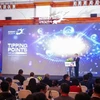
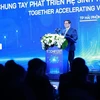
 Delegates at the launching ceremony of the 9th national STEM festival (Photo: VNA)
 To improve the quality of STEM field training in Vietnam to meet the nation's development needs and the trend of global integration, many universities are striving to implement solutions to renew their training programmes and attract students.
The University of Science and Technology, HCM City National University, has restructured its training programmes according to international STEM standards. They have increased the duration of practical work, internships, business-oriented practical experiences, and implementing graduation projects with a practical orientation. They have also expanded programmes that are entirely taught in English.
Additionally, they have brought in foreign professors to teach directly at the university, engaging in faculty and student exchanges, adhering to international training standards, and participating in global rankings.
The university is currently operating 22 programmes that are entirely taught in English, eight high-quality engineering programmes following the Vietnam-France framework, and two Japan-oriented training programmes. As of this August, all these programmes have been evaluated to meet international standards.
Dr Nguyen Dac Trung from the Hanoi University of Science and Technology also shared that, to build training programmes addressing the demands for high-quality human resources, the university has developed the Elite Technology Programme (ELITECH). Graduates from these programmes would become researchers, technical developers, engineers, experts and managers in core engineering and technology fields.
By 2023, the university implemented 32 ELITECH training programmes, including 19 programmes taught entirely in English, two programmes following the high-quality engineer standards of France, seven international cooperative programmes with universities in the United States, the United Kingdom, Australia, Germany and Japan, and four talent-oriented training programmes. The number of participating students has reached 2,200 students annually, accounting for 30% of the total annual enrolment, he said.
Dr Khai from the University of Transportation stated that the need for training high-quality human resources was a strategic breakthrough for the country’s socioeconomic development. However, some technical universities and certain necessary fields for the country's development, such as construction, transportation, electrical and mechanical engineering, have struggled to attract students.
Moreover, the income of lecturers depends on enrollment numbers, leading to the tendency to admit as many students as possible, including those who did not meet the requirements for these majors, resulting in a lack of quality graduates, he added.
Khai said the deep reduction in the number of students in Mathematics and Statistics, Computer Science and Information Technology, Engineering, Manufacturing and Processing, Architecture and Construction, Agriculture and Fisheries, and Veterinary Medicine, also showed the need for State regulation since higher education institutions were left to grapple with the choices of the market economy.
Therefore, he said, to build a sustainable foundation for socioeconomic development in the 4.0 era, it is crucial to have a rigorous plan for training high-quality human resources through Government regulations and solutions./.